Westland — Mass timber construction is undergoing a renaissance nationally, touted by proponents as a more efficient, environmentally friendly and durable building method.
The Michigan Department of Natural Resources is working to promote mass timber projects in an initiative that advocates hope will boost the state’s $26 billion forest products economy. Armed with a $400,000 appropriation from the state’s general fund, the department awarded grants of $25,000 to $60,000 to 10 mass timber projects that are in the design phase across Michigan.

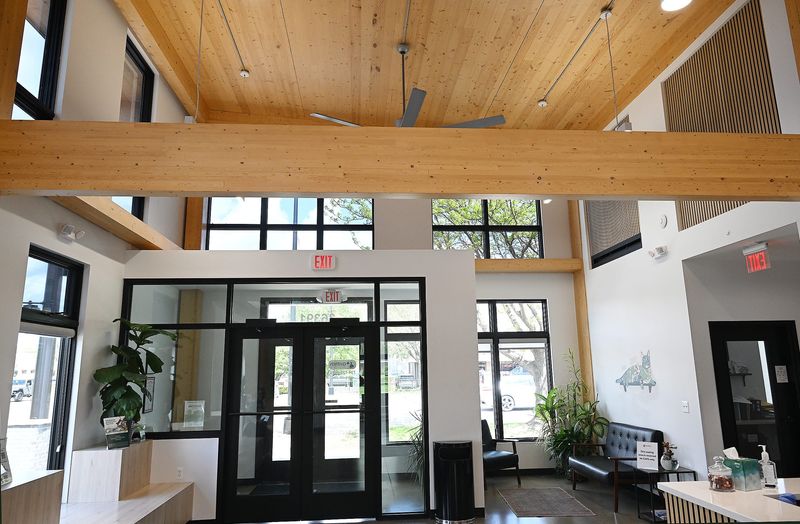
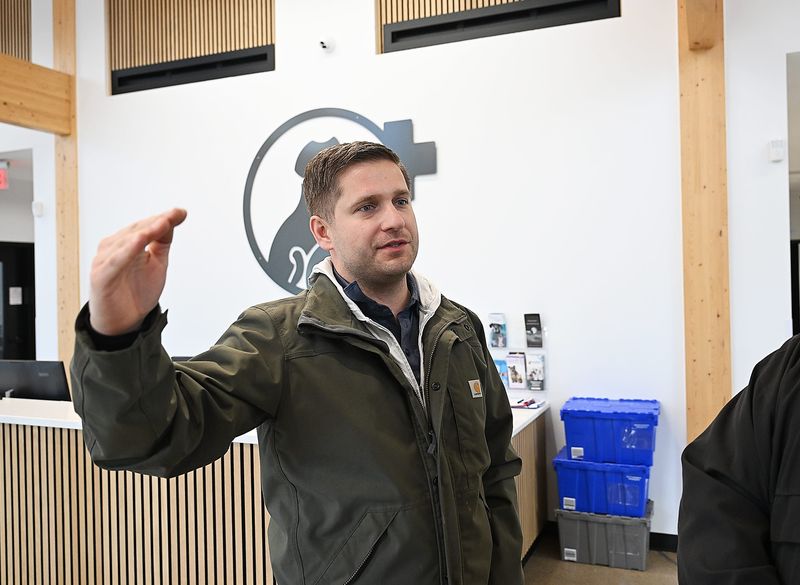
“In Detroit, as we look at the city coming back and having a renaissance in the past five to 10 years, I think the need to create new developments that are using new technologies to solve simple building projects or even complex ones is a great way to put energy and excitement back into the state,” said Charles Heid, an architect who designed Griffith Veterinary Hospital in Westland, which was built with mass timber construction in 2022-23.
In Michigan and nationally, a growing number of projects are being planned and built using mass timber — large wood panels and beams that are pushed together producing a sturdy material that’s more fire-resistant than common lumber.
According to WoodWorks, a nonprofit that provides assistance to timber project developers, the United States had 2,746 multi-family, commercial, or institutional mass timber projects in progress or complete as of March 2026. Moreover, from 2018 to 2025, the number of projects that were in design, under construction or completed increased by more than six times nationally.
Upcoming mass timber developments in Michigan include a two-story apartment building planned for Highland Park, a supportive services center for older adults and veterans in Lansing, a municipal building in Harrison Township, a woodworking school in Adrian, a six-story residential and retail building in Detroit, a mixed-use development in Traverse City, a municipal building in Grand Rapids, an institutional building in East Lansing, a three-story building in Mt. Pleasant and a long-term care facility in Brimley.
Ann Arbor Public Schools is using mass timber construction in four new elementary schools and a middle school gym to advance the district’s environmental sustainability goals, Jason Bing, the district’s director, said in an email.
After having architectural teams compare mass timber with traditional steel-and-concrete construction, the district found it was a cost-competitive, faster building method that would help achieve carbon-reduction goals without sacrificing quality, he said.
“Ann Arbor Public Schools’ utilization of mass timber construction reflects the district’s commitment to using evidence-based best practices to inform decisions that impact learning outcomes, student wellness, and environmental sustainability,” Bing said.
Experts at the Mass Timber @MSU of Michigan State University, which coordinated grant awards with DNR through the Michigan Mass Timber Catalyst Program, say mass timber projects can reduce carbon emissions by 76% to 94% compared with other building methods because wood can store carbon long-term, while traditional construction materials are produced with extractive processes involving mining and heat that emit more carbon.
Sandra Lupien, director of the program, said mass timber construction has intrinsic benefits for people who step inside.
“People like to be in buildings that are made of wood,” she said. “Biophilia is this concept that when humans are occupying spaces where there are natural elements exposed around them, especially wood, they may see real benefits, whether that’s improved well-being or mental health, or even improved productivity.”
Putting it all together
When it comes to construction, delivering products faster and efficiently is high on the priority list. Similar to steel, construction crews tout the use of prefabrication in mass timber production, with elements showing up on site like a Lego set.
Prefabrication involves designers, builders and manufacturers using computers to design and precisely cut giant puzzle pieces of a structure that are assembled on site. Builders report that framing and assembling structures take much less time than some steel developments.
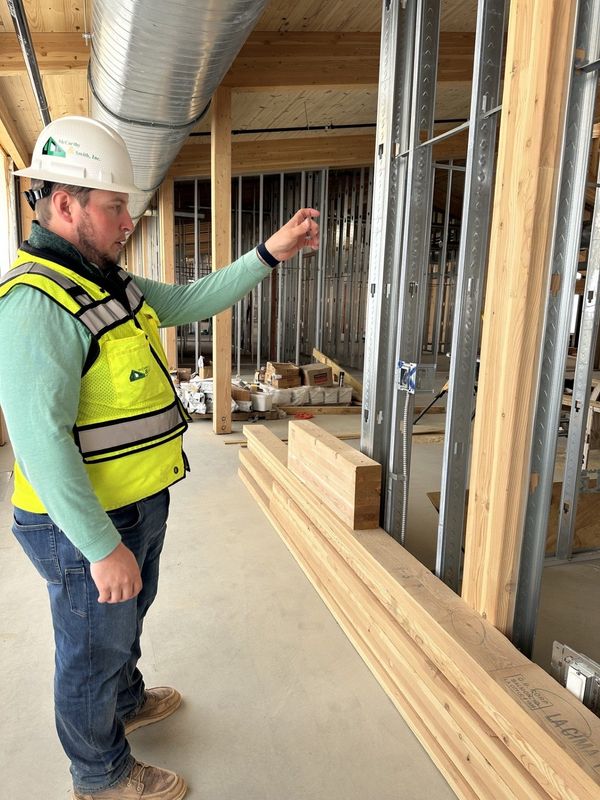
The White Lake Township Hall that’s under construction is being built with about 75% mass timber from Douglas fir grown in Idaho, plus steel and brick. The 36,000-square-foot building, with wood 4- to 5-inches thick in its roof deck, is expected to open this summer.
The building’s project manager, Kyle Pietila of McCarthy & Smith Inc., said using mostly mass timber reduced the types of trades workers needed for construction.
“In this project, it was the carpenter. They did it all, so it was more of an ease … of that coordination aspect. It’s all one person doing it, so it makes it super easy and friendly for us,” Pietila said. “Where steel’s been around for forever, industry has a process of how all that goes together, how everything goes together, coordination of layout, all that, and we’re getting to that point with mass timber as well.”
Heid, the architect for the Westland development, estimated that lumber to build it cost around $50,000 more than a conventional construction package but saved enough time to make using a mass timber build more than worth it.
“What’s kind of more important when you’re doing commercial development is ‘How quickly can you get on the market for sale, and what are we selling? What is the end result that we’re after, and what is the value of that?’ The quicker you can do that with the right utilities, the better,” Heid said.
Pytiak Design Build constructed the Westland project. Co-owner Mark Pytiak said the advantages of using mass timber were clear in the finished product.
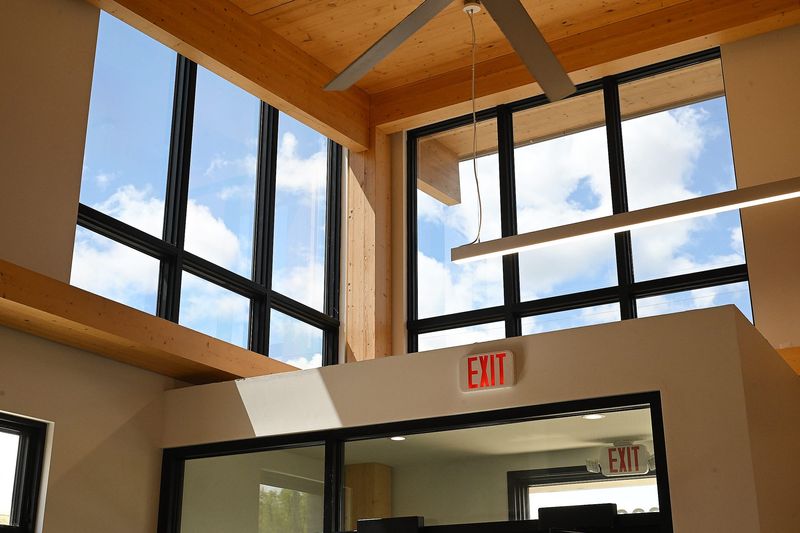
“How it was pitched to us, is that it’s unique, environmentally friendly, certain aspects of the foundation don’t have to be as intensive as steel … because the building’s lighter,” Mark Pytiak said. “Our client really wanted this building to stand out and I feel that it does because it’s a really unique building architecturally … with all that exposed wood.”
Lots of logs, no manufacturer
The only thing slowing Michigan down from building more wooded developments is manufacturing.
“We currently do not have a manufacturer that can create the mass timber pieces for us here in Michigan,” said Brenda Haskill, who oversees timber sales and wood utilization for the Michigan Department of Natural Resources. “We are working hard as a state to bring a manufacturer to the state that can take our own wood and turn it into mass timber structures.”
Although softwoods are in heavy supply, Michigan looks to western and southern states like Washington, Oregon, Georgia and Mississippi in addition to Canada and Europe for production, effectively missing out on another layer of the forest economy industry.
As an example, only one mass timber development in the state is made from trees grown in Michigan: the DNR’s Newberry Customer Service Center in the Upper Peninsula, built in 2024.
Mass timber sourced and produced in Michigan “would provide a higher value product, thus then create better revenue for the mills and manufacturers and, of course, create some beautiful structures,” she said.
“How do we then produce enough woods to feed those needs on a local level? That comes down to being able to utilize more of the softwood that we grow out on the landscape versus having a lot of it being produced into things that just really are of lower value,” Haskill said.
Out of all the wood that grows in the state, Michigan only harvests about 30% of it, according to Haskill.
“We’re not even harvesting 50% of what grows each year, not what exists, but what we add to the landscape in terms of trees getting bigger every year,” she said. “We could easily harvest another 20% to 30% and still sustain high-quality timber resource across the state.”
mjohnson@detroitnews.com
This article originally appeared on The Detroit News: Michigan’s mass timber boom faces a manufacturing gap
Reporting by Myesha Johnson, The Detroit News / The Detroit News
USA TODAY Network via Reuters Connect