

Every political era confronts one defining economic question. During the Great Depression, people asked whether capitalism could survive without compassion. Franklin Roosevelt answered with the New Deal.
During the civil rights movement, the Rev. Martin Luther King Jr. warned that political equality without economic justice would leave America divided between “the two Americas.”

Today, another question confronts the Democratic Party: Can a political party continue to call itself the party of working people if people no longer believe it understands their economic lives?
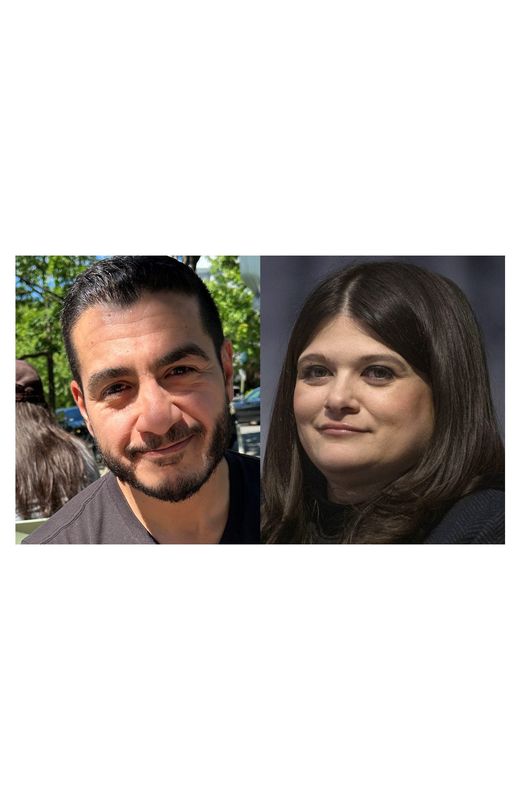
That question, not democratic socialism, seems to be quietly reshaping Democratic politics in Michigan and across the nation. Let’s take, for example, the ongoing Michigan Democratic Senate primary battle between Congresswoman Haley Stevens and Abdul El-Sayed. It is about more than choosing a nominee.
The race has become a referendum on whether Democratic voters believe the party establishment still possesses the moral urgency to confront an economy that too many believe no longer works for ordinary people.
Stevens represents the governing establishment of today’s Democratic Party. El-Sayed represents a progressive wing arguing that the party has grown too cautious and comfortable defending an economic order that millions increasingly experience as unequal.
Whatever the outcome of the primary race, it is exposing a larger truth. That is, political labels rarely move history. Economic hardship does.
But unfortunately, I have heard too many Democrats assume progressive candidates are gaining ground because voters have embraced a more left-wing ideology.
That is the wrong diagnosis. Political movements emerge when people conclude the political establishment no longer speaks convincingly to their daily struggles. After all, people don’t wake up wondering whether they are moderates or progressives. They wake up wondering whether they can afford groceries.
Whether they will ever own a home or if another medical bill will threaten their financial security. More importantly, they are concerned about whether their children will inherit a better life than they have.
That distinction explains why candidates like El-Sayed are finding an audience.
Whether one agrees with every policy he proposes is beside the point. His campaign speaks with urgency about affordability, healthcare, housing and inequality at a moment when many voters believe those concerns are not being met with equal urgency by the Democratic Party.
For generations, Democrats earned the trust of working people because they challenged concentrated economic power on behalf of ordinary people. The New Deal restored confidence that democracy could improve people’s lives. The labor movement, which played a major role in Detroit, was about the dignity of workers. The Great Society was about expanding opportunity. Economic justice was not an afterthought. It was central to the democratic vision of America.
Today, too many voters wonder whether that vision has faded. This is the opportunity candidates like El-Sayed have recognized. The challenge for mainstream Democrats is not simply to defend their record. It is to convince working people that they still possess the imagination and courage to build an economy where opportunity is broadly shared rather than narrowly accumulated.
The lesson emerging from this Senate race extends far beyond Michigan. Political parties that mistake economic management for economic justice eventually discover that voters are not looking for better explanations.
They are looking for renewed purpose because the measure of a political party is not how effectively it protects its own establishment. It is how faithfully it protects the dignity of the people who entrusted it with power.
X (formerly Twitter): @BankoleDetNews
bankole@bankolethompson.com
Bankole Thompson’s columns appear on Mondays and Thursdays in The Detroit News.
This article originally appeared on The Detroit News: Michigan Senate race tests Democratic Party’s economic identity | Thompson
Reporting by Bankole Thompson / The Detroit News
USA TODAY Network via Reuters Connect

By Bankole Thompson | USA TODAY Network
