A state agency regulating invasive plant species has banned six additional plants from import into Michigan — including a common, white-flowering ornamental tree that many might have in their yards.
Newly prohibited and restricted invasive plant species include:

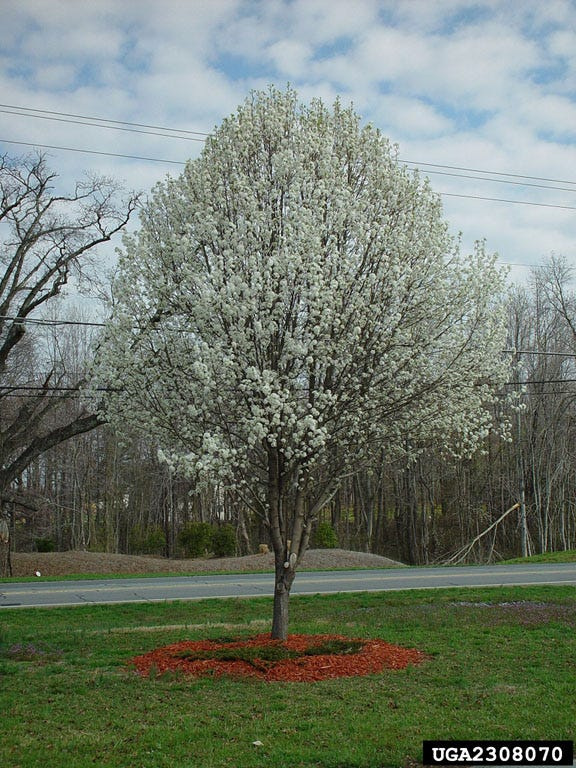
Callery pear tree
Also known as the Bradford pear tree. The deciduous tree native to East Asia was originally imported in the early 1900s for agricultural use, and it became popularly used in landscaping because of its vibrant white flowers that bloom in early spring and its deep red-purple fall foliage. Callery pears cross-pollinate with other cultivars and spread aggressively through seeds. They form dense, thorny thickets that crowd out native plants and degrade local ecosystems.
While the pears are popular for their spring blooms, they are notorious for the rotten smell they give off.
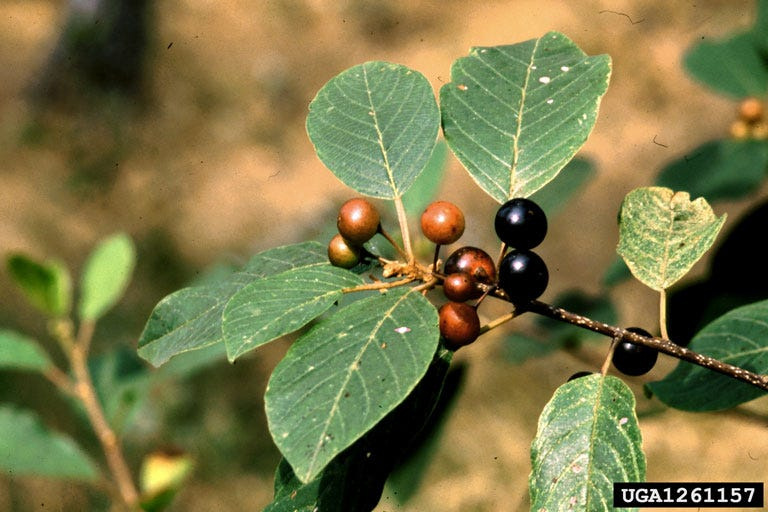
Glossy buckthorn
Originating in Europe and Asia, glossy buckthorn is a non-native species brought to the United States in the mid-1800s for ornamental landscaping and to create wildlife habitat and food. The small tree or shrub can reach 18 feet tall. Its leaves are shiny and un-toothed, and it produces tiny flowers with five greenish-white petals clustered at the base of leaves from late May to September. The plant does not have thorns, and its pea-sized fruits ripen from green to red to dark purple from June through September.
The aggressive growth of this bushy species allows it to thrive on the land and outcompete native species, especially those that are shade intolerant.
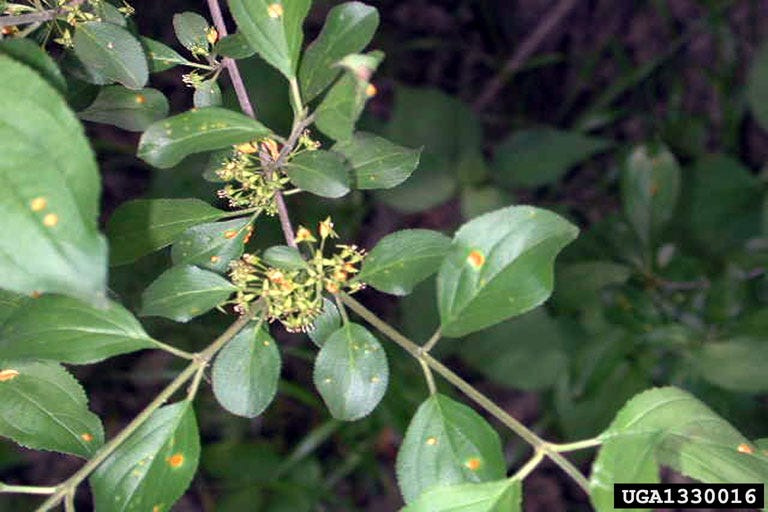
Common buckthorn
This deciduous small tree or shrub originally from Europe and Asia can reach 25 feet tall. Its leaves are dark green, oval and slightly toothed. In spring, small, yellow-green, four-petaled flowers grow in clusters of two to six at the base of leaves. Small, purple to black fruits ripen in the fall. Twigs often have a single, sharp thorn at their tip. Common buckthorn can be found in disturbed and undisturbed areas, including roadsides, pastures, old fields and woodlots. This invasive plant spreads quickly through seeds distributed by birds and wildlife and crowds out native shrubs and understory plants. It is a host for alfalfa mosaic virus and crown fungus and may be a possible host for the crop-damaging soybean aphid.
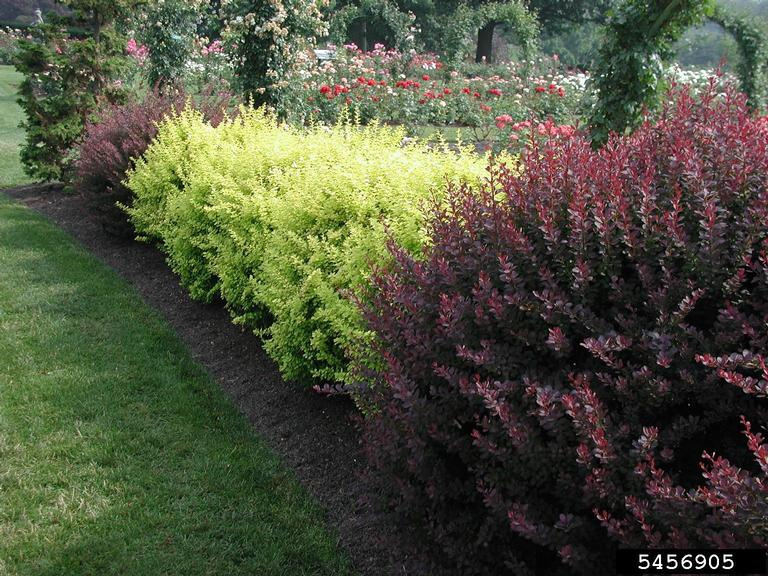
Japanese barberry:
As the name suggests, this piney, deciduous shrub is originally from Japan, and was introduced throughout the United States as an ornamental plant in the late 19th and early 20th centuries. It usually grows to 1-2 feet but can grow up to 6 feet in height. It has small, oval-shaped green leaves with smooth edges that turn red in the fall, with brown to reddish stems with thorns at each node. It also has very sharp thorns. Small, pale yellow flowers with six petals hang from stems, blooming in spring. It produces small, bright red, egg-shaped berries that persist into winter. It can be confused with the native American barberry, which has toothed leaves.
Japanese barberry easily spreads as its seeds are dispersed by birds and wildlife. The plants are not browsed by livestock or wildlife due to thorns, giving it a competitive advantage over native plants. Shrubs form dense stands that displace native species, providing the perfect habitat for black-legged ticks, the tick that carries Lyme disease. Japanese barberry can also raise pH levels in soil.
Water hyacinth
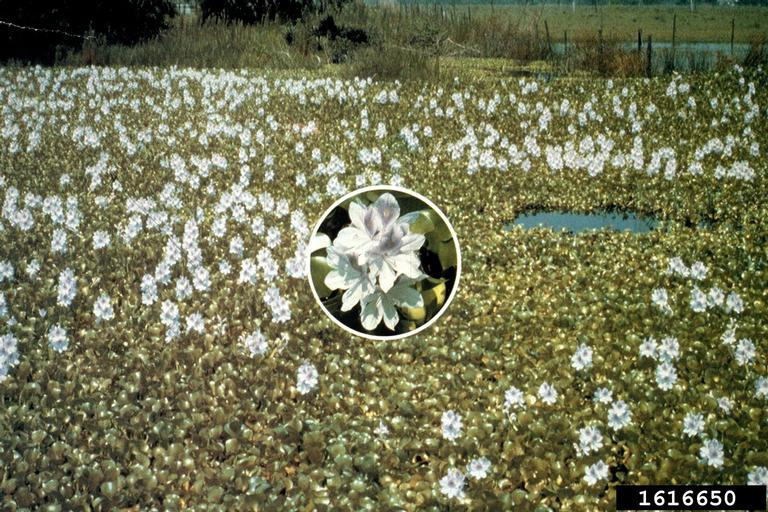
Native to the Amazon basin in South America, water hyacinth was brought to North America for use in aquaculture. The free-floating perennial herb has distinctive air bladders that keep leaves afloat, and rounded, leathery leaves arranged in whorls of six to 10. It has a 14-day flowering cycle producing lavender flowers with central yellow fleck.
Easily spread through boat traffic and water flow during flooding, water hyacinth has been introduced to at least 25 states and is widespread in Louisiana, Mississippi, Alabama, Arkansas and Tennessee. This invasive species forms dense colonies in water bodies that block sunlight and crowd out native species. At optimum temperatures, it can double its biomass within a month. Dense colonization can also impede boat traffic, reduce water flow and interfere with hydroelectric power generation.
Water lettuce
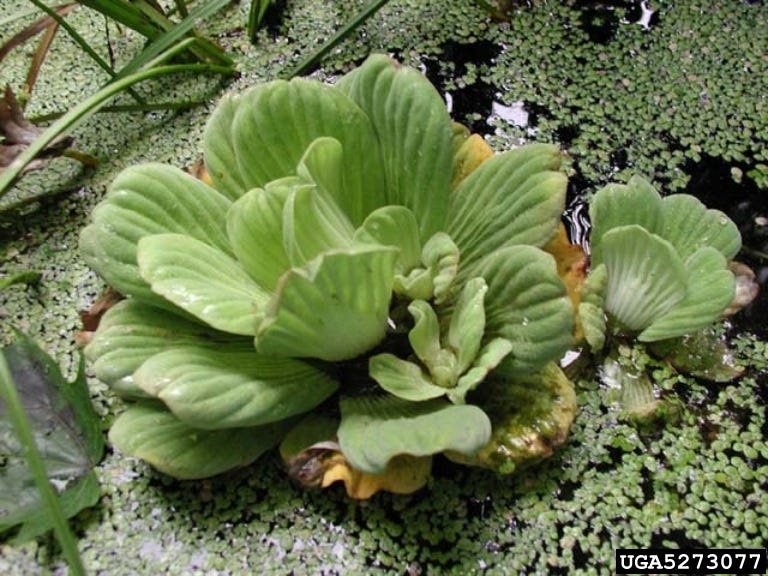
This free-floating water plant forms a rosette of leaves that resembles an open head of lettuce. The leaves are thick, ridged, rounded at the end, light green, and have short, white hairs. It produces small, white to pale green flowers, and many feathery roots dangle under the rosette.
How water lettuce got to the United States isn’t exactly known; it’s believed to be tropical or subtropical in origin. Water lettuce has been introduced to the southern and western United States, as well as Ohio, New York, New Jersey, Maryland, Delaware and Michigan. This freshwater perennial creates thick mats that reduce oxygen levels, block sunlight and prevent growth of submerged vegetation. Mats interfere with recreation and can have a negative effect on fish and other aquatic species in an infested area.
Decision followed process with thousands of public comments
The Michigan Department of Agriculture and Rural Development (MDARD) is charged under state law with regulating invasive plant species, in consultation with the Michigan Department of Natural Resources.
MDARD first proposed to add common buckthorn, glossy buckthorn, Callery pear, Japanese barberry, water hyacinth and water lettuce to Michigan’s invasive species lists in November 2025 after conducting comprehensive weed risk assessments. During those assessments, MDARD experts evaluated the latest scientific literature, verified plant distribution data and climate modeling, and reviewed other evidence-based criteria. Based on those actions, MDARD determined that the six species pose a risk to Michigan’s environment, economy, and/or public health.
In January and February 2026, MDARD collected public comments from stakeholders, industry representatives, environmental organizations, local governments and Michigan residents. More than 2,000 comments were received with more than 90% in favor of adding the six plants to the invasive species list.
The department evaluated the public comments and presented its findings to the Michigan Commission of Agriculture and Rural Development at its March 2026 meeting. The commission voted to add all six proposed plant species to Michigan’s prohibited and restricted plant lists at its meeting on May 20.
Have these invasive plants on your property? What to know
Property owners are not considered in violation if these invasive species are already established on their property or in adjacent waterways and are not required to take any action. Individuals who seek alternatives to the newly restricted and prohibited plant species are encouraged to review resources such as those compiled by the Northwest Michigan Invasive Species Network.
Contact Keith Matheny: kmatheny@freepress.com.
This article originally appeared on Detroit Free Press: Michigan bans 6 invasive plants – and 1 might be in your yard
Reporting by Keith Matheny, Detroit Free Press / Detroit Free Press
USA TODAY Network via Reuters Connect