After a nearly yearlong legal battle between Lafayette Park co-op residents pushing back against a utility company for attempting to build a steam heat network underneath their property, a judge has ruled in the residents’ favor.
But the company says it has no plans to stand down.

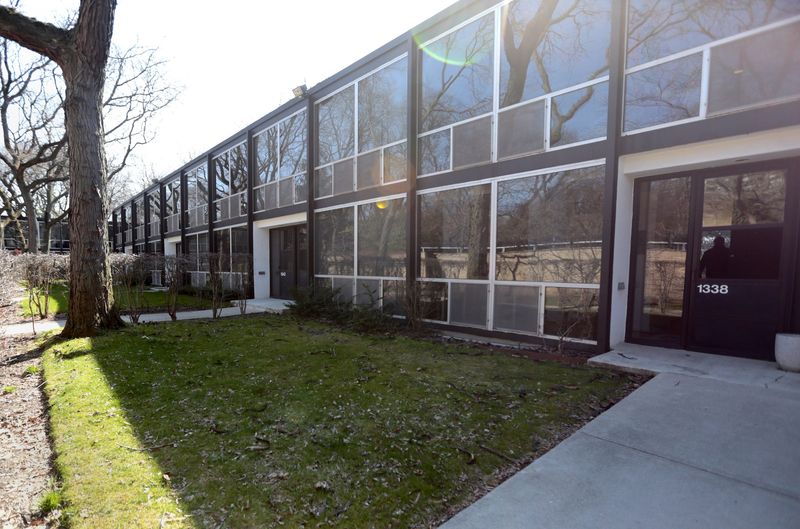
Detroit Thermal and residents in the condominium cooperatives in Detroit’s Mies van der Rohe Historic District have gone back and forth about whether the company could restore the underground steam lines, which were abandoned in the 1980s, to provide heat to the neighboring 1300 Lafayette East Cooperative building, across the street, on the south side of Lafayette Boulevard.
As of Tuesday, June 2, Wayne County Circuit Court Judge Annette Berry ruled that Detroit Thermal and the 1300 building co-op “must find an alternate solution to 1300 Lafayette’s problem.”
In April, a Wayne County jury affirmed that the utility company has rights to use public easements within the Mies cooperatives, which would have paved the path for the project. However, the judge on Tuesday ruled that the jury did not determine the easement applied to additional lots that the company proposed to excavate, according to the court order.
Now, Detroit Thermal says it plans to appeal.
“The decision is flatly wrong and dangerously framed in a way that will have an adverse effect on Lafayette Park and adjoining neighborhoods. The ruling runs counter to a jury’s verdict that upheld Detroit Thermal’s right to access the public right of way, alongside DTE Energy and other utilities,” according to a statement from the company. “Not only does the Court’s order deny 600-plus Detroiters the heating system they need, but based on the Court’s reasoning, water, sewer, gas, electric, internet, cable, and telephone companies are barred from using these public utility easements to service 1300 Lafayette East Cooperative or any other property outside the Lafayette Park subdivision.
“We will appeal.”
Members of the Nicolet, Joliet, LaSalle and Lafayette co-ops issued a statement indicating they hope Detroit Thermal will pursue another plan to provide heat to the building, while protecting their neighborhood.
“The Court correctly concluded that Detroit Thermal’s proposed steam installation project is ‘clearly beyond the scope’ of the easements burdening our property. The Court also affirmed the profound historic importance of Lafayette Park. As the Court recognized, ‘justice requires the injunction because of the harm to a national treasure,’ ” the statement from the co-op owners said.
“This ruling affirms that property rights still matter. When you buy a home and pay a mortgage, the right to enjoy your private property can’t be taken away from you, even by a billion-dollar, multinational corporation. Detroit Thermal isn’t above the law. Our neighborhood was at peace before Detroit Thermal inserted itself. It’s a special place with a strong sense of community,” Natalie Pruett, a Nicolet Co-op board member said.
“Now that this case is closed, we can get back to living our lives without the threat of trespass or destruction by Detroit Thermal. We can get back to living at peace.”
How it got here
The utility company, in 2024, notified the Mies co-ops’ property manager about evaluating whether the steam lines running underneath the district property could be restored to provide heat for the 1300 Lafayette building, which has run on aging boilers that have failed during winter months.
Residents from the Mies co-ops challenged Detroit Thermal and filed a lawsuit against the company in July 2025 in an effort to preserve the historic neighborhood from potential environmental impacts.
Residents filed the lawsuit before a Detroit Historic District Commission meeting, where the city approved Detroit Thermal’s revised project that was meant to address residents’ concerns over the possibility that it would harm their neighborhood.
Mies residents stressed that they were not opposed to the building upgrades for their neighbors in 1300 Lafayette, though they were frustrated with the process, claiming Detroit Thermal kept them out of discussions about its plans and use of their property for work beyond what was legally permitted.
Residents from the 1300 Lafayette property argued Detroit Thermal’s proposal was the more affordable path to provide heat in their units. After hours of discussion, the commission approved the project.
As the legal battle ensued, the court issued a temporary restraining order against Detroit Thermal, barring it from work. However, crews were allowed to continue work in the public right-of-way.
Judge Berry had also ruled in February that Detroit Thermal was prevented from reconnecting a steam tunnel underneath the properties, stating that any intrusion by company employees on the historic property related to using steam lines to service a building outside of the property “exceeds the scope of the easements and constitutes a trespass.”
Dana Afana is the Detroit city hall reporter for the Free Press. Contact: dafana@freepress.com. Follow her: @DanaAfana.
This article originally appeared on Detroit Free Press: Judge: Detroit Thermal must find ‘alternate solution’ for heat project
Reporting by Dana Afana, Detroit Free Press / Detroit Free Press
USA TODAY Network via Reuters Connect
By Dana Afana, Detroit Free Press | USA TODAY Network