One of the greatest hypocrisies of our time is the continued expectation that Black people should remain forever loyal to the Democratic Party that too often delivers symbolic recognition and nothing meaningful in return.
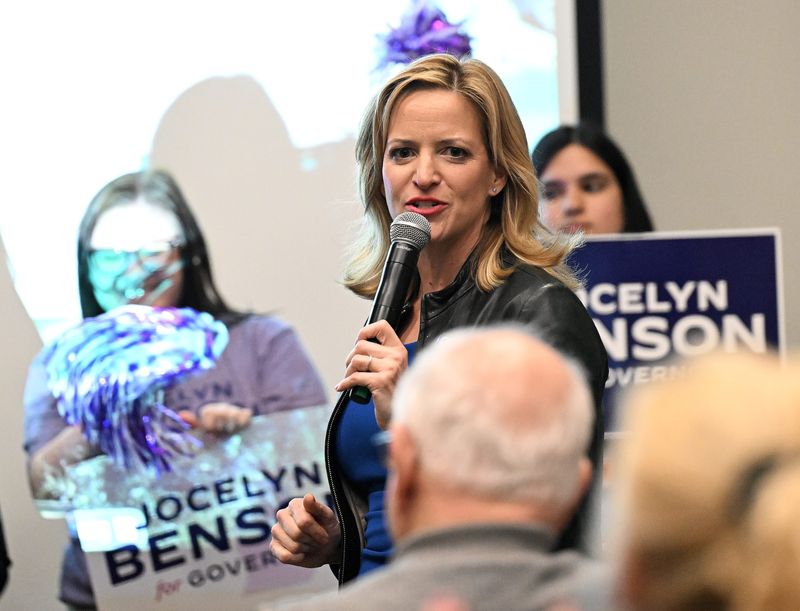
With former Detroit mayor and independent candidate Mike Duggan out of the race for governor, current Secretary of State Jocelyn Benson, a Democrat, now has a clear path to the nomination, and, potentially, winning the governor’s race.

Supporters and allies of Benson will be crisscrossing Black Michigan rehearsing the language of compassion and inclusion. Some will even invoke the legacy of the civil rights movement. But few will be willing to demonstrate that they have the intellectual courage and moral fortitude to face up to the deeper issues of racial and economic inequality evident in many Black communities across the state.
It is not an issue of whether Benson will visit Black churches with choreographed speeches during the election and pose for photographs with pastors eager to show their parishioners they have access to the trappings of political power in the state. The larger issue is whether she is prepared to directly address the issue of economic injustice that has long defined the lives of many Black families in Detroit and across the state.
Is she ready to admit that economic growth without equity simply creates modernized inequality in Black neighborhoods? And that an economy that continuously leaves Black communities stagnant is not progress, but failure?
After all, the Black community should not be a seasonal campaign stop or a guaranteed voting bloc that is emotionally courted on the campaign trail but politically neglected after the election. The main issue that is facing Black communities in Michigan is the need for economic opportunities, something many gubernatorial candidates avoid discussing.
It is not selfies taken in Benton Harbor, Flint and other Black enclaves to display on social media to generate likes. It is not carefully scripted talking points released by high paid consultants who are not willing to confront the painful truth of Black suffering.
Hours after Duggan announced that he had dropped out of the race for governor, I spoke to former Flint mayor Karen Weaver who was backing him. She said the departure of Duggan does not make the central issues of Black survival go away. Because in cities like Flint and Detroit, there are generations of Black families who continue to deal with the consequences of systemic disinvestment, failing schools, inequitable health outcomes and growing inequality.
Weaver, who told me recently that Benson has not made substantial outreach in Flint, made it clear that communities like hers and others are still living with the scars of concentrated poverty while prosperity is subsidized elsewhere. She wants the eventual Democratic nominee to lay out a real plan for economic growth and not hide behind generic promises.
Benson is already facing a racial discrimination lawsuit from Black workers in the secretary of state’s office that she has yet to publicly address. That’s very problematic for the impending flag bearer of the Michigan Democratic Party. It is crucial for her to publicly tackle this issue right away and not ignore it. Her silence is a statement on the issue and it does not bode well for the candidate who needs the Black vote to become the next governor. She knows that optics matter in politics. And not saying anything about the issue speaks volumes.
It is also important for Benson to articulate a moral vision that is rooted in fairness, dignity and opportunity for all communities, including those that have been historically marginalized from economic power. She should not be afraid to have direct conversations about racial and economic inequality in spaces that are not controlled by her advisers.
Yes, the Black community possesses enormous electoral influence, but that should be used to demand bold leadership — not symbolic gestures. Blacks deserve more than applause lines in controlled settings where a candidate is only talking to a room full of loyal supporters.
Benson should be willing to answer the difficult and Socratic questions of the 2026 gubernatorial race. That includes how the next governor will expand economic opportunity beyond gated communities, a plan to confront housing inequities, and a way for Black-owned businesses to gain access to state investment opportunities.
Every year that a governor is elected, the schools remain unequal, urban neighborhoods remain underinvested and poverty remains generational.
And the political establishment, with their Black collaborators, move on as though Black suffering is just a permanent feature of life.
We must challenge this hypocrisy. For years politicians have mastered the art of making Black people emotionally visible during elections but economically invisible after campaign season is over.
X (formerly Twitter): @BankoleDetNews
bankole@bankolethompson.com
Bankole Thompson’s columns appear on Mondays and Thursdays in The Detroit News.
This article originally appeared on The Detroit News: Jocelyn Benson can’t demand Black loyalty without equity | Thompson
Reporting by Bankole Thompson / The Detroit News
USA TODAY Network via Reuters Connect