Eloise Asylum in Westland is part history, part entertainment and all spine-chilling. Once a poorhouse, psychiatric facility and general hospital that housed thousands, it now draws visitors from across Michigan and beyond for its haunted attractions and immersive tours.
But is Eloise really haunted? Its lead historian, Adam Hachey, says it very well could be.

“I believe that every area is haunted. I believe that we live in a diverse spiritual ecosystem, and there are a lot of things everywhere. I think that this building is an example of a place that has, for one reason or another, tended to hold onto energy more so than some other places,” Hachey told the Free Press. “I’ve been touched. I’ve had things whisper in my ear. I’ve had equipment moved. And then, of course, just a lot of activity with the different pieces of equipment that we have as well.”
A city within a city
“A lot of people have negative connotations and associations with its history, but a lot of good things happened here as well, and we like to preserve that legacy,” Hachey said.
The former Eloise complex, which once housed up to 10,000 patients at its peak, began in 1839 as a poorhouse in Hamtramck before moving to Westland and expanding into a psychiatric institution and a general hospital.
“When it was first running in Hamtramck, there was no distinction made between the poor and people with mental health disorders, and everybody was just housed in the same area,” Hachey said. “As the need for those types of services expanded, they started segregating out those populations — one area just for a poorhouse, one area just for psychiatric care. And then it just slowly started getting bigger and bigger as it responded to the needs of the community, and then eventually became one of the biggest medical complexes in the country.”
Over time, the Eloise complex evolved into a 900-acre self-sufficient community with over 70 different buildings. It even included a bakery, dairy and pig farms, a school for children who ended up there, and many other facilities and services.
“It had everything that you would expect a town or city to have,” Hachey said. “We grew all of our own food, raised all of our own cattle, had our own police and fire departments, powerhouses, everything.”
Eloise pioneered several medical advancements, including early X-ray technology, music therapy and dialysis treatments. Using German plans and models, the facility’s chief bookkeeper and amateur electrician, Stanislas Keenan, built one of the first medical diagnostic X-ray machines in the country in 1896. The hospital was also among the first in Michigan to perform dialysis and liver transplants, earning recognition from the Dialysis Foundation.
Psychiatric patients underwent treatments such as electroshock therapy and insulin shock therapy, common practices at the time that are now considered outdated and often dangerous.
Understanding of mental health was limited during Eloise’ time as a psychiatric hospital, Hachey said. A lack of regulation and oversight contributed to poor conditions in psychiatric care across the board. Greater accountability in health care didn’t emerge until decades later.
“To suggest that those types of things were unique to a government-run institution or were unique to Eloise, I don’t think is entirely accurate,” the historian said. “There was still a lot of spiritual and religious connotations associated with mental health disorders, and the patients weren’t really treated very well. … The lack of government regulation, oversight and transparency, coupled with a poor understanding of mental health disorders, probably contributed to some of the negative things that people think of (when they think of Eloise).”
The Eloise complex operated under several names, including Wayne County General Hospital and Infirmary. It became widely known as Eloise when the area’s post office and train station adopted the name, honoring Eloise Dickerson Davock, daughter of Detroit postmaster Freeman B. Dickerson, who worked to improve conditions for the poor.
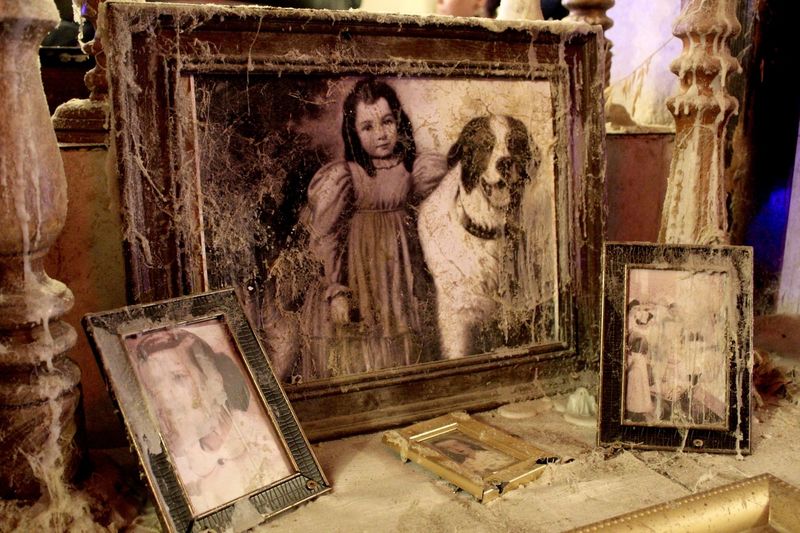
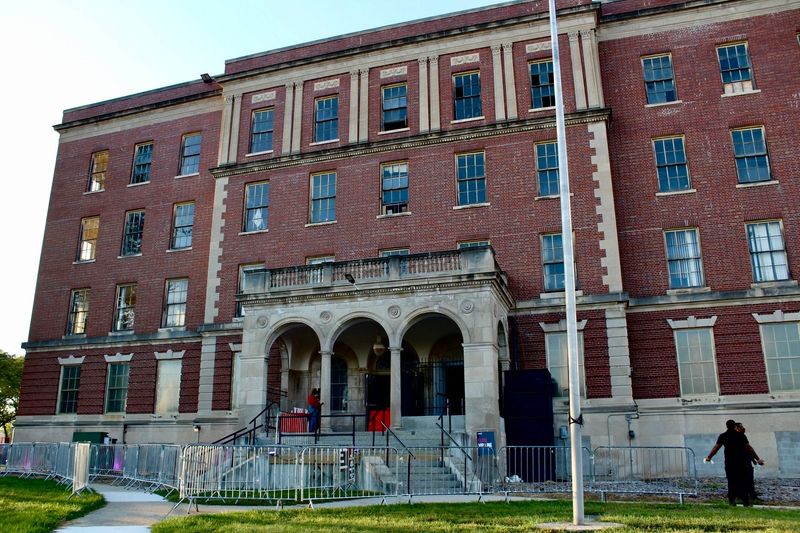
While more than 70 buildings once stood on the grounds, most have been demolished, and only a few remain. The five-story, 150,000-square-foot Kay Beard building, which houses Eloise’s haunted attractions, was built in the early 1930s and remains largely unmodified — except for props in the lobby and the haunted house path on the first floor and in the basement. It once had a bed capacity of about 300 patients. The old powerhouse on the premises is set for demolition, Hachey said. The former fire station and hospital commissary remain, with the commissary now serving as a homeless shelter. A couple of buildings that were once used for equipment storage are now used as office space.
Hachey said he understands concerns about repurposing the former asylum and hospital, but views it through a historical lens.
He said Eloise, despite its complex history, “did a lot of good for many people,” and that preserving its legacy helps honor those who worked there and understand how the past shapes the present.
Farm operations ceased in 1958, and the psychiatric division began to close in the 1970s, when the state took over. The main hospital closed in the mid-1980s.
Current attractions
With spooky season upon us, here is what the Eloise Asylum currently offers as a haunted attraction:
All current and future attractions can be seen at eloiseasylum.com/book-now.
Nour Rahal is a trending and breaking news reporter. Email her: nrahal@freepress.com. Follow her on Twitter @nrahal1.
This article originally appeared on Detroit Free Press: Is Eloise Asylum haunted? Inside Westland’s historic, eerie attraction
Reporting by Nour Rahal, Detroit Free Press / Detroit Free Press
USA TODAY Network via Reuters Connect