The calls often sound the same to Stefanie Sinks when family members with aging loved ones wait too long to reach out: “We’re in a crisis. We need some help. … What do we do?”
“Care management unfortunately is often reactive,” said Sinks. “I want to make sure everybody has the same sheet of music in front of them and we are all looking at the same thing.”

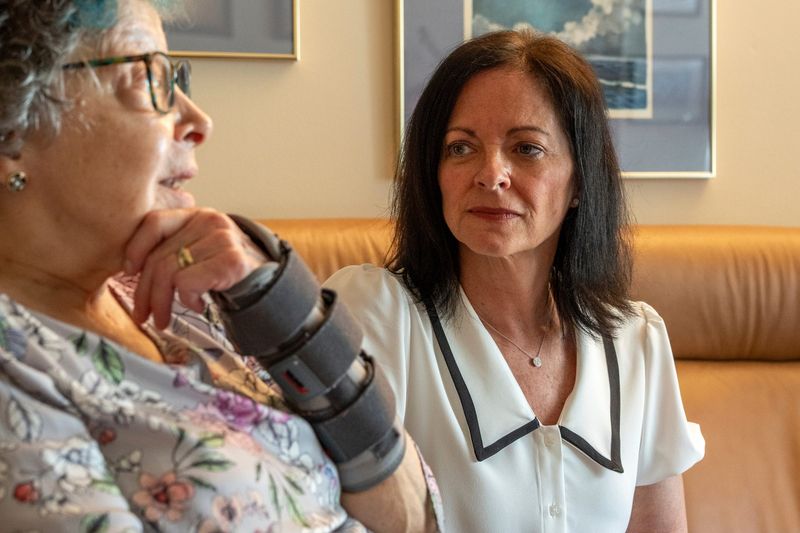
Sinks, 54, is a geriatric care manager — a sort-of elder care conductor — hired to coordinate doctors, navigate living facilities and manage crises so people don’t have to figure it out alone. Experts say the position is part of a small, but emerging field that can help the growing number of older adults navigate the aging process more smoothly with an advocate by their side.
Typically geriatric care managers are social workers, nurses, gerontologists, counselors, psychologists or occupational therapists who get additional training and, in some cases, certification through organizations like the Aging Life Care Association.
For Sinks, her day can involve helping with the smallest of tasks, like getting a grab bar installed in a bathroom, to the more complicated, such as guiding the move into assisted living, a nursing home or setting up care to remain at home.
“The focus is always on supporting independence and autonomy,” Sinks said. “And recognizing that may change as the needs increase but that is always at the core.”
She is based in Ann Arbor, but gets calls from as far away as Grand Rapids and Sandusky, Ohio. Many times she is hired by family members of older adults but also by those without family to care for them.
“Even if you are eligible for a program and are admitted to it, there can be real bumps in the road if your needs or circumstances change,” said Alison Hirschel, director of the Michigan Elder Justice Initiative. “A geriatric care manager really helps navigate all of those challenges.”
It is particularly helpful for people concerned about a family member who lives out of state or for people working full time while they are caring for older adults, Hirschel said.
‘Important and valuable’
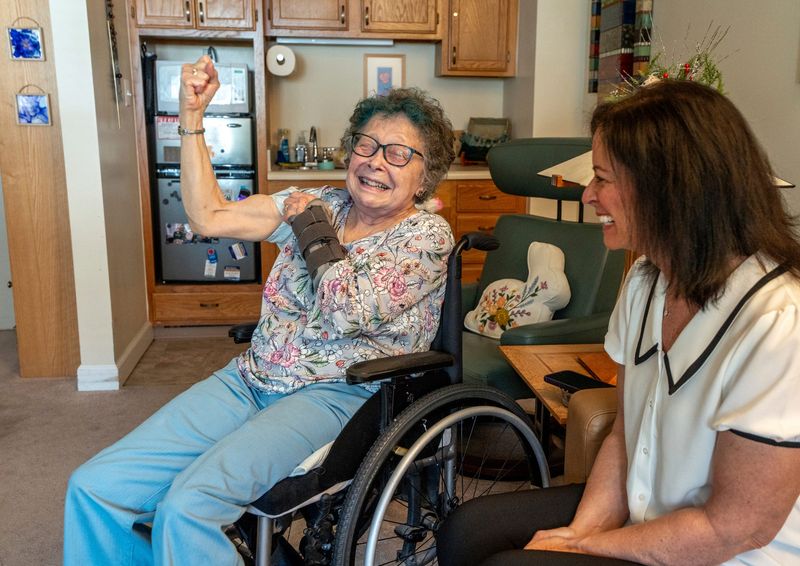
Sinks started working with Anita Rochefort, 74, about six years ago when she still lived in her home in Saline, south of Ann Arbor and about 5 miles from where she lives now in a one-bedroom assisted-living apartment at Brecon Village.
Rochefort has no children; her only close relative, her older brother, lives in Connecticut and has been helping her since 2012, after her husband died.
She lives with traumatic brain injury and spinal cord damage after a two-seater plane she was traveling in crashed in May 2012 in Washtenaw County.
Rochefort, a former medical technologist, said she doesn’t know what she’d do without Sinks, who her brother hired to help manage her care. She points to managing her 20 medications as an example.
Sinks recently signed her up to see a pharmacist at the University of Michigan to review her medications.
“I counted the pills I have to take,” she said, “I know I have problems — but 20 pills.”
But even before that, Sinks said, there were so many pills, “it was the one and only time where I was up the entire night after I did [Rochefort’s] pillboxes — petrified.”
“They would say once a day, twice a day, but they wouldn’t say, don’t do it with this one or do it at this time and that time,” Sinks said.
When Rochefort still lived at her home in Saline, Sinks put a medication management system in place — a local pharmacist assembled the prefilled pill packs that included the date and time to take each medication.
Rochefort has lived in assisted living for about three years. One of the biggest concerns before her arrival was her seizures, Sinks said, bigger at the beginning before she started taking medication, but another hit the week before she was supposed to move.
When she first moved into assisted living, she had a lot of doctor appointments and a home aide 24 hours a day. Gradually, as she became more independent, she wanted to scale back on the aides.
“Stefanie guided me to make that decision more intelligently,” she said.
Whenever she has a doctor’s appointment, Sinks or her colleague comes with her, Rochefort said.
“Always,” she said, “And I can’t think of anything that’s more important and valuable.”
How does it work?
The Aging Life Care Association, a nonprofit founded in 1985, formerly known as the National Association of Professional Geriatric Care Managers, has just over 1,800 members, though not all practitioners belong.
In Michigan, the association lists 15 aging life care professionals in their online directory, including Sinks.
The need is growing, but there aren’t enough people who do this, Sinks said.
Sinks earned her master’s degree in clinical social work and a specialist in aging certificate from the University of Michigan in 2000.
Her clients come from her community network and social work background, as well as referrals from attorneys, residential communities and geriatric programs like Trinity Health IHA Medical Group Comprehensive Geriatric Primary Care and the University of Michigan Turner Geriatric Clinic, where she completed an internship during her graduate studies.
For many, the kind of help Sinks provides remains out of reach. Geriatric care management services are typically private-pay, leaving people who need them unable to afford them. Hourly rates in southeast Michigan typically run $150 to $250, Sinks said.
Another alternative is MI Options, a relatively new program offering free one-on-one counseling for older adults and people with disabilities on long-term care needs and Medicare assistance. The program can be reached at 800-803-7174.
They can meet by phone, virtually or in-person statewide, according to Kathleen Yanik, communications director at AgeWays Nonprofit Senior Services. They will create an action plan and follow up.
Some free or potentially low-cost resources for care management exist, but access can depend on factors like income, location, and availability — even those who go looking can find the system difficult to navigate.
The Medicaid-funded MI Choice Waiver program and the Program for All Inclusive Care (PACE) are two programs that may offer care management services in home-based settings. Anyone interested can call MI Options to learn about eligibility for these and other programs.
Statewide, more than one in three, 39%, of older adults say they aren’t familiar with services available to them, according to the University of Michigan’s National Poll on Healthy Aging.
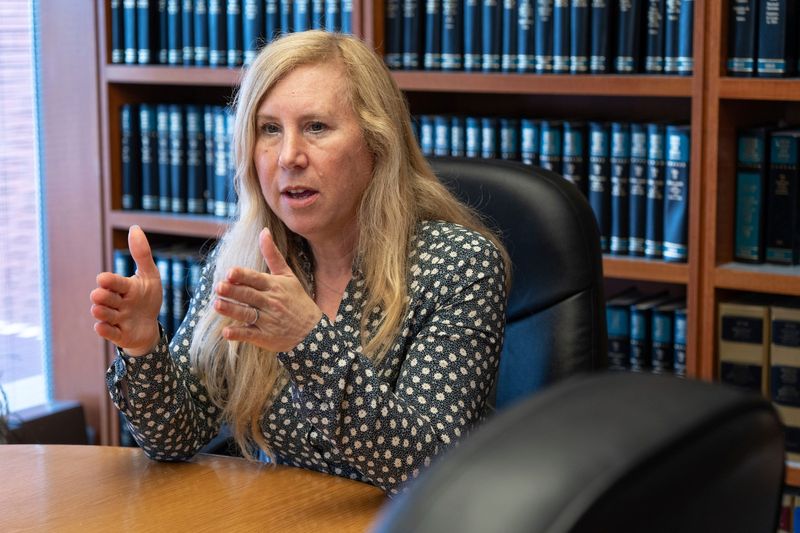
Washtenaw County probate and elder attorney Suzanne Fanning has worked alongside Sinks on court-appointed cases for more than a decade — often Sinks as guardian, Fanning as conservator.
“Stefanie will manage the person-side, the care, the coordinating the providers, placement, and I do the money and the legal side of things,” Fanning said. “So we dovetail.”
Sinks has testified as an expert witness in Washtenaw and Livingston county probate courts on capacity evaluations and care recommendations for older adults.
“That’s why so much of what I do is try to encourage people — while you’re able,” she said, “to get your documents in order so that you’re not having a ‘Stefanie’ come on board as your guardian.”
Most people call Sinks when they are already in a situation but the desire she said is to be proactive. “Pay now, save later,” Sinks said. “Let’s do the paperwork, let’s do the planning, let’s talk about what services and resources are available, let’s establish some trust and rapport now — before there’s a crisis.”
Full circle
One of Sinks’ longest-running clients first hired her to care for her dad and later herself.
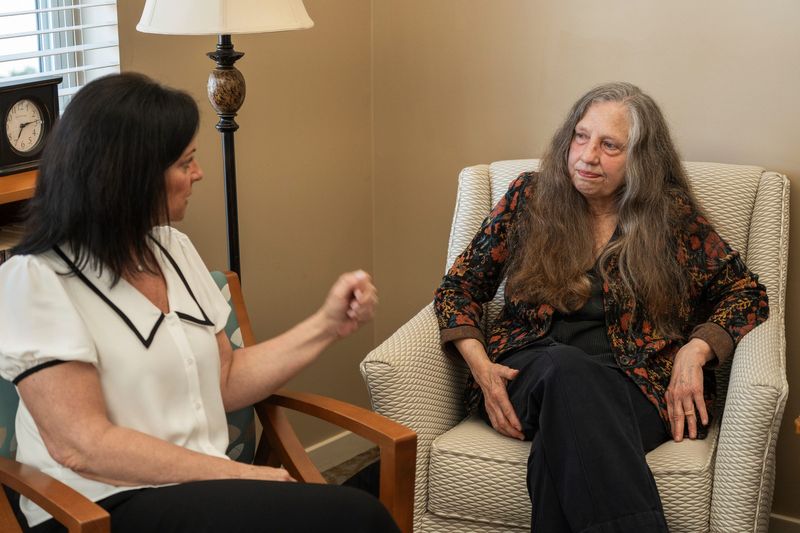
Christy still lives in her own home and like most older adults wants to stay there as long as possible. Her two adult children live out of state. (The Free Press is using her first name only because she does not want to be identified publicly as living alone for safety reasons.)
Sinks works with her to create a safer home to age in place like installing shower grab bars or fixing the uneven walkway outside her front door. She goes with her to the doctor, talks through her concerns and knows her wishes if there is a time she cannot speak for herself.
“(Christy) is focused on having her ducks in a row,” Sinks said. “In Christy’s case, more often than not, I am a sounding board.”
Sinks is Christy’s designated patient advocate and medical power of attorney.
The designation is something Sinks says she considers carefully on a case by case basis when she receives a request.
Knowing the role often gets activated in a crisis, when there’s a lack of capacity due to a stroke or accident, for example, Sinks said she is very mindful of her caseload.
“Desperation,” Christy said, is what led her to a geriatric care manager for her father. Her mother had just died, and her father was already showing signs of cognitive decline, she said.
Despite her background as a registered nurse, Christy, the only family member in town, couldn’t do it alone.
“I was feeling it was falling all to me, and I didn’t know what to do,” she said. “So I just started researching what to do and geriatric care management came up.”
Christy began working with Sinks when her father’s first geriatric care manager was set to retire.
Her father, a retired professor and musician, was “very smart, very independent and very resistant to any kind of help whatsoever,” she said.
Her father had moved from home to the hospital and assisted living and then back home with 24-hour care, and “somehow … he was OK with it.”
He was back in the familiar map he’d lived in for 60 years. “It really helped,” she said.
He even got back to playing his jazz trombone, Christy said, something he could not do in a facility.
She keeps a photo of her father, in his mid-90s, playing the trombone, at home on her dresser.
“It feels like that was such an accomplishment to be able to give him the peace and the fun still at that age after all he had been through,” Christy said.
MI Options offers free one-on-one counseling for older adults and people with disabilities on long-term care needs and Medicare assistance. Reach them at 800-803-7174.To locate an aging life professional visit the Aging Life Care Association website: aginglifecare.org
Kristi Tanner is a data reporter. Contact her at ktanner@freepress.com
This article originally appeared on Detroit Free Press: When the pills, appointments and decisions pile up, she organizes it
Reporting by Kristi Tanner, Detroit Free Press / Detroit Free Press
USA TODAY Network via Reuters Connect