Drivers may not know it quite yet, but the Internal Revenue Service put new, higher mileage rates into place effective July 1.
Thanks to some painful moments at the pump in the first half of 2026, the IRS took the unusual step of initiating a new standard mileage rate for the second half of the year. Gas prices soared for some time, fueling inflation, after the start of the Iran war in late February.

As of July 1, the IRS standard mileage rate will go up by 3.5 cents per mile to 76 cents for the optional mileage rate for automobiles driven for business, according to an IRS Bulletin issued July 13. The IRS did not put out a news release on the change in the mileage rate.
The new rates apply to mileage on or after July 1, 2026, and will be reflected on 2026 federal income tax returns filed next year.
Many drivers do not claim the mileage deduction on their federal income tax returns after changes in tax laws that eliminated unreimbursed employee business expenses. But some drivers do benefit.
Companies that reimburse their employees for mileage driven for business often follow the IRS mileage rate; the employee cannot claim a deduction if they’re reimbursed.
Another mileage rate, for use of a car, van, pickup or panel truck driven for qualifying medical reasons, goes up to 23.5 cents per mile. That change is up 3 cents from the rate for the first half of 2026.
The mileage rate moving purposes for certain active-duty members of the Armed Forces (and now certain members of the intelligence community) also went up July 1 to 23.5 cents per mile, up 3 cents a mile from earlier in 2026, according to the IRS bulletin.
It’s not typical for the IRS to shift gears and raise the mileage rates midyear, according to the National Association of Tax Professionals. We have to go back four years ago for the most recent change.
An extremely volatile year for gas prices in 2022 drove the IRS to increase some mileage rates for the second half of 2022 beginning in July. Before that, the last time the IRS made a midyear move was back in 2011.
In 2022, the IRS increased the business standard mileage rate from 58.5 cents for the first six months to 62.5 cents for the final six months of that year. The change was announced June 9, 2022, and applied beginning July 1, 2022.
Anyone who drives, though, knows that we’ve had an unusual year once again when it comes to gas prices.
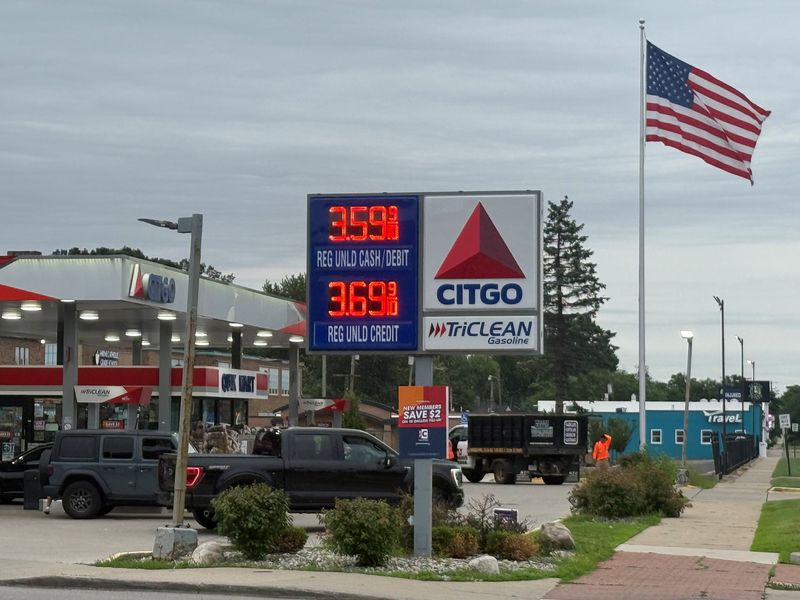
Michigan drivers are now paying an average of $3.95 per gallon for regular unleaded, based on a July 13 announcement by AAA Michigan. The price is 28 cents less than this time last month but it is still 67 cents a gallon higher than it was the same time a year ago.
As we started making plans for summer, of course, gas prices seemed far more troubling.
AAA noted in early May that Michigan drivers were paying an average of $4.87 per gallon for regular unleaded. The price was $1 more a gallon than the same time in early April and $1.65 more a gallon than the same time in 2025. The Michigan state average then was the highest since July 2022, according to AAA.
The price surge in Michigan in late April and early May was attributed to refinery issues, as well as the war in Iran. Petroleum experts said then that gasoline prices in the Midwest were going up even faster and above the national average because refineries in Illinois and Indiana were out of commission, pinching supplies.
Gas prices nationwide came down later in June, tumbling 9.7% month-over-month, according to the new information for the Consumer Price Index for All Urban Consumers, which was issued by the U.S. Bureau of Labor Statistics on Tuesday, July 14. Based on year-over-year data, gas prices in June remained up 26.7%.
Gas prices last month pulled back after hopeful signs of negotiations between United States and Iran over the Middle East conflict. But the situation in the Middle East has continued to be volatile, making it harder to know where gas prices are likely to be heading into the rest of 2026.
When it comes to the IRS mileage rates, self-employed individuals can claim business mileage on a tax return. Those filing 2026 returns next year will need to take into account both announced rates, the lower rate for the first half of the year and the higher rate beginning July 1.
The mileage rate used when driving in service of charitable organizations will remain at 14 cents in 2026. This rate is set by statute and will be unchanged.
The IRS had noted earlier that these rates apply to fully electric and hybrid automobiles, as well as gasoline and diesel-powered vehicles.
The annual mileage rate change for business use, which is announced in December for the upcoming year, is based on an annual study of the fixed and variable costs of operating an automobile. The rate for medical and moving purposes, meanwhile, is based on only the variable costs from the annual study.
Contact personal finance columnist Susan Tompor: stompor@freepress.com. Follow her on X @tompor.
This article originally appeared on Detroit Free Press: IRS boosts mileage rates for second half of 2026 for unusual reason
Reporting by Susan Tompor, Detroit Free Press / Detroit Free Press
USA TODAY Network via Reuters Connect

By Susan Tompor, Detroit Free Press | USA TODAY Network