The Michigan Department of Natural Resources is launching a shocking plan to count young walleyes in Michigan lakes.
Starting this month, and continuing until mid-October, DNR personnel will be conducting nighttime walleye surveys.

“These surveys are an important tool for fisheries managers to determine whether walleye that hatched in the spring (known as young-of-year) hatched in the wild or were stocked, as well as how many of those fish are present in an area,” the DNR said in a press release.
Information about the status of young walleye in lakes helps the DNR make informed management decisions, the departent said.
What to know about the electrofishing survey.
What is the DNR planning to do?
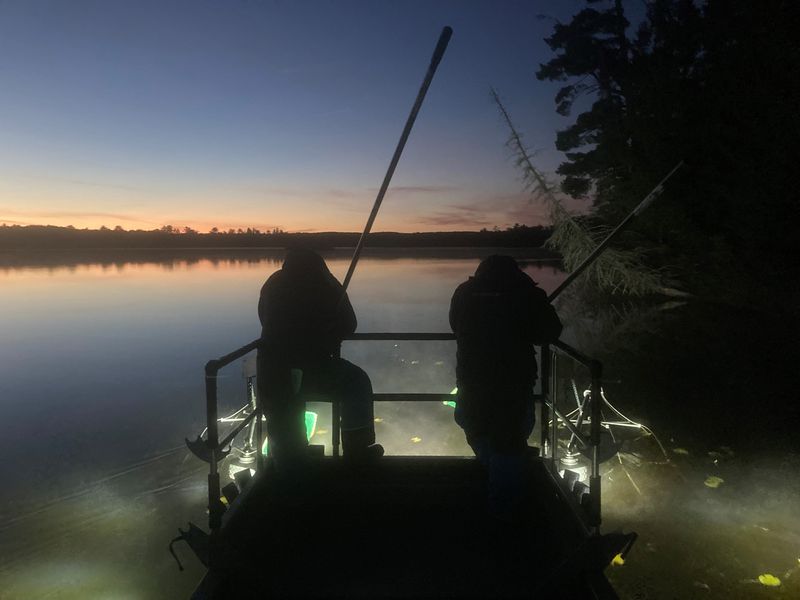
Crews in electrofishing boats will survey shallow areas near the shoreline of lakes at night with the goal of capturing young-of-year walleye.
“Walleye prefer cooler, deeper areas of lakes during the day but move into shallow, nearshore areas at night, making nighttime surveys more efficient,” the DNR said.
On larger lakes, two or more electrofishing crews using separate boats may operate at the same time to cover more area.
The DNR did not specify which lakes will see counting.
What is electrofishing?
Electrofishing is the application of an electric field into water in order to incapacitate fish, rendering them easier to catch, the Game & Wildlife Conservation Trust explained.
When biologists electrofish, a generator or battery gives off a current that runs through the water. Volts, amps, and frequency can be adjusted based on water temperature, conductivity, and other variables, the Virginia Department of Wildlife Resources said.
From a boat, anodes enter the water from a long boom off the bow. Electrical current travels from anode cables back to the cathode(s) — in many cases, the metal hull of the boat acts as the cathode. The electrical field typically expands 5 to 7 feet in circumference from each anode and down about 6 to 7 feet. The size of the electrical field can vary depending on conductivity, voltage, and frequency of electrical current.
Fish are temporarily stunned as the electrical current causes their muscles to contract. The fish then float towards the surface where they can be easily netted.
Different fish species react differently to the shock.
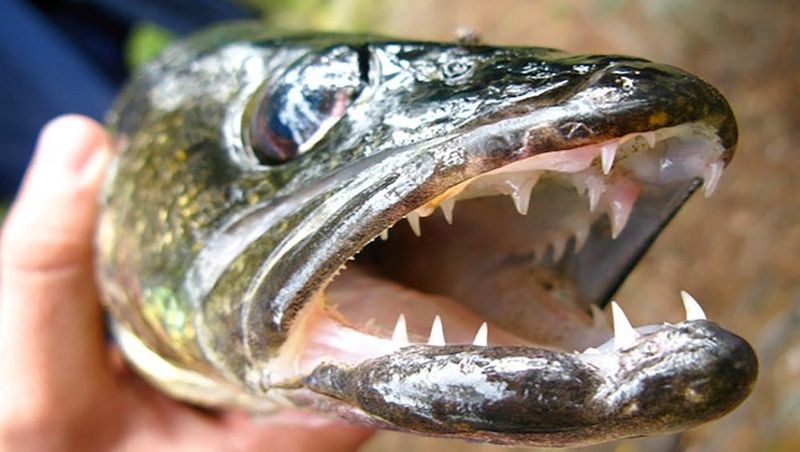
What type of fish is the DNR looking for?
The DNR will work both on lakes that have been stocked with walleye and lakes that have not.
Biologists plan to collect and keep a sample of young-of-year walleye from stocked lakes to determine whether the fish are primarily reproducing naturally or if young-of-year are from stocking.
“Many walleye that are stocked are marked with oxytetracycline, a chemical marker that can be observed within captured fish by using a microscope with an ultraviolet light source in a laboratory setting,” the release said.
In addition, genetic techniques that allow more accurate assessment of stocking success will be completed at Michigan State University on walleye tissue samples collected during some of these fall surveys.
Which agencies will take part in the walleye survey?
Some surveys will be conducted collaboratively with tribal agencies, and tribal natural resource departments also will be conducting surveys independently of the DNR.
In the Upper Peninsula, the U.S. Department of Agriculture’s Forest Service also be collaborating on surveys and conducting independent surveys in the Hiawatha National Forest as part of an effort to create long-term datasets for a number of inland lakes managed for walleye.
Is electrofishing dangerous?
The DNR said members of the public should use caution when fishing or when they are on the water near electrofishing boats.
Those wading will be asked to exit the water when a survey boat approaches and during electrofishing work.
“Crews will be using bright lights to illuminate the water around the boats and running generators on board, which may make it difficult to hear and speak with anyone on shore,” the DNR warned.
This article originally appeared on Lansing State Journal: How many juvenile walleye are there? DNR set to count in Michigan lakes
Reporting by Dan Basso, Lansing State Journal / Lansing State Journal
USA TODAY Network via Reuters Connect