Editor’s note: This story includes discussion of suicide. If you or someone you know needs help, the national suicide and crisis lifeline is available 24/7 by calling or texting 988. More information at 988lifeline.org.
This story was produced in collaboration with the Investigative Reporting Lab at Yale.

Around 11 p.m. on an evening in early November 2023, 34-year-old Ben Blostein walked through the door of his parents’ Royal Oak home in violation of a court order that deemed him a credible threat to his father’s safety.
He settled into a chair in the living room. His mother, Barb Oppewall, was asleep upstairs. His father, Joel Blostein, was standing anxiously in front of him.
Ben had struggled with mental illness and drug addiction his entire adult life. But over the course of 2023, his parents say, Ben became increasingly manic, paranoid, hostile, and suicidal.
“We really need to talk,” Ben said.
Joel had not seen his son in nearly seven months. If he called the police, Ben would be arrested. His mind buzzed. He remembers thinking: Is Ben in trouble? Is he here to ask for help? Is he here to hurt me?
Joel wanted to say: “Ben, are you hungry?” He wanted to say: “You must be exhausted. Just go up to your bed and sleep.”
“I’m not sure now’s the right time to talk,” Joel said. Ben walked out. It was one of the last times Joel would see his son.
After more than a decade trying and failing to keep their son sober and stable, Barb and Joel turned to Oakland County’s criminal-legal system for help. It’s a decision they now regret.
Court-ordered psychiatric treatment triggered a police search that led to felony drug and gun charges. Ben grew angry and isolated. He broke into the family home, assaulted Joel, and was arrested.
In the Oakland County Jail, Ben was held in high-maximum security — what experts characterized as solitary confinement, though the county disputes that label. Over 48 days, Ben was recorded as leaving his one-man cell just 10 times to walk and shower. He complained constantly of hunger. After three weeks, he was cut off from using the jail’s messaging and phone system. After six weeks, he had his first appointment with the jail’s psychiatric care provider, a 26-minute virtual visit.
Despite a recent bipolar diagnosis and suicidal statements to police, the jail did not consider him a suicide risk.
On March 1, 2024, after seven weeks of detention, Ben Blostein died by suicide in the Oakland County Jail.
Since Ben’s death, Barb and Joel have embarked on a mission to improve how Michigan’s second-largest county responds to mental health crises and to rectify what they see as unacceptable jail conditions and inadequate procedures for identifying and protecting mentally ill detainees. Along the way, they have obtained internal jail documents, campaigned to end solitary confinement, and filed a lawsuit against Oakland County and jail staff.
“My feeling was that this was a completely pointless and preventable death,” Barb told the Free Press. “And to me, the only way to give it meaning was to fight back, to try and change the system.”
From October 2019 through September 2023, at least 30 people in Michigan died by suicide while held in jail, according to data from the U.S. Department of Justice. (The Marshall Project, which also reported on this dataset, has found that the DOJ’s data undercounts deaths.) Five of those suicides occurred in the Oakland County Jail.
The Free Press, in collaboration with the Investigative Reporting Lab at Yale, obtained and reviewed hundreds of pages of records to investigate one individual’s journey through the mental health systems operated by Oakland County’s cops, courts, and jail.
Officials with Oakland County Sheriff Michael Bouchard’s office, which operates the jail, declined the Free Press’ request for an interview and did not respond to questions about jail policy, including how the jail identifies and cares for mentally ill detainees.
In a statement, Steven Potter, an attorney representing the county and jail staff in the family’s lawsuit, wrote that despite multiple evaluations, “at no time did medical personnel determine that Mr. Blostein presented a suicide risk.” Potter noted that ongoing litigation prevented a substantive response to what he categorized as “significant concerns regarding the accuracy and completeness of the allegations in your report.”
The county and jail staff are fighting the family’s lawsuit and have denied wrongdoing.
More than two years after Ben’s death, Barb and Joel are still trying to understand what happened. As parents, they have questions about the final days and months of their son’s life. And as community members trying to prevent another tragedy, they’re asking another set of questions: How did a mental health crisis become a death alone in a jail cell? And why don’t Oakland County leaders seem to care?
Seeking help for their son
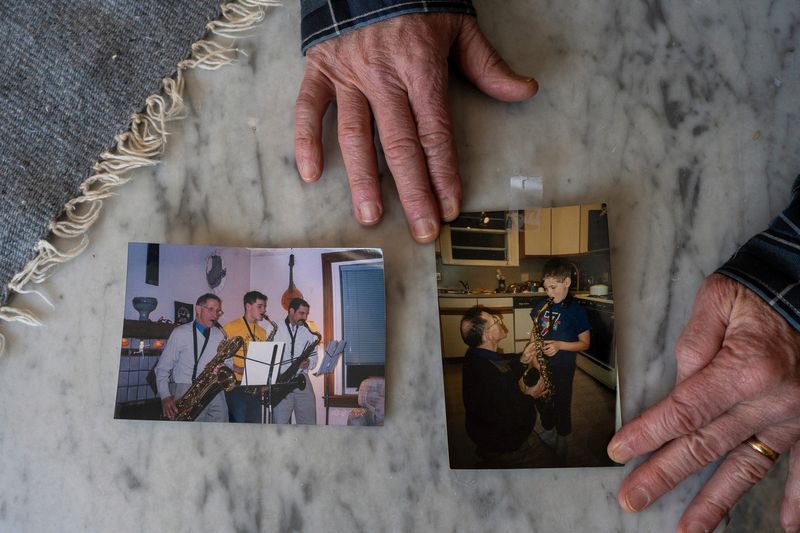
On an evening last spring, Joel Blostein pulled out a cassette player, set it on the dining room table, and inserted a tape dated 1999.
“I don’t know if I’m strong enough to listen to this,” Joel said. “But the point is … Ben was a kid, too.” He pressed play, and the sheepish, breathy voice of his son, not quite 10 years old, filled the house.
“Hi, Grandma and Grandpa. It’s me, Ben. I was just calling you, Sunday night, to tell you that… we got a dog! A golden retriever. It’s really cute. And if you get home tonight, you could come over. Umm. Bye.”
The tape clicked off. “It’s funny to hear his voice,” Joel said.
When Ben was 19, Joel found him passed out in the attic with a heroin needle in his arm. His parents hadn’t known he was using. Over the past few years, the outgoing kid who had joined just about every school club and sport had grown into a young man who was argumentative, disengaged, and moody. The transformation was the first sign of what Barb and Joel began to see as an undiagnosed mental illness.
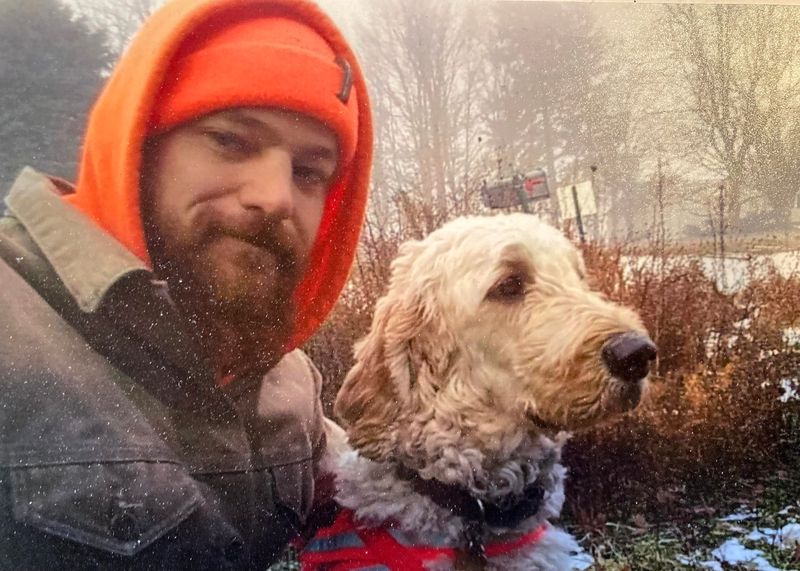
After the overdose, Ben went to drug treatment. In the years that followed, he went to treatmenta few more times, and sometimes he even stayed clean for a while. He worked a series of blue-collar jobs and dated a series of girlfriends. He helped Barb tile the staircase and helped Joel build the deck. He was charged with domestic violence; that charge was dismissed as part of a plea agreement,, but he was sentenced to three months detention in the Oakland County Jail for a bond violation. He rebuffed Barb and Joel’s repeated attempts to get him mental health care. He dove into a river to save a stranger from drowning. He raised and loved a golden doodle named Jackson. He bought a truck. (“Its the most amazing perfect awesome beautiful amazing thing in the world,” he texted his sister Freida, “Besides Jackson.”) He tried his best to live what was — for reasons Barb and Joel could never quite identify — a rocky, difficult life.
In March 2023, Ben was living with his parents in Royal Oak. He had shaved his head and grown out a shaggy red beard. He was almost 34.
Recently, he had grown angry and erratic. The sudden shift frightened Barb and Joel, who didn’t know if it was a new mental health issue, a new drug habit, or both. They told Ben they thought he needed treatment, but Ben refused.
Ben had a collection of guns, which he used for hunting. He had been a careful gun-owner, but now Barb and Joel worried that their son, in some sort of psychotic break, might hurt himself or others.
While both Ben and Barb were out of town, Joel hid Ben’s guns in a storage unit. When Ben returned, a week of escalating arguments revealed just how seriously he was struggling.
At the end of a particularly hard day, Joel stood outside Ben’s room, and begged his son, again, to seek help. Ben opened the door and pointed a handgun at Joel.
“I just went to the bedroom and locked the doors,” Joel remembered. “And I didn’t sleep all night.”
The next morning, exhausted and unsure what else to do, Joel went to the Royal Oak Police Department to ask for help. An officer, Joel says, suggested he file a Petition for Mental Health Treatment in probate court, which, alongside an Order for Examination/Transport, would empower police to take Ben into “protective custody” and deliver him to a psychiatrist for evaluation. If deemed necessary, Ben would enter inpatient treatment.
Barb and Joel weren’t familiar with this process for pursuing court-ordered care under Michigan’s Mental Health Code. They worried about engaging the police, especially given Ben’s prior criminal record and current unpredictability. But they felt that Ben was dangerously unwell. Joel, scared of his son’s erratic behavior, had been sleeping in a motel.
Barb and Joel didn’t know what else they could do.
Court-ordered evaluation ends in felony charges
Joel filed the petition and got a judge’s signature on the accompanying transport order. He delivered the order to Royal Oak police, who, Joel says, told him to locate Ben and call them.
Joel had sought police assistance because he couldn’t handle Ben’s crisis alone. Now he found himself staking out his own home from his neighbor’s window.
Police pulled Ben over on his way to work the next morning. Records obtained by the Free Press show that dispatch warned officers that Ben would be “aggressive” and potentially armed. As they approached Ben’s truck at least one officer drew his gun.
Ben was taken into custody without incident and delivered to the county’s Resource and Crisis Center, police records show. He was transferred to an inpatient-care facility, where he was diagnosed with bipolar disorder, according to medical records provided by Barb and Joel. The couple was not made aware of the diagnosis until after his death.
Barb and Joel had assumed Ben would enter long-term care. But just five days later, a social worker at the inpatient facility called Joel to inform him that Ben was set to be discharged the following morning.
The social worker recommended that Joel take out a Personal Protection Order prohibiting Ben from contacting Joel or entering their family home, according to inpatient records. The records, provided by Barb and Joel, indicate that Ben’s mood had stabilized prior to discharge.
Court records obtained by the Free Press indicate that Ben was discharged under a voluntary agreement to pursue medication and outpatient therapy. Under such an agreement, known as a deferral, the subject of court-ordered treatment is first given the opportunity to seek care voluntarily. If they fail to follow their treatment plan, a series of court processes can be used to bring them into compliance.
Barb and Joel had hoped the treatment petition would set Ben on the path to recovery. Instead, they discovered, the petition was just one part of a complicated process with no guaranteed outcomes.
Elements of the Michigan Mental Health Code can help families secure court-ordered long-term care, explained Jenny Kimmel, an expert at the Center for Behavioral Health and Justice at Wayne State University. But, Kimmel said, “it’s not a linear process.”
The treatment petition had also created a new problem.
When police executed the transport order, records show, they searched Ben and his truck and found methamphetamine, hallucinogens, and a registered but improperly stored handgun.
According to the Michigan Mental Health Code, officers can conduct a “pat-down search” while taking someone into protective custody, “but only to the extent necessary to discover and seize a dangerous weapon.”
Police records show that Ben “advised Officers that he had a pistol in the vehicle.” A representative for the Royal Oak Police Department declined a request for comment.
As a result of the search, police opened a criminal investigation. About eight months later, the Oakland County Prosecutor’s Office would bring felony charges against Ben for drug possession and concealed carry of weapon.
According to both Kimmel and Milton Mack, former chief judge of the Wayne County Probate Court, the state’s mental health code does not limit how transport orders can result in criminal charges, but it is rare that such charges occur.
A representative for the Oakland County Prosecutor’s Office did not respond to questions about the decision to bring charges based on evidence collected while serving a transport order.
Barb and Joel had gone to Royal Oak police for help getting their son into treatment. Instead, Ben was facing the possibility of years in prison.
The crisis spirals
After being discharged from inpatient care in late March, Ben moved out of the house. Joel took out a protection order against Ben and changed the locks.
In the months that followed, Barb and Joel say, Ben sent texts and emails accusing his parents of conspiring to fake his diagnosis and control his life. He threatened to hurt Joel and hurt himself. It was clear to them that Ben had stopped getting treatment, but Barb and Joel were scared that reengaging the court system would make things even worse.
In mid-November, Ben was arrested on drug and gun charges stemming from the transport order. He posted the $500 bond the same day, police records show.
As fall turned to winter, Barb tried to break through to her son.
“We miss you and worry about you all the time,” Barb wrote in one late-December email. Ben sent back an angry tirade. A week later, he called Barb and told her he had a handgun in his mouth.
On a rainy afternoon in early January, police records state, Ben broke into his parents’ house through a sliding door in the kitchen.
The couple say it all happened in a matter of seconds. Barb, in the family room, called 911. Joel, in the dining room, turned to face his screaming son.
Ben lunged at Joel, grabbed him, and tried to put him in a headlock.
Barb picked up a glass water pitcher. She was terrified of hurting Ben. She was terrified of Ben hurting Joel. She crossed the dining room, lifted the pitcher above Ben’s head, and swung down hard.
Water and glass exploded across the room. Both men fell to the ground. Joel tasted blood on his lip. He saw a hunting knife on the floor beside him. Ben staggered to his feet and stumbled out the door. He made it two blocks before the police arrived.
In nearby bushes, records state, officers recovered a backpack containing a credit card in Ben’s name, along with ammunition, a pistol without a serial number, and a device to convert the pistol into a fully-automatic weapon.
Classified for what experts call solitary confinement
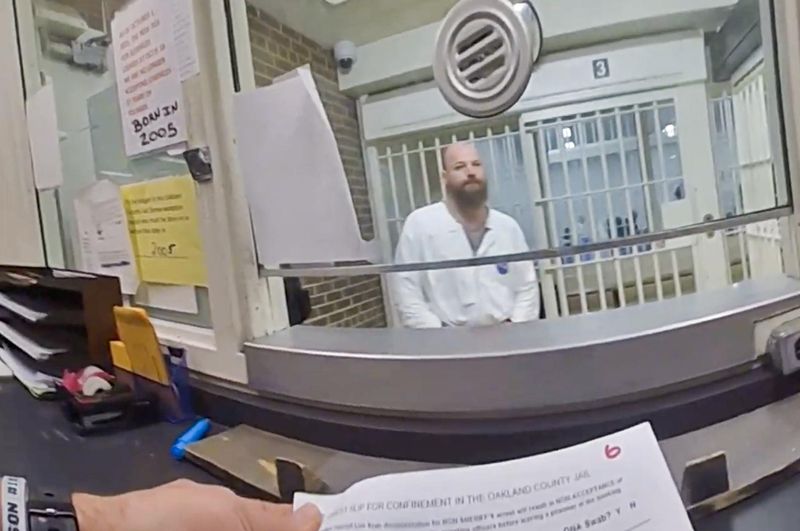
On Jan. 12, 2024, Ben was booked into the Oakland County Jail. He had been charged with home invasion, domestic violence, and concealed carry of a weapon, on top of his outstanding drug and gun charges. His bond was set at $1 million.
Ben was classified for detention in the jail’s highest security level, “MX1” — what experts described to the Free Press as solitary confinement.
According to jail records, Ben was classified as MX1 for “removing and hiding a piece of metal while in the interview room of Royal Oak PD.” Police records obtained by the Free Press show that officers confiscated the metal and that Ben told the officers he had intended to use the metal to hurt himself.
Ben’s cell, B-305, was about 5 feet wide and 8 feet long. On the left wall was a towel hook, a low shelf for toilet paper, and a high shelf where Ben kept socks and deodorant. On the back wall was a small mirror and a metal box that served as both sink and toilet. On the right wall was a bed — a floating metal slab with a plasticky seafoam-green mattress — and two small shelves where Ben ate meals, stored books, wrote letters, reviewed court documents, drew, and solved crosswords. From behind the metal bars of the front wall, Ben could not see the faces of the men held just a few feet to his right and left.
Due to his MX1 classification, Ben was prohibited from attending group programs like Alcoholics Anonymous, according to records provided by Barb and Joel. A copy of the jail’s classification procedures states that MX1 detainees are barred from commissary, visitation, and television.
Ben was held in MX1 for 48 days. Over that time, he was recorded as leaving his cell just 10 times to walk, shower, and “tx,” according to jail records obtained by the Free Press, which did not define “tx.” (On one occasion, Ben is marked as refusing an offered walk. On another, after Ben lied to get an extra breakfast serving, jail records state that his walk was “cancelled for today due to his behavior.”)
A representative for the sheriff’s office did not respond to questions about how out-of-cell time is recorded or whether Ben received additional recreation time.
The United Nations’ Nelson Mandela Rules, which outline minimum standards for the humane treatment of prisoners, define solitary confinement as an environment that restricts people to two or fewer hours of meaningful human contact per day.
The guidelines prohibit the use of solitary confinement for people with mental disabilities and limit the detention of any person in solitary confinement to no more than 15 consecutive days.
Psychology experts overwhelmingly agree that solitary confinement causes lasting psychological harm and increases the risk of suicide, especially in people who already suffer from serious mental illness.
In a court filing, Potter, the lawyer representing the county and jail staff, argued that “Blostein’s cell location was not solitary confinement (no contact); it was a single man cell, where he could listen and talk with other cell mates housed in B-3.”
Five national experts who reviewed the conditions of Ben’s incarceration told the Free Press they disagreed with that assessment.
“There are very few solitary confinement units anywhere in the world where prisoners are not able to call out to one another in nearby cells. This kind of strained communication hardly constitutes ‘meaningful human contact,’ ” wrote Craig Haney, a psychology professor at University of California Santa Cruz and nationally recognized expert on the psychological effects of solitary confinement.
David Fathi, director of the American Civil Liberties Union’s National Prison Project told the Free Press that the apparent restrictions on face-to-face socialization and the extremely limited time reported out of cell amounted to conditions “among the harshest and most isolating I have ever heard of in a U.S. prison or jail.”
Those conditions, Fathi said, “are solitary confinement under any recognized definition of the term, and they are conditions that no reputable corrections professional would accept.”
‘Unconscionable’
As he waited for trial, Ben struggled to adapt to life in MX1.
He complained frequently about the quality and size of the meals. His constant hunger appears in verbal and digital grievances documented in jail records, in messages to family and friends, and in writing on the walls of his cell.
“The average meal size here is, by design, starvation rations,” Ben wrote in a letter to a friend provided to the Free Press by Barb and Joel. “I say by design, because it is. Aramark — the evil corporation which is contracted by the county to handle … feeding inmates in OCJ, also holds the contract for fulfilling the comiserry [sic] orders; they have a vested interest in starving inmates — on the one hand, it keeps their costs down by feeding us less, and on the other it drives up their profits — hungry inmates order more commisary [sic].”
Oakland County contracts with Aramark Correctional Services LLC to provide meals and to operate a retail commissary where detainees can purchase additional items. County records obtained by the Free Press show that in 2024, Oakland County paid Aramark over $1.8 million for meal service, at an average cost of $1.34 per meal.
When detainees purchase additional food or personal items from the commissary, Aramark pays Oakland County a commission ranging from 35%-50.5%. In 2024, detainees spent nearly $3 million on commissary items, according to a Free Press calculation based on county financial records. Of that total, Aramark took home nearly $1.6 million and paid Oakland County a commission of over $1.3 million.
In December 2025, people incarcerated at a West Virginia prison sued Aramark, alleging that the company serves inadequate meals in order to coerce purchases from the Aramark-run commissary. Aramark has filed a motion to dismiss the suit, arguing that the allegations “hardly establish a deprivation of ‘basic needs’ so profound that Plaintiffs were forced to purchase food against their will.”
The Michigan Department of Corrections terminated its own contract with Aramark in 2015, after confirming reports of food shortages, maggots, and misconduct by Aramark employees. MDOC cited contractual disagreements as the reason for the early conclusion of the contract, which both parties described as a mutual decision.
In response to questions about their service at the Oakland County Jail, a representative for Aramark wrote “Our menus are designed with our partner institutions. … All menus follow local, state, and federal requirements as well as American Correctional Association (ACA) dietary guidelines.”
On Feb. 2, after 20 days in MX1, the jail revoked Ben’s access to its electronic messaging and phone system, according to records obtained by the Free Press, for “multiple violations of no contact order/contacting victim.” In other words, for exchanging messages with his mother.
After Ben’s arrest, a judge had forbidden him from contacting not just Joel, but Barb as well. Barb says she was not informed of the court order.
The last electronic message Ben was able to send, according to records provided by Barb and Joel, was to Barb.
“You have been over all [sic] decent parents,” Ben wrote. “You f–ked up royally at times but hey so have I … Love you, Ben.”
Over the course of February, Ben attempted to reestablish privileges through repeated digital requests to jail staff, which were provided to the Free Press by Barb and Joel. He was eventually referred to a sergeant, to whom he sent an apologetic paragraph asking how he could regain access to the outside world. Ten days later, the sergeant sent a one-sentence reply: “Privileges are suspended for violations of court order.”
A representative for the sheriff’s office did not respond to a question about how long detainees can be prohibited from using the communication system.
On a notepad in his cell, Ben imagined himself bringing “certain facts to the attention of the court.” He described constant hunger, revoked communication privileges, social isolation, and “lock-down” inside a cramped cell where “[I] have not seen the sun & have been under fluorescent lights for over 30 days.”
“The conditions I am currently subject to are unwarranted, unneccessary, [sic] unconscionable,” Ben wrote.
Not considered a suicide risk
In a statement to the Free Press, Potter, the lawyer representing the county, wrote that “multiple independent mental-health evaluations” determined Ben was not at risk of suicide. In court, Potter submitted jail records showing that Ben verbally denied suicidal ideation in five instances.
During evaluations, Ben was not always honest about his mental health.
An “Intake Medical Questions” form provided to the Free Press by Barb and Joel shows that Ben reported having been diagnosed with anxiety but answered “no” when asked whether he had previously been hospitalized for mental illness.
Probate records from Ben’s court-ordered hospitalization are publically available, including two clinical certificates completed by licensed psychiatrists recommending treatment.
The day after intake, Jan. 13, Ben was evaluated by a caseworker at the request of the jail’s classification department “for clearance for single cell in MX1,” according to records submitted by the county. On the evaluation form and in an accompanying referral for psychiatric assessment, the caseworker wrote that Ben denied present or past suicidal ideation. On the referral form, under “Problems/Psychiatric History,” the caseworker wrote “anxiety.”
The Oakland County Jail’s suicide prevention policy requires that a caseworker screen for suicide risk before a detainee is placed in segregated housing and notes “the strong association between inmate suicide and placement in isolation.” A representative for the sheriff’s office did not respond to a question asking whether MX1 is considered isolation housing.
About six hours after the caseworker evaluation, Ben was moved to MX1.
Just days prior, a Royal Oak police report had repeatedly documented Ben’s suicidal ideation. According to a copy obtained by the Free Press, the report stated that Ben told officers he had intended to use the confiscated piece of metal to hurt himself. Just before that incident, the report shows, Ben begged a Royal Oak detective to “just put a bullet in me.”
Those statements did not appear in any of the jail or medical evaluation records obtained by the Free Press. In a court filing, Potter, the county’s lawyer, wrote “there is no evidence that Blostein’s statements to Royal Oak PD regarding potential self-harm were ever communicated to Defendants.”
A representative for the sheriff’s office did not respond to questions about the jail’s ability to seek information from local courts and police when evaluating the mental health of detainees.
Under the jail’s suicide prevention policy, according to a copy obtained by the Free Press, a person who is found to be a suicide risk would be kept under close supervision — either in 15-minute intervals or under constant watch — and would interact with a caseworker daily. Detainees who are not under an active watch are monitored every 60 minutes, according to a copy of the jail’s surveillance policy.
On Feb. 4, after 22 days in MX1, Ben sent a digital request to a jail caseworker for an adjustment to his prescribed anxiety medications, according to records provided to the Free Press by Barb and Joel.
“I have been having debilitating anxiety and depression,” he wrote, “suffering from insomnia and need to change my meds because they are not working.”
The caseworker responded the next day, informing Ben that his psychiatric referral submitted upon intake, which was for anxiety, was still pending. “It is taking 6 weeks to see the psychiatrist,” the caseworker wrote.
At the time, psychiatric evaluation was conducted by the nonprofit organization Easterseals MORC. A representative for Easterseals declined to comment on the specifics of Ben’s case, citing HIPAA privacy laws, and confirmed that Easterseals no longer provides psychiatric evaluation at the jail.
In a statement, the representative wrote that if Easterseals received a referral that “indicated an acute issue, such as suicide ideation, appointments were expedited to the soonest available time,” typically “within 24 – 48 hours.”
On Feb. 23, after 41 days in MX1, Ben received an initial evaluation from a psychiatric mental health nurse practitioner employed by Easterseals, according to records submitted by the county. The evaluation was conducted via video call and lasted 26 minutes.
The nurse practitioner identified possible signs of delusional thinking, which she intended to investigate the next time she was able to see Ben. She increased his dosage of anxiety medication and prescribed a medication for insomnia. The evaluation was submitted with suicidal ideations marked as “NO.”
On Feb. 27, after 45 days in MX1, Ben was examined by a psychologist at the Center for Forensic Psychiatry, according to records submitted by the county. The examination was part of a pretrial legal process to determine Ben’s mental competency. (It’s unclear whether the psychologist made a final determination.)
“I don’t even care anymore. My life is over,” Ben told the psychologist, according to the evaluation form. “I’m in constant pain, existential, physical, emotional pain.”
The evaluation stated that Ben “denied suicidal thoughts.”
Forty-eighth day in MX1
On the afternoon of Friday, March 1, 2024, according to jail records obtained by the Free Press, a sheriff’s deputy entered B-3 to collect meal trays. In cell B-305, the deputy “observed Inmate Blostein hanging from a manufactured rope made from an inmate bedsheet.” Ben was unresponsive.
Deputies rushed in and began CPR. Medics arrived soon after. Resuscitation efforts continued for 45 minutes and then ceased.
In the four years before Ben’s death, at least five other men died by suicide in the Oakland County Jail, according to data collected by the U.S. Department of Justice. Four of those men died by hanging.
‘Fundamentally wrong’
On the evening of Ben’s death, two sheriff’s deputies knocked on Barb and Joel’s door. Two days after Ben’s death, a deputy returned to deliver Ben’s belongings in a clear garbage bag. Four days after Ben’s death, Barb and Joel began receiving messages from other detainees, passed along by a friend of Ben’s.
Two men held in nearby cells wrote that shortly before his death, Ben yelled that he was “checking out” and began banging his meal tray on the bars of his cell. One man wrote that Ben said his meal contained mouse excrement and that he was “done with this s–t.” The other wrote that Ben said he was going to hang himself. Both men wrote that they and other detainees began banging their own trays on the bars.
(The two men, along with two others held in B-3, have now signed affidavits testifying that banging on cell walls was an established method for signaling an emergency. Three men testified that the banging continued for 20-30 minutes.)
“If they would have responded like they were supposed to,” one of the detainees who had called for help wrote in a message, “Ben would still be here.”
That’s when Barb and Joel started their own investigation, seeking to understand not just their son’s death, but the system that enabled it.
Barb and Joel filed Freedom of Information Act requests to demand jail records, lobbied county and state decision-makers, and joined an anti-solitary-confinement campaign. (“They’re on a mission,” said Lois Pullano, executive director of Citizens for Prison Reform.)
The couple believe that Oakland County’s criminal-legal system — especially its jail — fails mentally ill people. Worse, they say, there’s no indication that their elected officials seem to care enough to change anything.
In October 2024, Barb, as the representative for Ben’s estate, filed suit against Oakland County and jail staff. The lawsuit, which is set for trial this fall, alleges that the conditions of Ben’s incarceration violated his rights and led to his death. The lawsuit also alleges that deputies ignored detainees’ calls for help in the final minutes of Ben’s life.
In a deposition, the sheriff’s deputy who discovered Ben’s body testified to hearing banging for only five minutes. He said that detainees bang on cell walls in both emergency and nonemergency situations and that he assumed the noise was a complaint about the food.
In a case filing, Potter, the county’s lawyer, argued that the jail’s suicide prevention policy “sets forth numerous training and procedure requirements,” including screening upon intake and training for deputies to monitor “at all times” for suicide risk.
The jail, Potter wrote, “adhered to the numerous preventative measures it had in place to prevent inmate suicides. Unfortunately, Blostein still managed to kill himself.”
In depositions, two sheriff’s deputies testified that they were unaware of any changes to jail policies and procedures following Ben’s death.
A representative for the sheriff’s office did not respond to questions about whether the jail has implemented new suicide prevention or mental health care procedures since Ben’s death.
“The system that we have lacks transparency and accountability and justice and honesty and an effort to improve,” Barb told the Free Press. “It’s just fundamentally wrong.”
‘Plenty of guilt to go around’
A few weeks after the first anniversary of Ben’s death, Barb and Joel sat around their dining room table, wandering through details of his life. In the corner, the floorboards were stained with black rubber marks left by Ben’s boots the day he assaulted Joel.
“It just all snowballed,” Joel said. “I just feel really guilty about some of this s–t.”
“Well, you should,” Barb replied. “There’s plenty of guilt to go around. That’s my thinking. There’s so much guilt. There’s plenty to share. Don’t hog it all. Give me some.”
She reached across the table and gathered up some of Joel’s invisible regrets.
“There is a big part of self-blame,” Barb said. “Blame between us — you know, you did that, I did this. The legal case is telling you to blame the jail. Blame the failed criminal justice system. Blame the failed mental health system.”
“Looking at the year before his death, how many … off-ramps were there? Why did none of those work?” Barb asked. “I think that’s why I say there’s plenty of blame. We can all take a piece.”
Etai Smotrich-Barr is a fellow at the Investigative Reporting Lab at Yale focused on criminal justice and government accountability. Contact him at smotrichbarr@gmail.com.
This article originally appeared on Detroit Free Press: How did a mental health crisis become a suicide in the Oakland County Jail?
Reporting by Etai Smotrich-Barr, Special to the Detroit Free Press / Detroit Free Press
USA TODAY Network via Reuters Connect



By Etai Smotrich-Barr, Special to the Detroit Free Press | USA TODAY Network