Detroit — Here in this Democratic stronghold, many elected officials prefer not to use the word “progressive” to describe their approach.
But in a city known to lean left, it’s leaning even more to the left politically these days with its first new mayor in more than 12 years and a city council with two Democratic socialists on board.

Taking over for former Mayor Mike Duggan, who labeled himself as an independent during his failed run for governor, Mayor Mary Sheffield has debuted policies that she contends will combat the root causes of poverty in Michigan’s most populous city.
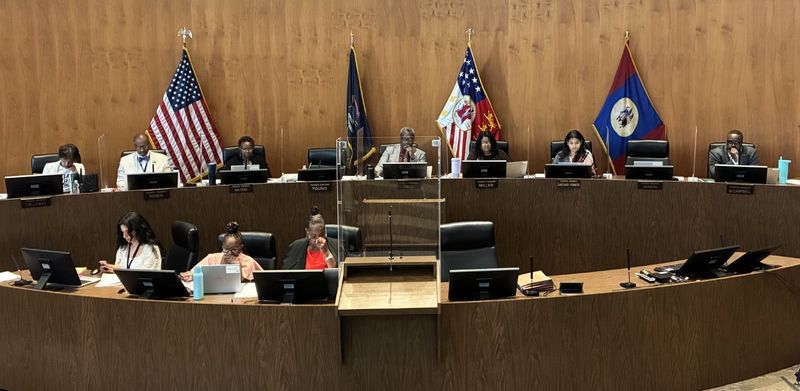
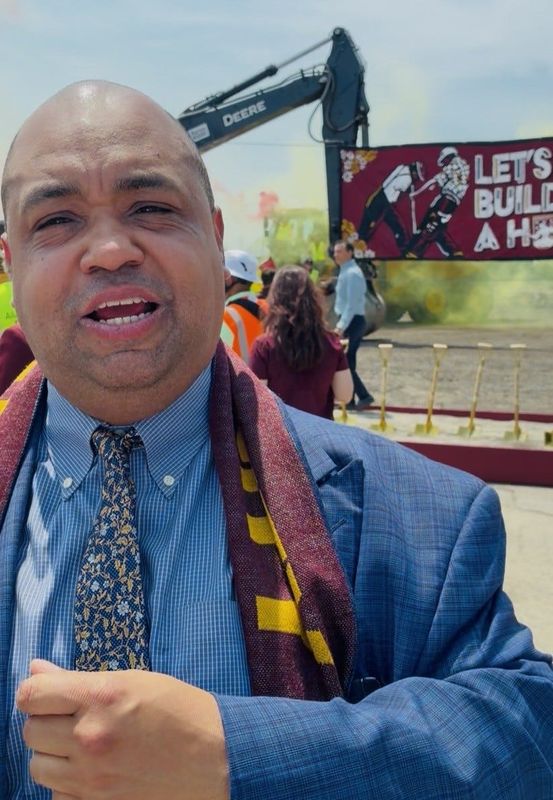
The Detroit City Council, meanwhile, which includes two new members, including Democratic socialist Denzel McCampbell, has prioritized issues such as affordable housing, cracking down on negligent landlords and reining in Immigration and Customs Enforcement.
Still, “Detroiters don’t care about labels. They care about results,” said Sheffield’s spokesman John Roach, adding that labels “usually mean different things to different people.”
Since taking office, Sheffield, the former Detroit City Council president, has overhauled city departments in an effort to expand the social safety net and hired left-leaning policy advisors and academics to lead key agencies and initiatives, addressing everything from public health to homelessness to home repair.
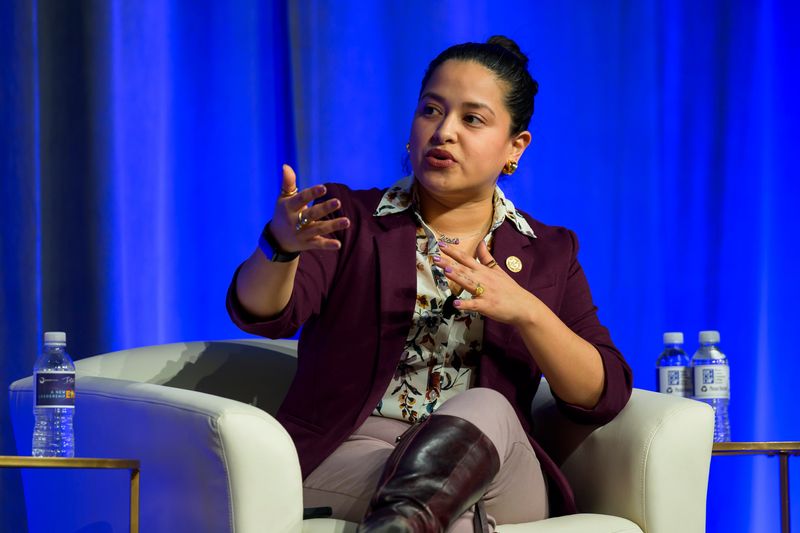
Sheffield’s agenda, along with having two Democratic socialists on council, McCampbell and Councilwoman Gabriela Santiago-Romero, reflects a city that has shifted to the left since the November election, some analysts and residents said.
Earlier this summer, McCampbell and Santiago-Romero sent a letter to the U.S. Department of Homeland Security, demanding that ICE agents and other immigration officials stop dangerous car chases in city neighborhoods.
McCampbell has also asked the council’s legal policy division to explore whether the city “has a viable civil claim” against ICE for the car chases. He also requested that the legal division edit the language of a potential resolution “in opposition to the Trump Administration’s interference in Detroit’s elections,” according to the document.
Most Detroit City Council members declined to comment on whether the council is leaning more left than previous councils, but Santiago-Romero, now serving her second term, said there is often “alignment between Council and the Mayor” on policy.
“I think the reality is that we are seeing people in office . . . that want to help their neighbor,” Santiago-Romero said in an email. “They believe that everyone deserves affordable housing, access to quality healthcare, reliable public transportation, places to gather and recreate, and good-paying jobs.”
Sheffield’s priorities
Sheffield, who served three terms on council, succeeded Duggan, a popular mayor who served 12 years in office. He is widely credited for helping to revitalize downtown, stabilize city services, boost home values and, for the first time in decades, preside over a small population increase. Sheffield has vowed to continue to improve neighborhoods, among other issues.
“I was not elected to maintain the status quo,” Sheffield said recently during her half-hour speech at the high-profile Mackinac Policy Conference. “Poverty elimination is one of the most powerful economic development tools in our toolbox.”
Since taking office in January, Sheffield has overhauled the city’s social services department; expanded a nonprofit program into Detroit that gives cash to every new and expectant mother; leaned into community violence intervention efforts to fight crime; instilled a new compliance program for senior citizen housing facilities; and beefed up efforts for mental health outreach, among other measures.
She’s also signed executive orders to create a “livable wage” for city of Detroit full-time employees and to double the funding for affordable housing efforts. She created a $9 million program to fix a backlog of 6,300 broken sidewalks in neighborhoods.
Sheffield describes her approach “as more indicative of a representative democracy,” according to spokesman Roach.
Scott Holiday, executive director of Detroit Action, a nonprofit that describes itself as “a union for Black and Brown Michiganders to build power and defend our communities,” believes Sheffield’s priorities, along with the council’s, are in line with what most Detroiters want.”
“Detroit has always been a progressive city, but because of the financial situation, the bankruptcy, it’s understandable that we had to have a bit more a conservative approach to deal with that,” he said.
While the mayor and council races are officially non-partisan, Detroit’s last Republican mayor was Louis Miriani, who was defeated by Democrat Jerome Cavanaugh in 1961. The last known Republican elected to a citywide office was the Rev. Keith Butler, who served on the City Council from 1990-1994.
Detroit has a long history of progressives in office, said Adolph Mongo, political consultant and commentator.
“We got to go back to Coleman Young, Maryann Mahaffey, Mel Ravitz,” Mongo said. Young was the first Black mayor of Detroit. Mahaffey, a Democratic socialist, served on City Council for more than three decades and Ravitz, an academic who helped form Wayne State University’s Dept. of Urban Planning, also had a long career in Detroit politics.
Mongo said he remains skeptical if the current mayor or council are progressive. “I’m still trying to figure out what is their agenda and what is the mayor’s agenda. The mayor talks a great game, and people listen. Now can she deliver?”
Sheffield has kept a number of Duggan appointees in top roles, Mongo said, and she has not focused much on the reparations task force that she championed as councilwoman. ” Nobody says anything about the schools,” he said, which he described as the “elephant in the room.”
Detroit’s public schools are not run by the mayor or the city council. The Detroit Public Schools Community District is governed by its elected Board of Education.
Sheffield may be placing more emphasis on tackling poverty issues and improving neighborhoods, but they are not challenges Duggan or previous councils ignored, said City Councilman President Pro Tem Coleman A. Young II, who is serving his second term on council.
“Especially with Mayor Sheffield. . . it’s a different in terms of approach and the focus, but the direction is the same,” Young said. Council also deals with many non-political issues that don’t have an ideological label, he said.
Many in Detroit now want city leaders to deal with the vast changes in federal policy under President Donald Trump’s administration, such as aggressive immigration enforcement tactics, social service cuts, reduction of environmental protections and the potential challenge to the local elections, several residents said.
“Focusing on local actions, things that can protect our community, I think that is what both the mayor and council (are) trying to do,” said Sarah Carter, 42, a Detroit resident who voted for Sheffield and McCampbell. “I don’t care if you call that progressive or whatever. The extremist action is going on at the federal level and communities have to do what they can.”
Sheffield’s priorities
Last month, Sheffield released the 116-page “Rise Higher Community Framework,” which the mayor vows will guide her policy priorities. It’s the product of an estimated $2 million effort in which she assembled more than 300 area leaders. The framework was also based on a survey focused on several issues, including neighborhood development; safer communities; transportation, workforce development; education; youth opportunities; and open government.
More than 8,000 residents responded to surveys as part of the process, and more than 1,200 attended five community meetings held throughout the city.
Sheffield’s “entire focus as Mayor is uplifting every Detroiter and every neighborhood,” Roach said.
Many supporters say the Rise Higher campaign reflects her progressive, people-oriented approach. Others say it shows the actions of a veteran Detroit politician and a fourth-generation Detroiter in tune with residents’ needs. Sheffield served on council for 12 years.
One person who had praise for Sheffield is Andrea Batista Schlesinger, a policy consultant for various elected city leaders nationally, as well as developers and nonprofits. She’s a New York-based partner in the firm HR&A Advisors. Schlesinger was part of the Rise Higher effort, helping with putting together the overall structure and execution, she said.
“I work in transitions all over the country and this one is special,” Schlesinger said. One reason is “the leadership of your mayor,” she said.
Angelique Power, president and CEO of the Skillman Foundation, says Sheffield had already shown strong commitment to try to address and listen to the issues of teens, including crime, mental health and education. Power was part of the Rise Higher effort and said many teens were involved in the process. The result, she said, can be a ” coordinated, city-wide approach to all of the opportunities that exist for teens.”
Council priorities
Meanwhile on City Council, the priorities of the two Democratic socialists who serve on the nine-member council are becoming evident. The most example was debate over the Detroit Police Department’s request to continue to use Shotspotter, the technology that detects gunshots in the city.
Detroit police, as do most law enforcement agencies, say Shotspotter is a critical tool that is helping save lives and increase arrests. McCampbell and Santiago Romero, like many progressives, argued against the technology, questioning police leadership over privacy concerns and cost. The two recommended rejecting the deal.
The council narrowly approved the continued use of Shotspotter in a 5-4 vote. It allows Detroit police to use the technology for nine months under a $2 million contract extension. Detroit police are evaluating proposals from ShotSpotter vendor SoundThinking and other vendors for a longer-term contract.
The debate over whether the city should impose an expanded teen curfew during last month’s fireworks event also revealed differences among council members.
The council approved the temporary fireworks curfew by a 6-2 vote, with Councilmembers Mary Waters and McCampbell voting no. McCampbell argued that data doesn’t show it’s effective, a sentiment echoed by Waters. Santiago-Romero was absent for the final vote, but she had voiced skepticism in early discussions.
So far, though, sharp disagreements and close votes are rare on council.
Limiting ICE
How to deal with ICE raids in Detroit, meanwhile, could be another test for city leaders. Santiago-Romero wants the city to legally determine whether it can “ban or limit ICE activity” in Detroit. The city’s legal department is still reviewing the request.
The letter Santiago-Romero and McCampbell sent to the U.S. Department of Homeland Security says that two recent car chases in Detroit have left two people critically injured, damaged homes and property, and “placed children and bystanders in mortal danger,” according to the letter. “These are not unfounded notions; they happened on our streets in front of families.”
Santiago-Romero added there is an “increasing realization that no one is safe, unless we are all safe,” in her email.
“We have to ensure the protection of our universal and Constitutional rights regardless of one’s race, ethnicity, country of origin, faith tradition, sexual orientation, gender identity, ability, or another defining characteristic,” she said. “To some, this is ‘progressive.’ To me, this is simply wanting to ensure no one, including the poor, working class, and our immigrant neighbors, becomes collateral damage in our pursuit of progress. “
laguilar@detroitnews.com
This article originally appeared on The Detroit News: How Detroit’s policies, council priorities are leaning more left with new members, mayor
Reporting by Louis Aguilar, The Detroit News / The Detroit News
USA TODAY Network via Reuters Connect
By Louis Aguilar, The Detroit News | USA TODAY Network