Home values in Detroit have increased more quickly than any other big city in the United States in the last 10 years, a sign of recovery for the city’s housing market.
The median value of a Detroit home increased 138.7% from $31,572 in 2016 to $75,358 in 2026, according to an analysis of Zillow home price data by the research firm Construction Coverage.

Rising home values are a sign that the city has become a more desirable place to live, but they come with challenges — including higher property taxes and prices that freeze out some buyers, real estate experts and homeowners told The News.
“Across all neighborhoods, across all price points, there is a desire, there is a demand for housing … Detroit is appealing across the board, and to me that’s where you find stability,” said Jeanette Schneider, president of RE/MAX of Southeastern Michigan.
The total value of homes in Detroit has increased for 11 consecutive years, rising by $500 million from 2025 to 2026, according to assessment values published by the city in January 2026. Property values across all of Wayne County grew by $3 billion last year.
The assessment data showed that the value of homes in 267 of the city’s 286 neighborhoods increased since the previous year, led by the Buffalo/Charles neighborhood on the northeast side and North Corktown.
“As Mayor Sheffield builds on her commitment to making sure every neighborhood in Detroit sees meaningful investment, we do expect to see home values continue to rise higher, generating additional generational wealth for Detroit families,” said John Roach, a spokesperson for the mayor’s office.
Roach said despite the increase in home prices, “Detroit remains the second most affordable city in America for the cost of housing,” citing a WalletHub study.
Sheffield has also promised to slash property taxes by 30% or more, which would bring the principal residence property tax down to between $25 and $45 per $1,000 of property value from the current $64.18.
Why are home values in Detroit increasing?
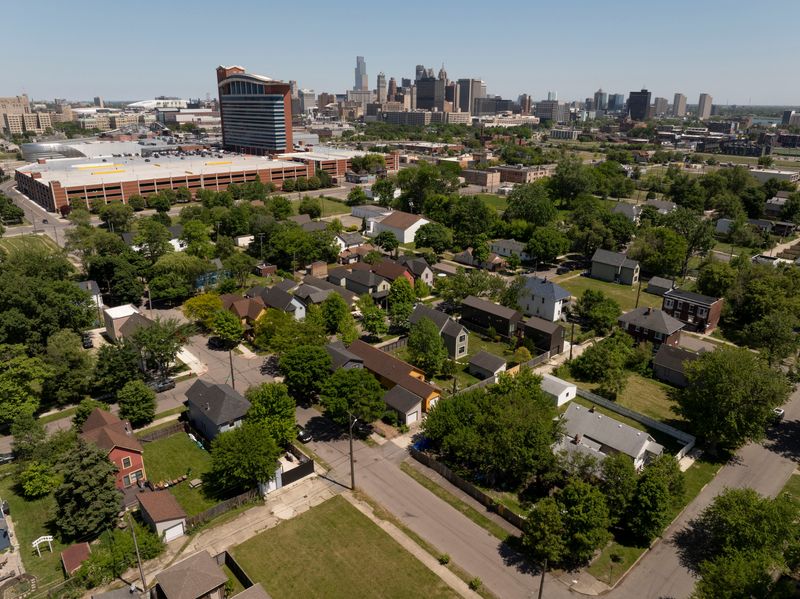
While renewed investment in areas like downtown Detroit has driven some of the increase in home values, neighborhood stabilization across the city has led to significant gains in lower-income areas.
“Over the last decade, Detroit has seen increased development activity, downtown investment, population stabilization in some neighborhoods, and renewed interest from both residents and investors looking for affordability relative to other large cities,” said Jonathan Jones, a data journalist with Construction Coverage who analyzed the Zillow data.
The city’s home value growth is notable because of how low home prices were a decade ago, when the median home was worth less than $40,000, Jones said.
“We really bottomed out… it makes it easy to see home values double or triple… because we did have further to climb out than any other city,” Schneider said, calling Detroit’s recovery a “hard-fought battle.”
Schneider believes that homes in Detroit were undervalued a decade ago, because “banks would not give a buyer a mortgage for a home in Detroit.” Since it was difficult for residents to get a loan, many buyers were investors who paid cash.
“Some of them were good, honest people and had good things in their heart. Others bought properties and kind of let them sit,” Schneider said.
While real estate speculation continues in Detroit— earlier this year, the city sued a cryptocurrency-backed real estate firm for leaving properties in disrepair — Schneider said the pendulum has swung back toward “folks that want to live in the home.”
In 2024, the latest year for which American Community Survey data is available, homeowners out-numbered renters in Detroit 136,621 to 131,427, though the difference was within the margin of error.
“Another big factor in this is the state of the city is so much stronger … lights come on, trash gets picked up, emergency services show up when you call them,” Schneider said.
“And those are the things that people that want to live in Detroit really see.”
How rising home values impact homeowners
Detroiters who bought their homes a decade ago have been rewarded mightily, with home values reaching more than 10 times what they paid.
But many are saddled with the cost of deferred maintenance on old houses. And first-time home buyers face higher prices and more competition for homes than just a few years ago.
Jessica Hill, a resident of the Marygrove neighborhood on the west side of Detroit, said she sees rising home values as a sign of a healthy neighborhood — and a potential economic opportunity for enterprising residents.
“The houses are definitely higher than they were in the past, but I don’t necessarily look at that as a bad thing…I look at it as an opportunity,” she said.
Hill grew up on the west side of Detroit, before she moved to Ohio to attend college. After moving back five years ago, she purchased her home in 2023. She also owns an investment property in the neighborhood.
“Sometimes I notice a lot of the bad eggs are being uprooted, and you’re getting more people who want to have healthy neighborhoods, who want an environment for their children to be able to play outside, and you feel safe about it,” Hill said.
She added: “It’s just nice to have community and somewhere again where you just feel safe.”
Jay Meeks, Hill’s neighbor and president of the Marygrove Community Association, said he considers rising property values as the result of hard work and improvements in the community.
“That is sort of how investment works,” he said. “You make an investment, it signals to other people that this is maybe a safe investment or a worthwhile investment for them to make.”
Meeks bought his home for $8,100 in 2014 from the Detroit Land Bank, before investing more than $25,000 to install a new HVAC system, central air and a new furnace.
Recently, Meeks said, some homes in the neighborhood have sold for up to $300,000. Current Zillow listings include single-family homes posted for $300,000 and $260,000 on the north side of the neighborhood.
“We need not be afraid of improvement and progress,” Meeks said.
Still, he acknowledged the challenges homeowners face with expensive repairs.
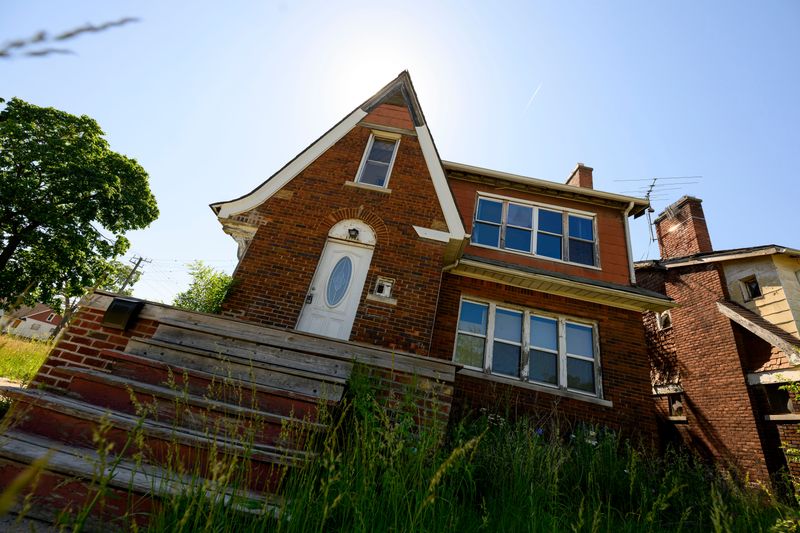
“Homeownership is a huge responsibility … my house is about to turn 100 next year. And so are a lot of the houses in the neighborhood. And so many of the things that needed to be upgraded … did not happen,” he said.
Bre Williamson, who serves as president of the North Corktown neighborhood association, said homeowners in her area struggle to afford those repairs.
“A lot of people who live here are equity rich, but they’re cash poor,” she told The News. “So the home value might go up on paper, but … their actual monthly costs are becoming harder to manage.”
Williamson, who bought her home for $240,000 in 2016, said she has neighbors who have been in the area for 30 or 40 years.
They don’t want to sell the home they might have grown up in, she said, while structural issues such as a leaking roof or cracks in the foundation require costly repairs.
Williamson routinely gets phone calls from realtors who say her home could sell for $450,000 or more, but she said options to move within the neighborhood are limited.
“It is kind of crazy, because when you think, oh, that’s a large number, that’s almost double what we paid for the house, you also have to consider market factors,” she said.
Her current interest rate is just 3%, less than half the typical mortgage rate in 2026, so financing a move would mean taking on a much higher rate.
“So, we couldn’t sell our house even if we wanted to,” she said.
Gains spread across whole city
Higher home values aren’t limited to North Corktown or Marygrove — nearly every part of Detroit has been part of the same trend, according to a study published last year by the University of Michigan’s Poverty Solutions initiative.
The study estimated that the net value of owner-occupied homes in Detroit — a measure that subtracts the approximate value of homes in tax foreclosure from the approximate value of owner-occupied homes — increased from $4.2 billion in 2014 to $8.8 billion in 2023, a 112% change.
Researchers found that the greatest gains came in places with many low-income residents.
Kurt Metzger, one of the authors of the study and the director emeritus of Data Driven Detroit, said 10 years of property sales data showed that a diverse array of residents have built wealth through their homes.
“The combination of new builds plus putting a lot of older homes back into the market…what it’s done is really stabilized neighborhoods,” Metzger said.
While home prices rose in nearly every part of Detroit, Metzger and his co-authors found that the number of property tax foreclosures declined from 4,984 in 2014 to just 192 in 2023.
“The fact that we are actually seeing foreclosures go down means that the increase in values (is) not driving people out,” Metzger said.
The majority of housing wealth — $6.6 billion or 75% — belonged to Black homeowners, the study found. In 2023, 76% of Detroit residents were Black.
In neighborhoods where at least 70% of residents were Black, the median home value increased by an average of 147%, more than the citywide change.
Boon for homeowners, drag for new buyers
Despite the optimistic interpretations of the home value data, Schneider warned that lower-income residents could be priced out of the Detroit housing market.
“So even if you have a really stable job … the cost of living increases every year, we know inflation is biting into more and more of our discretionary income, making it harder to save for the down payment,” she said.
Income growth has not kept pace with the price of a home over the last 10 years, either.
The median household income in Detroit in 2024 — the last year for which census data is available — was $39,209, 40% higher than the city’s median household income in 2016.
Especially when faced with insurance costs and property taxes, Schneider said first-time and younger buyers might not be able to take on the financial burden of purchasing a home.
Williamson, the North Corktown resident, said the experience of purchasing a home has also changed since she was a buyer back in 2016.
There may not have been new townhomes for sale in the neighborhood, but there was “no competition” for her home, Williamson said. After touring it, she and her husband made an offer on the spot.
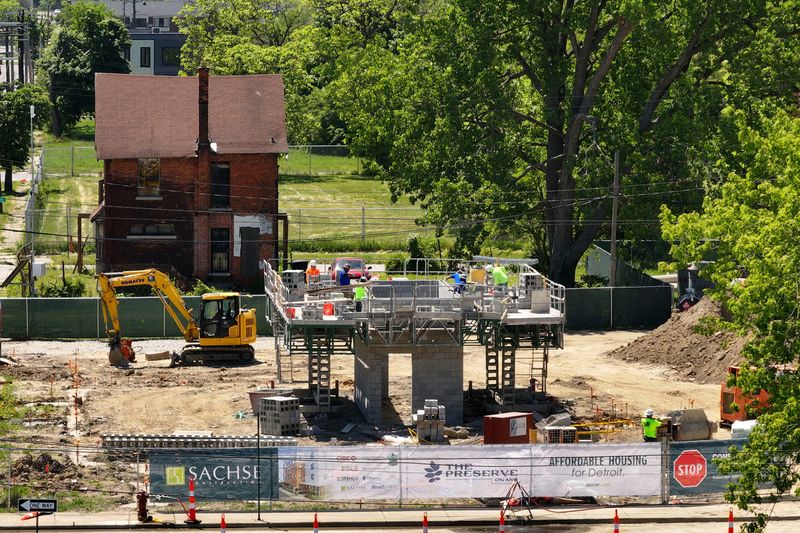
Recent arrivals tell her about long construction timelines for new builds, unexpected costs and competition for the most desirable properties, Williamson said.
Still, the median home in Detroit is far cheaper than any other big city in 2026, according to Zillow data. The median home value of just over $75,000 is nearly $40,000 less than in Cleveland, the second-least expensive big city.
Schneider also emphasized the positive impact homeownership can have on family wealth. “This typically becomes the biggest single asset that they will have… as their home goes up in value, their net worth goes up in value,” she said.
bwarren@detroitnews.com
This article originally appeared on The Detroit News: Detroit’s median home value has more than doubled in a decade
Reporting by Ben Warren, The Detroit News / The Detroit News
USA TODAY Network via Reuters Connect

By Ben Warren, The Detroit News | USA TODAY Network