Trajan Langdon intended to take the best player available with the No. 21 overall pick.
Instead, on the night of the first round of the 2026 NBA Draft, the Detroit Pistons’ president of basketball operations ended up pulling off a trade to move up for a player the franchise couldn’t afford to miss.

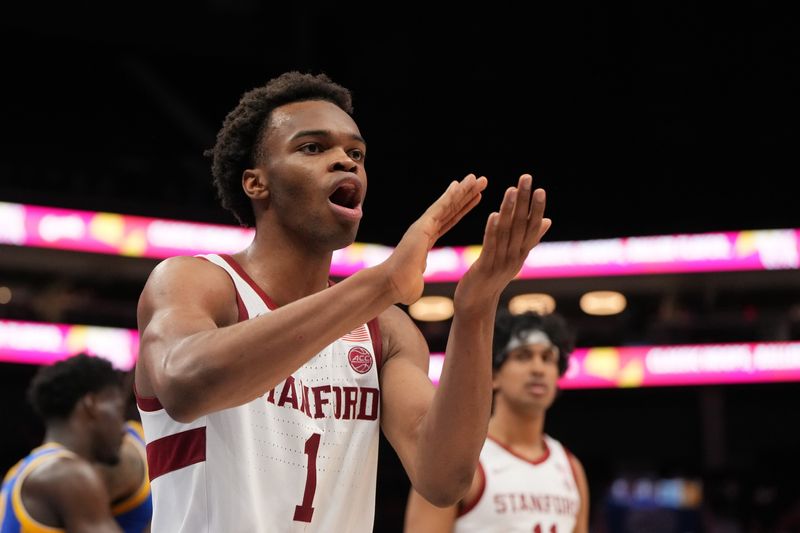
The Pistons sent three future second-round picks to the Memphis Grizzlies on Tuesday, June 23, to move up four spots. The result? Stanford guard Ebuka Okorie, a 19-year-old with electric speed and the tools to lift a Pistons offense that, too often, stagnated when the ball wasn’t in All-Star Cade Cunningham’s hands.
At just 6 feet 1 – as measured in his bare feet at the NBA combined in May – Okorie was one of the smallest players to go in the first round. But The Pistons had long admired the explosive guard, who rose from relative obscurity in New Hamshire to become one of the NCAA’s best scorers over teh past season. The hope is that he can address the ball-handling and offensive creation that was missing in the Pistons’ second-round loss to the Cleveland Cavaliers.
“Incredible speed with the ball in hand,” Langdon said Tuesday. “I think if I recall correctly he was up there in the country with and-ones in the paint; especially at the point guard position, he might’ve been No. 1. And obviously, as you guys know, he was a top-three scorer as a freshman in the country. What he did in a very good conference in the ACC hasn’t been done much.
“We’re incredibly excited to have a guy like that, a weapon who can get paint touches at will and can help not only score for us in halfcourt and in the fullcourt but can help distribute and have a little more creation for us all over the court.”
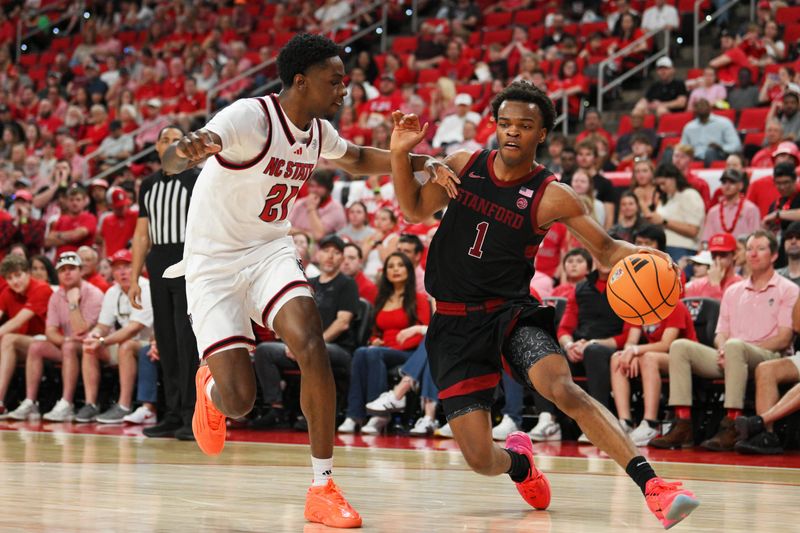
Okorie, who was listed at 6-2 and 185 pounds at Stanford, scored 23.2 points per game (an average tied for sixth in the nation, regardless of class) in his lone college season, while shooting 46.5% from the field. He rapidly shifts gears and likes putting defenders on his hip while probing the paint, waiting for the right opportunity to attack. He even shot a reasonable percentage from beyond the arc – 35.4% from 3 on nearly six tries a game – with some high-difficulty attempts off the dribble or from deep range.
He pressured the paint like few others – nearly two-third of his shots came there, leading to 7.3 free throw attempts per game. He put up big performances while leading Stanford to a 20-13 record – including 36 points and nine assists against North Carolina in mid-January and 40 points against Georgia Tech (on 12-for-21 shooting) three weeks later.
“It’s really hard to teach, at that age, a guy that has that touch around the rim, can finish with either hand taking hits and the other team knows he’s the guy and he’s still getting it done,” Langdon said. “He’s got some things you can’t teach but he’s always in the gym working on it, and he just loves the game.”
No team ran in transition more than the Pistons during the regular season, largely thanks to elite defensive disruption, and they were among the better teams at capitalizing on those opportunities. Their halfcourt offense wasn’t nearly as efficient, though – ranking closer to league average – and was overly reliant on Cunningham and second-chance opportunities.
NBA playoff matchups tend to reward teams who can consistently execute in the halfcourt, due to increased physicality, fewer turnovers and a slower pace. Individual creators shine.
The most recent evidence: The New York Knicks’ attack, led by 6-2 Jalen Brunson, was the postseason’s best halfcourt offense. New York won 15 of its final 16 postseason games en route to the championship. The Cavaliers, featuring James Harden and Donovan Mitchell, were sixth. The Pistons were 14th among 20 teams, including the play-in tournament.
On Tuesday, Langdon repeatedly emphasized Okorie’s ability to get into the paint at will – in transition or against a set defense, with or without a pick. The prolific college scorer, at times, played one-on-five and consistently found ways to throw defenders off-balance and slip through tight crevices in the paint. He can give the Pistons’ offense an energy it sorely lacked at times this spring.
“If you watch him, he’s always in the lane,” Langdon said. “That ball is on a string. He’s fast, he’s quick. Incredible stop and go and change of direction on a dime. Those kinds of things, we think they’ll translate to our level. He’s going to be surrounded by some pretty good players and so I think, transition or halfcourt, he’s going to be able to get in the lane and do this thing and find others. And that’s what we’re looking forward to.”
Okorie was a one-man show at Stanford, but his success in the NBA will depend on his ability to thrive alongside other guards. His game contrasts with Cunningham’s, powered by speed and nimbleness rather than size and power. But they’re both crafty with the ball and have strong handles, and Cunningham also has shown a willingness to play without it and find other ways to attack. Okorie knows he’ll have to do the same.
“I feel like alongside Cade I’ll just be another playmaker on the floor, another shot creator able to create for myself and others, and on the defensive end just bringing in intensity, using my quickness getting in passing lanes and getting a lot of deflections,” Okorie said.
That the Pistons traded three future second-rounders – with the seasons yet to be announced – to acquire the speedy guard speaks to their belief in his upside. In a league where lead ball-handlers have only gotten bigger, Brunson’s incredible playoff performance has re-ignited the debate concerning small guards and their ability to impact winning.
No player in the Pistons’ starting lineup last season was shorter than 6-foot-6, but the franchise pounced on the opportunity to add a player viewed as an offensive engine. He has growth in his game ahead – his outside shooting can improve and though he had a low turnover rate in college, he also has to prove he can run an offense with four other players. Likewise, it’s typically an uphill climb for players his size to be impactful on defense.
The potentially payoff down the road outweighed those concerns. Langdon has no doubt that he will reach his ceiling.
“He’s a high level competitor,” Langdon said. “He plays bigger than he is, listed at 6-2 but he’s got a 6-8 wingspan. And he really gets after it at an obviously young 18-, 19-years-old. He’s got a lot where his body can develop and get stronger. He’s a hard worker. He’s going to reach his potential, he’s going to reach his ceiling, just because that’s the type of young man he is. He’s going to do everything we ask him to do.”
[ MUST LISTEN: Make “The Pistons Pulse” your go-to Pistons podcast, listen available anywhere you listen to podcasts (Apple, Spotify) or watch live on YouTube. ]
Contact Omari Sankofa II at osankofa@freepress.com. Follow him on X and/or Bluesky.
This article originally appeared on Detroit Free Press: Detroit Pistons love Ebuka Okorie for ‘incredible speed’ in NBA Draft
Reporting by Omari Sankofa II, Detroit Free Press / Detroit Free Press
USA TODAY Network via Reuters Connect
By Omari Sankofa II, Detroit Free Press | USA TODAY Network