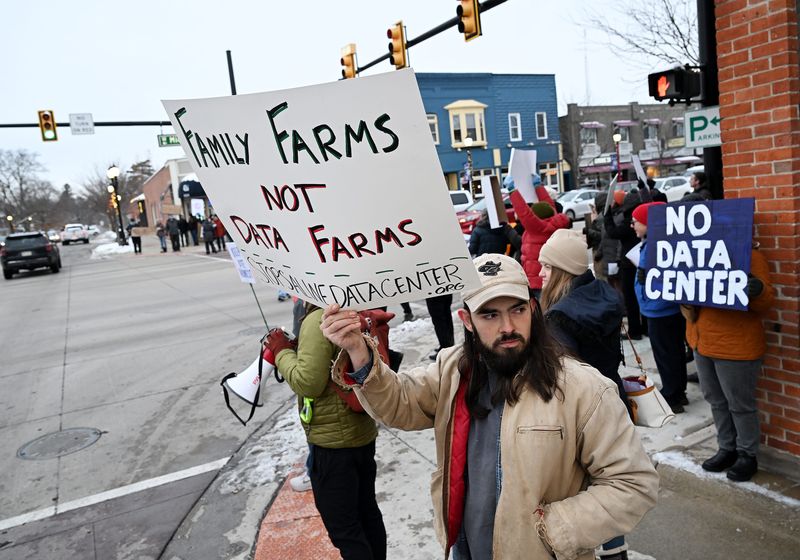
Lately, it seems like data centers have taken on an almost mythic status in the minds of Michiganians. It’s hard to go anywhere without hearing about how they might disrupt communities, strain local resources or fundamentally change the economy.
Those concerns aren’t coming from nowhere. People have seen the worst examples from other states with fewer regulations and are asking reasonable questions about energy use, land, water and whether these projects will truly deliver long-term benefits for the communities that host them.

If the worst fears about data centers were true, it would be right to fight tooth and nail against their development, but the facts tell a more nuanced and positive story.
Whether we realize it or not, data centers are simply the digital infrastructure that powers our modern economy. Whenever we stream a movie, hail a ride share service or use an app to send money to a friend, we are using a data center. They are in the background of operations for nearly every industry in the state ― health care, education, manufacturing and even farming. It should be no wonder then that demand for them is growing.
According to a recent study by Anderson Economic Group, the construction of even a single reasonably sized data center can generate an annual economic impact comparable to hosting the NFL Draft. That kind of sustained economic activity is rare among development projects of any kind.
The union trades have always understood that a project that doesn’t invest in the community isn’t really an investment; it’s extraction. Fortunately, Michigan isn’t approaching this opportunity blindly. Lawmakers have taken a very deliberate approach, putting regulations in place to ensure these projects are developed responsibly from the start.
The state’s data center tax incentive program is a good example. It’s a performance-based tool that requires data centers to create high-paying jobs, use green energy and minimize water use. In addition, Michigan energy regulations require data centers to pay in full for the electricity they use and the infrastructure needed to serve them, so that new data centers won’t be able to push their energy costs onto working people.
With strong protections like these, Michigan can benefit from well-regulated data center construction. Because the fact is, data center development is accelerating nationwide, and states are competing aggressively for these projects. If they aren’t built responsibly here, they will be built with fewer regulations and lower environmental standards elsewhere.
Our state has real advantages in this competition for growth, including a moderate climate, available land and a highly skilled workforce. The workforce piece is why unions across the state have joined in support of responsible data center development.
Each data center project will require a wide range of skilled tradespeople. From the construction of the sites to the installation of the power and cooling systems to the telecom specialists who run the fiber networks, there will be union-scale, benefits-eligible jobs required for each buildout.
When data center developers commit to labor agreements and local hiring, they also support the training programs that build the next generation of Michigan’s skilled workers.
Data center job sites support careers that don’t disappear when construction ends, either. Once a facility opens, it requires a steady stream of contract work for regular maintenance that can keep skilled tradespeople employed for years afterward. Apprentices who begin their careers on these sites will also go on to build the roads, bridges and all kinds of buildings and infrastructure that grow our economy and communities.
At the end of the day, the discussion around data centers is about people, and whether new development strengthens our communities, supports working families and creates lasting opportunities. With the right standards in place and a commitment to doing things the right way, data centers can be an important part of Michigan’s future.
Tom Lutz is Executive Secretary-Treasurer of the Northern Midwest Regional Council of Carpenters.
Labor Voices columns are written on a rotating basis by United Auto Workers President Shawn Fain, Michigan Education Association President Chandra Madafferi, Northern Midwest Regional Council of Carpenters Executive Secretary-Treasurer Tom Lutz and selected Service Employees International Union members.
This article originally appeared on The Detroit News: Data centers can bring jobs and growth to Michigan | Labor Voices
Reporting by Tom Lutz / The Detroit News
USA TODAY Network via Reuters Connect