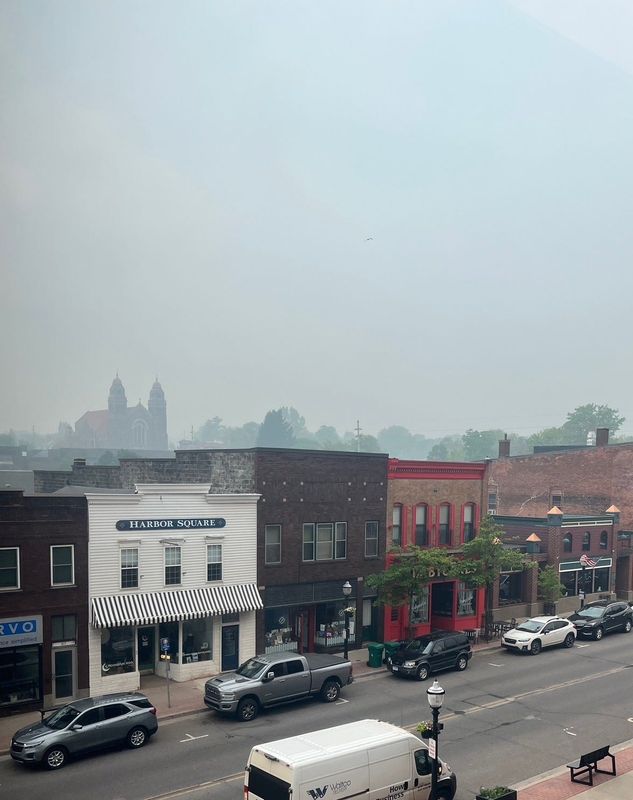
The entire state of Michigan is under an air quality alert today, July 14, from the Canadian wildfires, and officials forecast the alert to continue into Tuesday, July 15.
“Fine particulate is the dominant pollutant into Monday; however, a warm southerly flow develops Monday into Tuesday, which may increase ozone levels,” said MiAir Division, a part of Michigan’s Department of Environment, Great Lakes, and Energy.

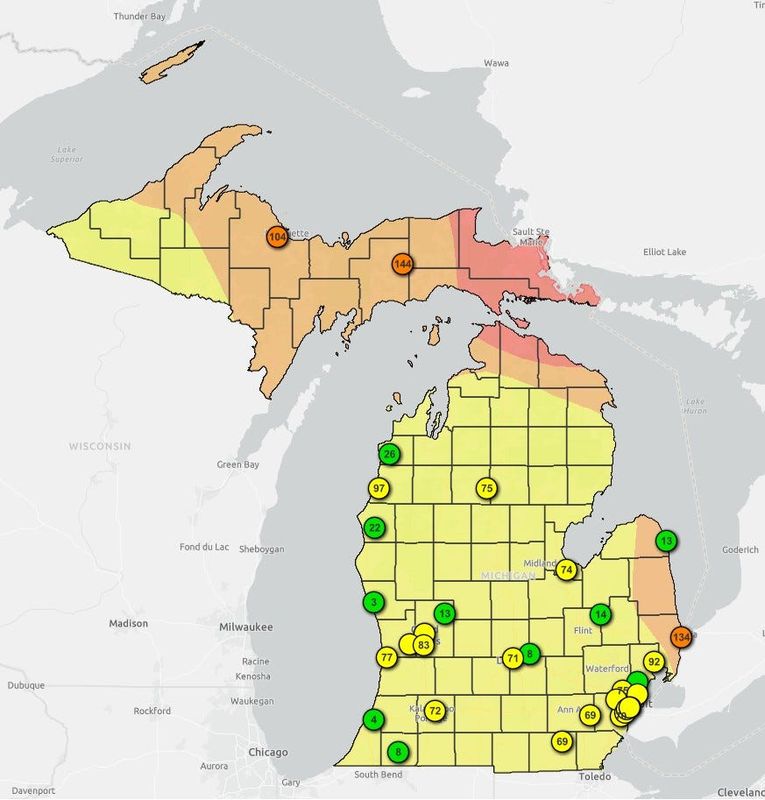
As of July 14, the air quality alert is statewide, with the eastern side of the Upper Peninsula, northern Michigan and parts of Michigan’s Thumb seeing the worst of the smoke.
With high levels of fine particulate matter (PM2.5) the air is unhealthy for the general public, but especially for sensitive groups.
“It is recommended that, when possible, you avoid strenuous outdoor activities, especially those with heart disease and respiratory diseases like asthma,” the National Weather Service said. “Monitor for symptoms such as wheezing, coughing, chest tightness, dizziness, or burning in nose, throat, and eyes.”
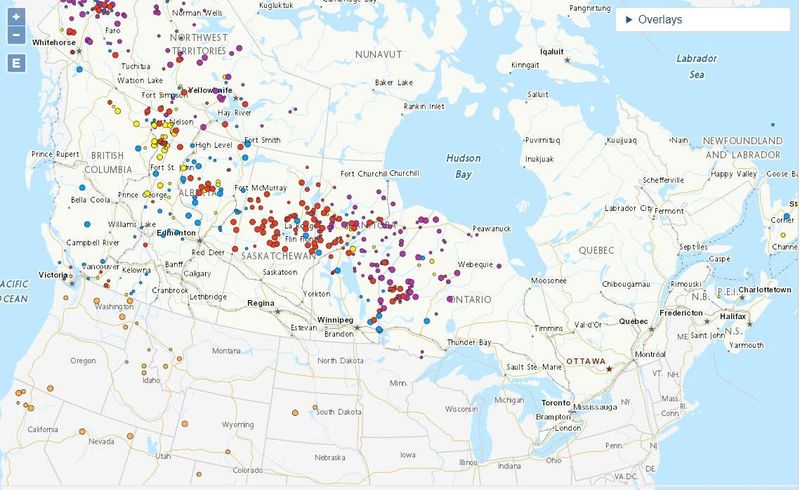
The smoke is coming from 81 uncontrolled active wildfires in Canada across several provinces, including British Columbia, Alberta, Manitoba and Saskatchewan.
“Extended models show warm, dry conditions as we move into Tuesday,” MiAir Division said. “Without an airmass change, the threat of increased ozone and/or fine particulate will continue.”
Here is more on the air quality alert in Michigan:
Where are the wildfires in Canada?
Based on Canada’s National Wildland Fire Situation Report (current as of July 9) there are 81 uncontrolled active fires; 49 being held; 116 controlled; and 90 modified responses.
The priority fires are located in Manitoba and Saskatchewan.
What should I do when an air quality alert is issued?
According to Michigan’s Department of Health and Human Services, here are some indoor methods to protect yourself from the pollutants outside:
What is the air quality index?
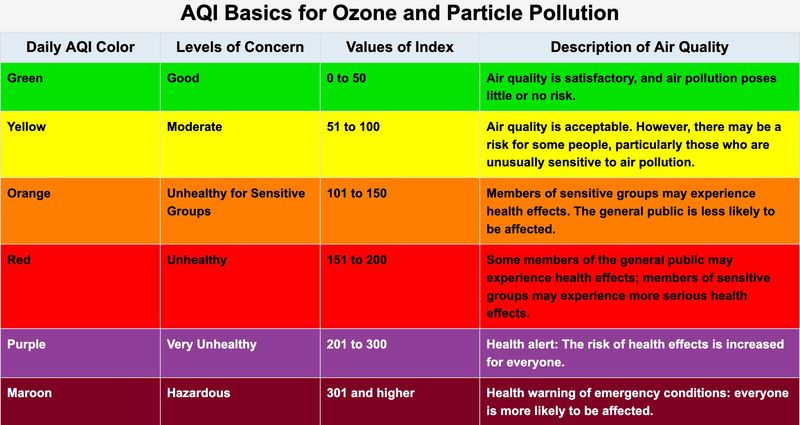
The AQI shows the outdoor air quality for public health. It features six color-coded categories, from good (0-50) to hazardous (301 plus).
The AQI takes into account five air pollutants:
What does PM2.5 mean on the air quality index?
This unit is used to measure the fine particulate matter in the air, such as smoke, dust, soot or dirt.
The “2.5” figure means particles are 2.5 micrometers in diameter or smaller, according to the EPA — that is 30 times smaller than the average human hair, which is about 70 micrometers in diameter.
How can I check the air quality in my area?
Michigan residents can check current conditions through EGLE’s MiAir Quality Index Dashboard. The interactive map provides AQI scores for cities across the state.
Residents can also use AirNow, a part of the U.S. Air Quality Index, and check local conditions by searching their ZIP Code or city. AccuWeather also has an AQI feature that lists the current pollutants in the air.
In addition, Michigan’s HHS Department has a Facebook and X account. The department allows for residents to subscribe for alerts through the EnviroFlash system.
Contact Sarah Moore @ smoore@lsj.com
This article originally appeared on Lansing State Journal: Canadian wildfires 2025: Michigan under air quality alert. What to know
Reporting by Sarah Moore, Lansing State Journal / Lansing State Journal
USA TODAY Network via Reuters Connect