General Motors’ Flint Assembly Plant receives about seven truckloads of axles every day to produce the automaker’s most profitable vehicles, pickups.
Soon, those semis may stop coming, jeopardizing major profits for the Detroit company, its suppliers and dealerships.

The potential supply chain kink is at American Axle’s Three Rivers plant more than 150 miles away, where union workers went on strike at midnight on Sunday, May 31.
The union took to the picket line after contract negotiations with American Axle (now known as Dauch Corp.) stalled after the union sought to recoup wages that were halved during the Great Recession. About 1,000 UAW members work there.
If the axles stop coming from Three Rivers, GM would be forced to shut down the line at Flint.
“It’s a big monster of money,” UAW Local 598 Chairman Eric Welter told the Detroit Free Press on June 2. “There’s a lot on the line for GM with this strike.”
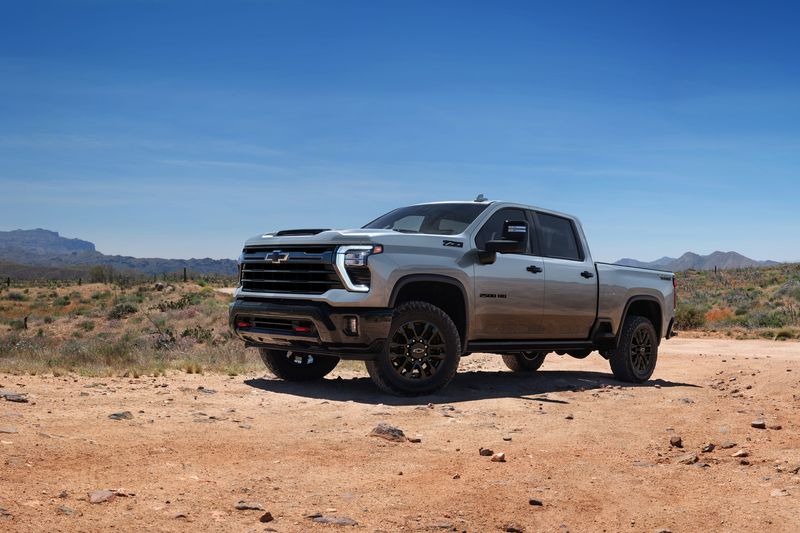
The Flint plant, which employs about 4,200 hourly workers, is adding an overtime production shift starting this month, which Welter said is planned to remain for the next two or three years. Then, Flint will operate three shifts six days a week to produce about 1,150 Chevrolet Silverado and GMC Sierra trucks in 2500 and 3500 variants. To keep production moving, the plant needs at least two truckloads of axles per shift.
GM prepared for the strike, which may offset some of the short-term damage. The Wall Street Journal reported that GM has about two weeks’ worth of axles stockpiled, which Welter said makes sense because the semis continue to arrive full and on time.
Each semi holds 48 racks, and there are about four axles to a rack. After a brief stop at another supplier for configuration, axles head right into production.
“We bring in trucks all day long, every couple hours to supply the line,” he said. “We don’t have room to store all that.”
Welter said he supports the union members in Three Rivers who want to catch up with wages at other manufacturing plants that have outpaced theirs.
“These workers have been underpaid a very long time,“ Welter said. “This is their opportunity and they’re taking advantage of it. It’s pretty rough to think they work at those wages with the way the economy is. It’s unfortunate it had to go this way.”
Big trucks equal big profits
The strike comes at an inopportune time for GM, which was already increasing heavy-duty truck production to meet soaring consumer demand. Company executives said on April 28 that dealer inventories of trucks and SUVs in particular needed replenishment.
“General Motors is closely monitoring the situation involving Dauch Corp. at its Three Rivers, Michigan, plant,” GM spokesman Kevin Kelly said in an emailed statement on June 2. “We are assessing any potential impact while staying closely aligned with our teams.”
GM dealers say that they’re already low on heavy-duty truck inventory and the idea of cutting off production entirely could be crippling.
Joe Hill, general sales manager at Shea Buick GMC and Chevrolet in Flint, said June 2 that he is about 20 trucks short of meeting customer demand. Heavy-duty trucks make up about 10% of his 150 total Chevrolet inventory.
“I’d sure like to make it more,” he said. “These heavy duties ― it’s a pretty lucrative piece of my business. My profit is probably 30% higher than on a half-ton truck,” or light-duty, such as the Chevrolet Silverado 1500 or GMC Sierra 1500.
Paul Zimmerman, a vice president and part owner of the Matick Automotive Group in Redford, said he could use more heavy-duty trucks at his Chevrolet and Buick GMC location. Right now, he has just three in stock at George Matick Chevrolet in Redford Township and half a dozen at Matick Buick GMC in Southfield.
“I want probably a dozen at each,” he said. “I am concerned about a stoppage. In terms of profitability, I mean, you’ve got to have a car to sell to make money.”
Why American Axle is ‘playing hardball’
Higher gas prices spurred by the ongoing Iran war haven’t dampened desire for huge trucks like the Silverado 2500 and GMC Sierra 2500. Utility is the primary reason demand holds steady, according to Welter, who has worked at the Flint plant since 2006. He said low inventory is all that’s holding back sales.
“It really comes down to use for that vehicle when compared to a light-duty. That’s a need-based vehicle compared to a grocery-getter,” he said, adding that those who need the power to haul campers or horse trailers tend to remain loyal bigger truck buyers regardless of price increases. “It kind of insulates us from the economic downturns.”
An economic downturn is exactly what cost American Axle UAW members the wage growth that union workers secured over nearly two decades of contract bargaining with Detroit automakers.
In 2008, American Axle’s Three Rivers plant — its largest manufacturing plant in the state — was on the brink of closing. The union and the company agreed to dramatically cut wages to keep the plant from shuttering.
Overnight, the highest wage on the shop floor went from $29 an hour to just $14.50. Josh Jager, UAW Local 2093 bargaining chair, was among those who took a pay cut in 2008.
“We did it to save the company, we did more than save them — we made them billions of dollars,” Jager said Sunday, the night the union announced its strike. “So tonight, it’s about getting our fair share.”
American Axle survived the Great Recession and has been a profitable automotive supplier over the last decade. Meanwhile, employees’ wages have not returned to their pre-recession highs — something the union wants to partially rectify in its next contract.
The $29 an hour wage from 2008 equates to roughly $44 an hour in 2026, according to the U.S. Department of Labor Statistics’ inflation calculator. But the current highest wage at American Axle among union members, the union said, is $22 an hour, which, according to the inflation calculator, is the 2008 equivalent of earning $14.19 per hour.
The union is seeking a contract that enshrines $30 an hour for union-represented employees at the plant ($14 shy of what the highest wage on the floor was before the cut, when adjusted for inflation), though the union has accused American Axle of stalling negotiations. On top of the higher wages, the union also wants a contract that carves out more affordable health care, sick leave and better work-life balance.
It is unclear how long the strike will last, but labor expert Harley Shaiken, professor emeritus at the University of California, Berkeley, said he wouldn’t be surprised if the union’s strategy was to hold the line for at least two weeks — or until GM runs out of axles.
American Axle is “playing hardball at the beginning, but as they get an increasing amount of pressure, then they may see a settlement as the better course of action,” Shaiken said on June 3. “And that’s going to come clearly with the price.”
Right now, the ball is in American Axle’s court — it isn’t out of axles yet. But, Shaiken said that “with each day that goes by on the picket line, the union gains leverage. … The clock favors the union, but the company is clearly talking and acting tough as we speak.”
American Axle’s chief financial officer, Chris May, told investors on Wednesday, June 3, that the plant, when in full swing, can make between $20 million and $25 million in revenue per week. For now, operations at the plant are being managed by about 200 salaried employees of the plant, and the union said late Wednesday that no UAW members have crossed the picket line to return to work.
Who benefits from a GM truck slowdown?
A potential hit to GM’s pickup production could hinder its attempt to gain the upper hand over crosstown competitor Ford Motor Co., said Sam Abuelsamid, vice president of market research at Telemetry.
Ford has been scrambling for months to replenish its pickup inventory after two fires at its main aluminum supplier last fall disrupted Ford’s production. The automaker has plans to replenish some 50,000 pickups lost in production disruptions.
At Kentucky Truck Plant in Louisville, where it builds the Ford F-Series Super Duty, Ford Expedition and Lincoln Navigator, Ford has increased the jobs per hour as well as hiring 100 new employees at the plant. Ford has added shifts and increased line speed at Dearborn Truck Plant, where it builds the F-150. The automaker also will start Super Duty production at Oakville Assembly Complex in Canada later this year.
Finally, Ford said all Ford F-Series truck assembly plants — Kentucky Truck Plant, Dearborn Truck Plant, Kansas City Assembly Plant in Missouri and Ohio Assembly Plant in Avon Lake — will skip summer shutdown this year to increase F-150 and F-Series Super Duty production by “more than 50,000 trucks.”
Ford does get some components from American Axle, but a company spokesman told the Detroit Free Press that the automaker is not expecting the strike to have an impact on its operations, given that most of the axles it uses come from the Sterling Axle plant in Sterling Heights.
But if Ford can’t catch up on its pickup production and GM’s pickup production takes a hit, it might mean Stellantis comes out the winner, Abuelsamid said.
Stellantis spokesperson Jodi Tinson, in a written statement sent to the Free Press on June 2, said the automaker is “monitoring the situation closely, but expect(s) no production impact at this point.”
American Axle produces at least one component for Stellantis vehicles, an actuator (a small, non-powertrain motor) for the Chrysler Pacifica minivan.
“It would make more sense to do a deal with the UAW sooner rather than later,” Abuelsamid said. “If you don’t have axles to put on the trucks, you’re not only losing capacity of trucks you can sell, you’re facing shutdowns and layoffs at your assembly plants and your other suppliers. That cost goes up very quickly.”
Jackie Charniga covers General Motors for the Free Press. Reach her at jcharniga@freepress.com.
This article originally appeared on Detroit Free Press: As strike continues at American Axle, storm brews for General Motors
Reporting by Jackie Charniga, Liam Rappleye and Jamie L. LaReau, Detroit Free Press / Detroit Free Press
USA TODAY Network via Reuters Connect
By Jackie Charniga, Liam Rappleye and Jamie L. LaReau, Detroit Free Press | USA TODAY Network