The statewide Natural Resources Commission, a seven-member, governor-appointed body that sets hunting and fishing policy in Michigan, doesn’t sufficiently address the unique natural resources policy needs of the Upper Peninsula, the region’s state legislators contend. And they intend to do something about it.

The Republican lawmakers on Wednesday, June 3, introduced a series of four bills in the House Natural Resources and Tourism Committee that would establish a new Upper Peninsula Natural Resources Commission, a 10-member body consisting of all U.P. residents, setting U.P.-specific hunting and fishing policy, and thereby taking that power away from the current statewide commission.
The statewide model increasingly struggles with the distinct ecological realities of the two peninsulas, said state Rep. David Prestin, R-Cedar River, an author of one of the bills.
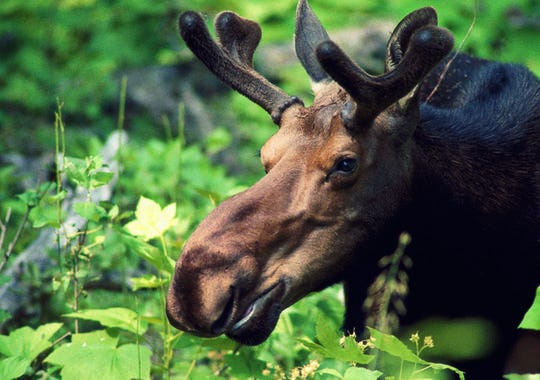
“The Upper and Lower peninsulas are ecologically distinct,” he said. “The U.P. has established populations of wolves and cougars; the Lower Peninsula does not. The U.P. supports a moose population, while the Lower Peninsula has elk. Whitetail deer are overabundant in much of the Lower Peninsula, but in the U.P., our herd faces chronic decline due to predation pressure.
“Statewide rulings from a commission that typically only holds one meeting in the U.P. each year often fail to account for these differences. The NRC is doing the best that it can. But the U.P.’s ecology is suffering because of a lack of focus on peninsula-specific issues. Local stakeholders, including sportsmen, guides, farmers and our tribal partners, possess critical, on-the-ground knowledge that the statewide process underutilizes. A more localized approach would empower both Natural Resources Commissions to make the best decisions for the two peninsulas.”
Approved by roughly 69% of voters, Michigan Proposal G of 1996 was a voter-initiated referendum that granted the Natural Resources Commission (NRC) exclusive authority to regulate the taking of game. It required the NRC to base all wildlife management decisions on “sound scientific management” while allowing for public input.
Bills would create a 10-member, U.P.-specific board
The four bills, House Bills 4783 through 4786, are sponsored by Prestin and state Reps. Greg Markkanen, R-Hancock; Curt VanderWall, R-Ludington, and Parker Fairbairn, R-Petoskey. Under the proposed legislation, the new 10-member Upper Peninsula Natural Resources Commission would still be appointed by the governor with the advice and consent of the state Senate, as is the current seven-member statewide NRC. But the U.P. commission would require the governor to choose representatives from lists provided by each of four state House members representing regions of the Upper Peninsula, as well as two members from each of the two state senators representing the U.P. The final two members of the commission would be appointed from recommendations of all U.P. House and Senate lawmakers. Not more than half of the commission’s members could be from the same political party.
That places authority over key game-related decisions, including matters tied to designating game species and establishing open seasons, into the hands of the commission “that is closer to the region and better positioned to understand its unique wildlife considerations,” Markkanen said.
“Wildlife management in the Upper Peninsula is not identical to wildlife management anywhere else in the state,” he said. “The Upper Peninsula has distinct habitats, species pressures, seasonal conditions and community impacts that demand regional attention. Decisions about game species and hunting seasons should be established by the people and institutions most familiar with those realities, while still honoring the principles of sound scientific wildlife management.”
House Bill 4783, which deals with fisheries’ management decisions, outlines that the new U.P. Natural Resources Commission would set fisheries policy for Lake Superior, the St. Marys River, and all inland lakes, streams, rivers, ponds and other bodies of water throughout the U.P. Great Lakes Michigan and Huron would remain under the jurisdiction of the Lower Peninsula Natural Resources Commission, the lawmakers said.
Shorter terms and more local accountability, bill sponsor says
The Upper Peninsula Natural Resources Commission’s members would serve two-year terms, compared with the four-year terms for the existing commission.
“You’ll either see a continuation of people operating at a high level, or you will see the board change in composition,” Prestin said. “Because out by us, it’s our livelihood. It’s something everybody talks about up there. That board will be held to a standard that I don’t think the NRC down here would be used to.
“In a U.P. NRC, it’s such a small community. Ultimately, you are going to be walking past those commissioners as friends and neighbors. People that are not working in the best interests of the U.P. will be made aware very quickly how people feel.”
The Sault Ste. Marie Band of Chippewa Indians submitted its opposition to the bills without comment. Prestin acknowledged that Upper Peninsula Native American tribes have not been consulted to this point in the development of the U.P. NRC concept.
“We are completely open to making sure they are a part of that U.P. NRC — they need to be,” Prestin said. “Between the Sault tribe and all the tribes that we have up there, they are an integral component. They have a significant fishing aspect in the Upper Peninsula. They definitely need to be a part of the conversation.”
A message left by the Free Press with Sault Ste. Marie Band of Chippewa Indians Chairman Austin Lowes was not immediately returned on Wednesday.
DNR doesn’t support the bill package
The Michigan Department of Natural Resources expressed its opposition to the bill package on Wednesday.
“From the department’s perspective, it is our job to advise and provide information and recommendations to the commission, which we do through sound scientific management,” DNR legislative liaison Chris Semrinec said. “And we do all of that while taking into account the differences in landscapes and habitats between the Upper and Lower Peninsula.”
The agency’s wildlife regulations on deer, trout, walleye, waterfowl and more are different between the Upper and Lower Peninsulas, he said — demonstrating that the DNR and the current Natural Resources Commission take into account the different challenges each peninsula faces
“Public trust doctrine holds that the natural resources of the state are in trust for all citizens of the state of Michigan — the ability to hunt and fish in the state of Michigan, not one peninsula or another.”
Prestin questioned why the DNR was before the committee, stating its opposition to the bills.
“I don’t understand why a department whose duty is to carry forward the things we agree to pass forward, why are you even in here taking a position as a stakeholder?” he said. “Because you are not. You guys do what we decide.”
Environmental group: Reach goals through existing commission
The Michigan Association of Counties expressed support for the bills, but some environmental nonprofits expressed opposition, including the Michigan Environmental Council.
Fish and game don’t respect governmental boundaries, and what happens in one place can affect another place, said Emily Smith, land and water policy manager for the MEC. The bills could lead to confusion over where one Natural Resources Commission’s jurisdiction begins and ends and the others take over, she said.
There are currently two Upper Peninsula residents on the seven-member Natural Resources Commission, and in the past, there have been three U.P. residents, Smith noted. If the Legislature wants more U.P. influence in natural resources policies affecting that peninsula, that can be accomplished through the existing Natural Resources Commission, she said.
“There are no guidelines as to who is accepted on the commission or who may apply to the commission. I think we should start there,” Smith said. “We should say a certain minimum or maximum number of people who live in the Upper Peninsula should be on the commission, while also representing the different needs of the entire state.”
After bills are introduced and referred to a committee in the Michigan state House, they undergo a review process where they may be scheduled for hearings, amended, or voted on by the committee members before potentially advancing to the full House floor for a vote.
Contact Keith Matheny: kmatheny@freepress.com.
This article originally appeared on Detroit Free Press: U.P. lawmakers propose letting peninsula regulate its own hunting, fishing
Reporting by Keith Matheny, Detroit Free Press / Detroit Free Press
USA TODAY Network via Reuters Connect
By Keith Matheny, Detroit Free Press | USA TODAY Network