Jim Adkins took “The Middle” all the way to the top.
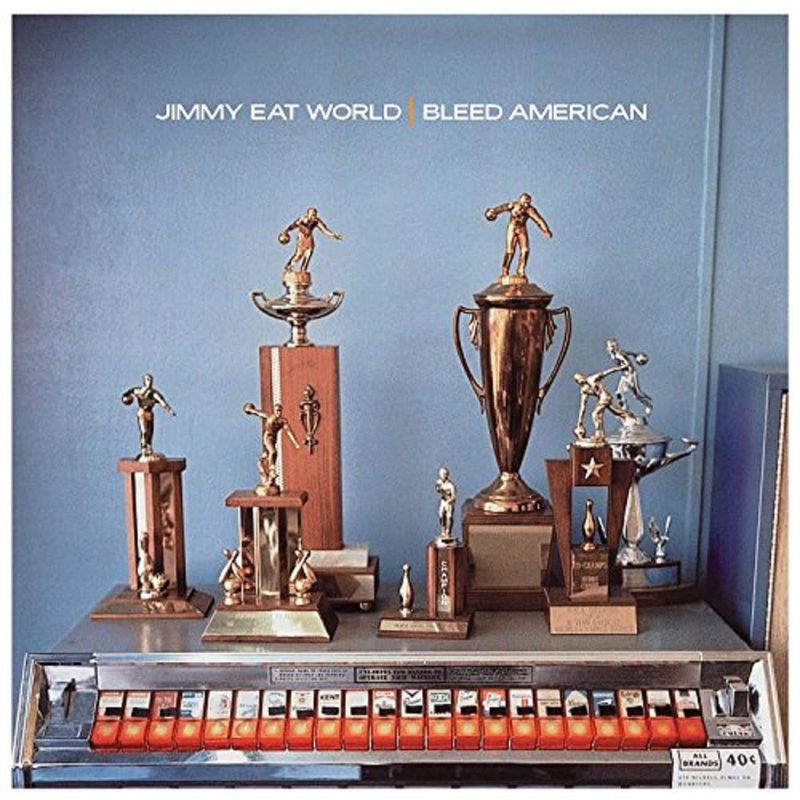
The Jimmy Eat World frontman is still marveling at the success of “Bleed American,” the Arizona rock band’s fourth album, which was released in July 2001.

The album — which the band retitled “Jimmy Eat World” in late 2001 after the 9/11 terrorist attacks, and became “Bleed American” once again following its 2008 re-release — sold over 1 million copies and became a genre-defining emo classic, while the video for “The Middle” became a hit on MTV’s “TRL,” positioning the band alongside Destiny’s Child, *NSYNC, Britney Spears and other hitmakers of the day.
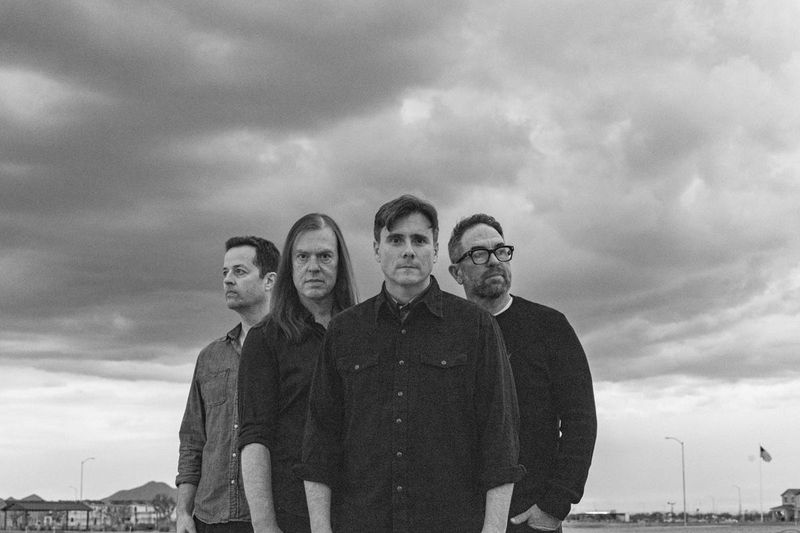
Now the band — singer Adkins, guitarist Tom Linton, bassist Rick Burch and drummer Zach Lind — is hitting the road to celebrate the album’s 25th anniversary, and the 30-date tour hits Michigan Lottery Amphitheatre in Sterling Heights on Friday.
We talked to Adkins, 50, on the phone from his Phoenix home about the tour, the album and performing in Detroit over the years. (Note: Questions and answers have been slightly edited for purposes of clarity.)
Q: You guys are getting ready to launch the “Bleed American” 25th anniversary tour. At the shows, are you playing the album front-to-back, or will you be playing the full album over the course of the night?
A: We’re going to play the album as an album. You know, it’s not exactly the way we would structure a live set with the way the dynamics of the “Bleed American” material goes, but I think it’s sort of cool to hear it as it was presented. Which, you know, that alone makes it a little bit different to hear it that way.
Q: What does “Bleed American” mean to you and the band now, what did it mean then, and how has that relationship changed over the last 25 years?
A: Where it started was we were just proud of what we felt was our best work to date. We’d had enough experience putting out albums that we felt that’s what you can count on, and all other expectations you’ve got to let go of. Like, are you proud of the work you just did? Then enjoy that, because that’s all you know you’ve got coming to you. Nothing else is guaranteed. I had no idea what was about to happen, that’s where our head space was. But if you’re putting something out that you feel proud of, just let that be enough. Because really, this whole thing is about challenging yourself and feeling a sense of reward personally from playing music and making music. If you don’t have that, you’re going to be miserable. And I feel that a listener is going to hear that misery, and that’s going to be a turn-off. So if you’re not excited about it, no one else is going to be buying it. Not everybody’s gonna buy it, but the right people will if you’re just honest with yourself about you liking it. And it’s funny, if you can nail that, then you can do this forever. The scale of doing it is not up to you, but if you have that personal sense of reward, you can always be doing music in some capacity.
Q: You mentioned you had no idea what was about to happen. When did you realize this album was a very big deal?
A: Maybe sometime in like 2011, I just realized, like, it was a big deal.
Q: It took it 10 years?
A: Yeah. (Laughs.) I was just sort of like, “Oh, huh. I guess I’m just doing this now.” Seriously, I still don’t really believe it, you know? I’m still kind of wondering what I’m gonna do when I grow up, or what my major might be if I have to go back to school. I’m not kidding! It can go away at any moment, the world can change, and the things that I like to do and I find rewarding, maybe no one else is into anymore. And so I guess something that I’ve had to really learn over the years, since it came out, is how to savor that. I wasn’t really good at savoring it in the moment when “Bleed American” was on its rise, you know? Because we were doing nine-band punk gigs in basements, and then we’re doing late-night TV. Like, what? It’s so unreal. And I wasn’t savoring any of that, because it’s just bizarre. I wasn’t taking any of it in. And now I think it’s important to savor even the small things that come our way. I feel like that’s exactly what you need to do to keep doing it. So going into this tour, 25 years later, we are appreciating this, we are commemorating this, we are acknowledging the passage of time and what this thing has meant to us.
Q: Is that how this tour came to be, or was it because the anniversary was a nice round number and it was like, “hey, let’s go do this?”
A: It’s all of that, you know? I remember reading where (filmmaker) Jem Cohen was being interviewed about his Fugazi documentary, “Instrument,” and I could be getting this wrong, but I have a memory of the guys from Fugazi saying one of the reasons they wanted to let him make the film was they realized they’re not gonna be able to play like this forever. (Laughs.) And I feel like I don’t know what’s gonna happen. It’s been 25 years. We’re like the Mars Rover, man; we have gone so far beyond what anyone would have expected or would have been realistic that we would have lasted. But selfishly, we didn’t get to be fully present and savor it when it was going on. And right now, it’s like it’s bigger than it was then, in a weird way. And we have 25 years of experience performing music now. You know, the stuff we felt was out of reach to really do or might have been a compromise to try to do back then, we can do that now. So for us, it’s about presenting that material with everything that we know about performing music and us as a working band, the ability to savor that, and the ability to savor that with the people that have found a connection to it.
Q: There’s that line in the second chorus of “If You Don’t, Don’t” where you say “I need this now more than I ever did, did.” All these years of performing that song, do you always make sure to hit that double “did” every night?
A: I do. Part of that song is the wordiness of it, and just leaning into that. It’s a yes, and to what the song was trying to say to me, and the line after that I say twice instead of once, which happens before that. So the song was just telling me to do that, so I did it.
Q: There’s a section on “A Praise Chorus” where you quote lyrics from “Crimson and Clover,” “Kickstart My Heart” and a few other songs. Did you end up having to split the royalties on the record because of that? Did lawyers get involved, or was it just like a handshake deal and everyone looked the other way?
A: Our manager represents the Beastie Boys, so they knew you have to ask about that stuff before you use it. Because of the sample culture in the hip-hop world it was like, “you really should mention that to people before you start putting it out there.” So we contacted everybody about it, and they were all cool with whatever. So we just thanked them, basically.
Q: Where does “A Praise Chorus” fall in your rankings of the record, or in the collected works of Jimmy Eat World?
A: I mean, it’s an important one. It really just celebrates that period of the band in a way that I don’t think any other song of ours does. It’s self-aware of exactly where it is. It’s a time capsule to a very specific place, but the theme of it you can tap into, and you should remember to tap into, and that’s adventure. Exploring the unknown, things feeling new for the first time, and deciding to jump into that head first. If you’re doing this whole life thing right, that doesn’t have to end. And the feeling of what that was like when that song was written, knowing you can never get that again. But it’s a reminder that you can still get that: It’s not going to be in the same place, and that means you’ve got to summon the courage to look for new places to dive in all the time, and there’s always a reward for that, too.
Q: Take the “Sliding Doors” version of your life and say this record doesn’t happen, it doesn’t hit the way it does. Are you back at college, and if so, what are you studying? Have you ever imagined the path where “Bleed American” had not done what it did?
A: My best guess would be that I would have stayed in college and tried to graduate with a degree in journalism, and then four years later I would have been completely out of a job when the internet explodes. Beyond that, I don’t know where it goes.
Q: What type of journalism? Environmental, political? Would you have been doing record reviews?
A: Photojournalism, actually. I was really into fine art photography, and I felt like I was trying to be sensible, which is really funny, but it’s such a gamble and you have no idea if you can really support yourself doing that. So I felt like photojournalism would have been the way that would have married a passion with a realistic career. Eugene Richards is a photographer that I thought like, oh man, he’s doing it. It’s fine art photography that’s telling the story in a really gnarly way and I felt like, okay, that would be rad.
Q: Since I’m in Detroit I’ve gotta ask, how has Detroit been to you guys over the years? Do any good Detroit stories pop out to you? Does anything ring a bell?
A: It’s all been just crazy adventures in Detroit; it’s always felt like it just blew our expectations every time we came there. Even doing the Shelter. It’s like, there was always sort of a sense of intimidation coming there that was eased by feeling accepted, and then it’s just a party.
Q: What songs from the record have you played the least over the years?
A: “Cautioners” and “My Sundown” are the two that have probably been played the least. When you’re structuring a live set, you really only have so much room for a particular mood, and there’s a bunch of songs we have that might fit in that category, and those two songs, they don’t always win out in the battle of what you’re doing when you’re making a set list.
Q: What happens with you guys and “Bleed American” after you wrap this tour? Do you do this again at 30? Or is this a special recognition that you’ll preserve it in amber, in a sense?
A: That’s how I’m approaching it. There’s really no plans to continue this beyond the gigs we have set up for this year. I think that would make it less special, and I want to protect that. So yeah, this is it. We’re not gonna do this again.
Q: For the album, right, not for the band?
A: Yeah, yeah. And probably for any album anniversary thing, this is probably it for us. There might be like an occasional one-off thing where we play a record, but it would have to be a special occasion. I don’t think we could do a tour like this again, and I don’t think we’re going to do all “Bleed American” again after this tour. You might hear a lot of the songs at any particular gig. But you know, we do have other material we’d like to play for people, too.
agraham@detroitnews.com
Jimmy Eat World
with The Get Up Kids and Sunny Day Real Estate
7 p.m. Friday
Michigan Lottery Amphitheatre at Freedom Hill, 14900 Metro Pkwy, Sterling Heights
Tickets $49-$193
Ticketmaster.com
This article originally appeared on The Detroit News: Q&A: Jimmy Eat World’s Jim Adkins on ‘Bleed American’ turning 25
Reporting by Adam Graham, The Detroit News / The Detroit News
USA TODAY Network via Reuters Connect
By Adam Graham, The Detroit News | USA TODAY Network