Alfalfa is one of the most valuable crops farmers grow. It belongs to the legume family of plants. Unlike other plants that must take up nitrogen by their roots, legumes, with the help of microorganisms that live in its roots, can fix nitrogen directly from the air, placing it into the soil.
Alfalfa’s roots grow far down into the soil, typically 20 feet but can sometimes reach depths of 45 feet. Because of this, it can recover minerals from deep in the earth and transport them to the growing top of the alfalfa plant.

In addition to the primary nutrients of nitrogen, phosphorus and potassium, alfalfa contains a plethora of secondary and micronutrients in a form highly available to plants including calcium, magnesium, sulfur, iron, cobalt, manganese, zinc and selenium.
Farmers harvest alfalfa for hay that is fed to cattle, horses and other livestock. Manure from the farm animals is collected and applied to fields as fertilizer for other crops such as corn. That crop then has access to all of those nutrients that alfalfa absorbed from the subsoil that otherwise would have been lost.
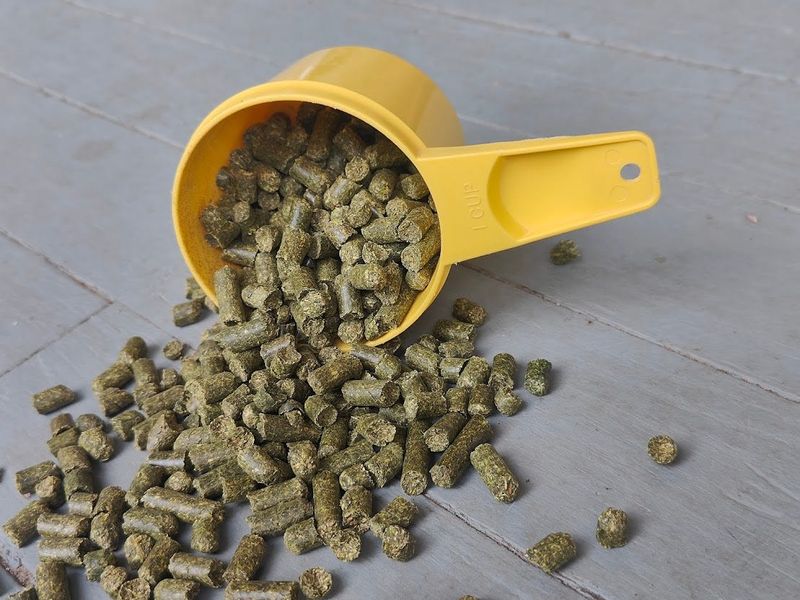
Part of the alfalfa crop is used for making dehydrated livestock feed. Bright green, freshly harvested alfalfa is brought to a dehydrating facility where it is immediately processed into meal or pellets locking in nutrients as a shelf-stable product.
As gardeners, we don’t have to grow alfalfa ourselves in order to take advantage of all that alfalfa has to offer as a fertilizer. We can simply purchase alfalfa meal or pellets. It is widely available at garden centers or more economically at feed and farm stores, usually in 40- or 50-pound bags. Look for non-GMO or organic.
With a fertilizer analysis of around 4-1-2, alfalfa is a great general-use fertilizer. It also contains vitamins A and E plus amino acids that feed soil microorganisms and has naturally occurring plant growth stimulants.
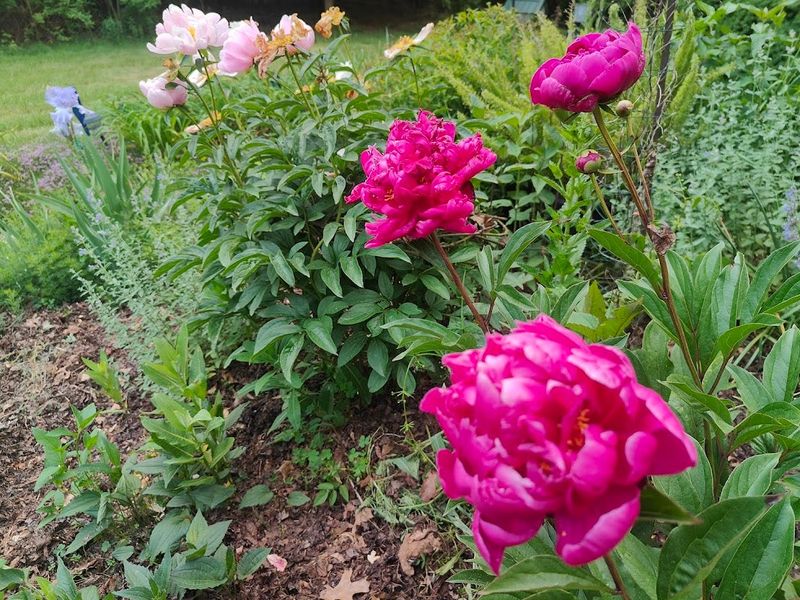
Dehydrated alfalfa is particularly good for blooming plants including roses, dahlias, peonies and clematis. For roses, use one to two cups per plant every six weeks.
In soils that have a low fertility, apply at the rate of 50 pounds per 1,000 square feet; medium fertility 35 pounds; adequate fertility 25 pounds.
Nutrients will be released over the next one to four months, which is relatively fast compared to some organic fertilizers but very slow compared to chemical fertilizers. This makes it safer to use without burning plants by applying too much.
A plant tea can be made by steeping one cup of dehydrated alfalfa in a five-gallon bucket of water for a day or longer. Pour into soil around plants as a pick-me-up. Or to use as a foliar spray, strain out the solids and add a couple of drops of a biodegradable dishwashing liquid to help it stick to the leaves, which may help alleviate foliar diseases.
Alfalfa is the secret substance to make your gardens healthy, green and lush with blooms.
This article originally appeared on The Detroit News: Alfalfa meal works wonders in your garden
Reporting by Bob Dluzen, The Detroit News / The Detroit News
USA TODAY Network via Reuters Connect
By Bob Dluzen, The Detroit News | USA TODAY Network