Cases of a parasite-causing illness that can trigger explosive diarrhea are rising in New York and across the country, but investigators have yet to identify a common source.
Cyclosporiasis is an intestinal illness caused by the microscopic parasite Cyclospora cayetanensis. While the parasite has long been associated with contaminated fresh produce, some experts believe the focus on food may be overlooking another possible source: water.

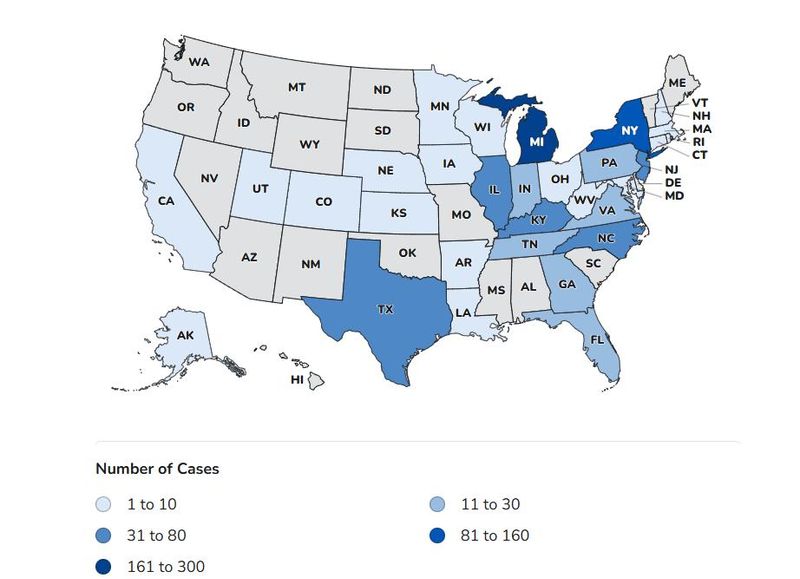
As of July 14, preliminary data from New York state health officials showed about 511 cases of cyclosporiasis reported statewide since May 1, among the highest totals in the nation. Preliminary data from New York City health officials show another 374 cases in the city between May 1 and July 10.
Cyclosporiasis is not new to New York. State health officials reported roughly 500 to 700 cases in each of the past two years. Although infections typically increase during the spring and summer, the current surge in New York and across the country has drawn renewed attention from public health officials.
While federal and state agencies continue warning consumers about fresh herbs, leafy greens and other produce linked to previous outbreaks, former officials with the U.S. Food and Drug Administration and U.S. Department of Agriculture told USA TODAY the investigation should look more closely at contaminated water.
Why investigators are struggling to find the source
USA TODAY previously reported that cyclosporiasis is more difficult to trace than foodborne illnesses such as E. coli or listeria.
The parasite has a longer incubation period, making it harder for sick people to remember exactly what they ate. It is also difficult to detect in food and environmental samples and cannot be tracked using the same genetic fingerprinting methods commonly used for bacteria.
Kalmia Kniel, a professor of microbial food safety at the University of Delaware, told USA TODAY another challenge may be reduced disease surveillance at the federal level.
In 2025, the Centers for Disease Control and Prevention scaled back a decades-old federal-state monitoring program known as FoodNet. Cyclospora and six other pathogens are no longer required to be reported through the surveillance network.
Kniel said losing that data makes it more difficult for investigators to identify national trends and connect illnesses to a common source.
“We have a lot less information to work with,” Kniel told USA TODAY. “I think we’re seeing some of the effects of that now.”
The FDA told USA TODAY it continues investigating cyclospora outbreaks using epidemiological, laboratory and traceback tools alongside the CDC and state and local partners.
“Protecting the nation’s food supply is a core FDA responsibility,” the agency said.
Experts say water deserves more attention
Some experts believe contaminated water may be playing a larger role than previously recognized.
“The role of water in the transmission of cyclospora to humans is probably underestimated or underrepresented and less understood,” former FDA Deputy Commissioner for Food Policy and Response Frank Yiannas told USA TODAY.
He said several produce-related outbreaks were ultimately traced back to contaminated irrigation water.
Water contaminated by sewage leaks, wastewater overflows, failing septic systems or flooding can carry the parasite into irrigation canals, where it contaminates crops before they are harvested.
During one FDA investigation, Yiannas said officials traced an outbreak to red cabbage grown in South Florida after testing found Cyclospora was prevalent in canals used to irrigate nearby farms.
Dr. Robert Mandrell, a microbiology researcher and former USDA official, told USA TODAY the parasite is especially resilient.
“It’s very resistant,” Mandrell said. “One expects that when you do treatment of water in a wastewater facility, that it can withstand that chlorine.”
Flooding could also increase exposure
Mandrell said contaminated floodwater may expose people to the parasite in ways that have received less attention than food contamination.
Michigan and Ohio — two states reporting large numbers of cases this year — both experienced significant flooding in recent months. New York has also seen repeated rounds of heavy rain and flooding this spring and summer.
When heavy rainfall overwhelms sewer systems or septic tanks, untreated or partially treated sewage can spread into neighborhoods, waterways and agricultural areas. That contamination may eventually reach recreational waters, private wells or irrigation systems.
“It may not be the drinking water that’s contaminated, but we don’t know that,” Mandrell told USA TODAY. “It also may be just exposure to floodwater that has some level of sewage in it.”
He said surveillance for Cyclospora in U.S. waterways remains limited.
“You need to do a major study, not just of drinking water, but of the rivers and streams that get the outflow from wastewater,” Mandrell said.
Yiannas noted that previous investigations have linked infections to tap water in a residential dormitory, sewage cleanup work and swimming in Lake Michigan.
However, both experts stressed there is still no evidence those scenarios explain the current rise in cases.
Scientists still have many unanswered questions
Researchers understand how Cyclospora causes illness but still know relatively little about how it survives and spreads in the environment before infecting people.
Mandrell said the parasite’s complex life cycle and difficulty growing it in laboratory settings have slowed research.
He and Yiannas both said more resources should be devoted to studying whether water plays a larger role in transmission than previously thought.
Yiannas also said investigators should ask more detailed questions about possible water exposure during outbreak investigations.
“When we’re investigating these outbreaks, we’re not asking enough questions about it,” he told USA TODAY. “We don’t have a lot of data, and we should.”
The FDA and CDC did not respond to USA TODAY’s questions about whether water exposure is being included in current investigations.
No single source has been identified
For now, state and federal health officials continue to say there is no evidence linking all reported cases to a single nationwide outbreak.
People can reduce their risk by washing fresh produce thoroughly, practicing good hand hygiene and following food safety recommendations. Those concerned about possible contamination following flooding may also choose bottled water until local conditions improve, Mandrell said.
Investigations into the source of the current increase remain ongoing.
Contributing: Christopher Cann, USA TODAY
—Madison Scott is a New York Connect reporter, covering entertainment, breaking and consumer news, and trending topics with a focus on stories that matter to readers across New York state. She also has an interest in how the system helps or doesn’t help families with missing loved ones. She can be reached at MDScott@USATodayco.com.
This article originally appeared on Rochester Democrat and Chronicle: ‘Explosive diarrhea’ parasite isn’t just on produce. Here’s where else it can hide
Reporting by Madison Scott and Mary Walrath-Holdridge, New York Connect Team / Rochester Democrat and Chronicle
USA TODAY Network via Reuters Connect
By Madison Scott and Mary Walrath-Holdridge, New York Connect Team | USA TODAY Network