Cadillac — Patricia Collins’ mother, Kelly Harris, had been struggling with frequent falls when her daughter made the decision she thought was in her mom’s best interest nearly four years ago: to move her mom into an adult foster care facility in Cadillac where she believed she’d be safely taken care of.
The 60-year-old’s long list of health problems, including diabetes, meant she needed more monitoring than her daughter could provide while working full-time as a teacher. So Patricia brought her mom to Pleasant Lake Lodge on Nov. 1, 2022.

Collins had wanted her mom to stay in a home close to her and her brother, and she said Pleasant Lake Lodge seemed like “a nice one.” The daughter said it was important to Harris to have freedom to come and go as she wanted; she’d be able to visit and pick her mother up for errands; and it seemed like her mom would get the care she needed.
“If I didn’t want my mom to be safe, if I didn’t want her to be cared for, we wouldn’t have gone through the trouble to find a place for her to stay and have care,” said Collins, 40.
But four days after she moved in, Harris was dead of diabetic ketoacidosis, a dangerous complication of diabetes from low insulin, according to the medical examiner’s conclusion.
The circumstances of Harris’ death led to a complaint being filed against Pleasant Lake Lodge with the Michigan Department of Licensing and Regulatory Affairs, which has administrative authority over adult foster care facilities. A Pleasant Lake administrator now faces criminal charges alleging Harris died after not receiving her needed insulin for several days after she moved in.
But state law doesn’t require Michigan’s more than 4,000 adult foster care facilities to report unnatural or unexpected deaths of residents to LARA, the state’s licensing agency. So unless a complaint about a death is filed to prompt an administrative investigation, LARA doesn’t disclose the death to the public. In Kelly Harris’ case, a complaint was filed, though not by Collins. But it’s unclear how many other deaths have gone unreported.
The agency doesn’t maintain a database that tracks all deaths of residents known to the agency, and LARA only keeps investigative reports public on a facility’s licensing web page for three years. A Detroit lawmaker said she is developing legislation to require transparency so these deaths become more known to the public.
Adult foster care facilities are residential settings that provide 24-hour care, protection and supervision for people who can’t live alone because of developmental disabilities, mental illnesses, physical handicaps or age, but who don’t need continuous nursing care. A facility can have as many as 20 residents.
Salli Pung, the long-term care ombudsman for Michigan’s Elder Justice Initiative, a legal rights advocacy group for older adults and adults with disabilities, said not requiring adult foster care facilities to report any unexpected or unnatural deaths to LARA is concerning. Without a reporting mandate, she said it’s difficult to know when deaths or injuries may have happened, whether they occurred because of a pattern of practices or inadequate services for residents, and if other residents are at risk.
“Those things should require more oversight, and reporting to the state agency is one way to start to hold providers more accountable. And then from there, (LARA) could make decisions and create a process to determine which types of those events they respond to,” Pung said.
Melissa Samuel, the executive director of the Health Care Association of Michigan — a professional association representing long-term care facilities — said she believes current regulations already provide mechanisms to understand if a resident’s death occurred under suspicious or concerning circumstances.
“I think we’re trying to get at, did something bad happen that caused the death, and I think there are layers of processes in place to determine that,” Samuel said.
Another resident’s death in Wyandotte was not reported
Kelly Harris’ death isn’t the first to happen at an adult foster care facility in Michigan in the last three years. In January, a resident of a Wyandotte adult foster home wandered outside in 18-degree weather without a coat and died after jumping in the Detroit River.
In Dennis Pollard’s death, an investigation was never sought, according to LARA.
A spokesperson for LARA confirmed that the agency does not investigate a resident’s death unless it receives a complaint accusing the adult foster home of inappropriate care that may have caused the death. The agency does not create reports that track all resident deaths in adult foster facilities.
“If a complaint is received alleging inappropriate care that potentially caused the death, LARA will investigate, which includes reviewing any existing incident report,” LARA spokesperson Abby Rubley wrote in an email. “If a complaint is not received, LARA would not conduct an investigation. LARA does not have any reports that would track all resident deaths.”
LARA — which licenses more than 4,000 adult foster care homes across the state — does require adult foster homes to write up an incident report of unexpected or unnatural resident deaths, according to its licensing rules. Those incident reports then have to be turned over to the deceased person’s designated representative, such as a family member or guardian, within 48 hours.
But LARA only investigates if the agency receives a complaint alleging the circumstances of the person’s death violated licensing rules.
But some would like to see more transparency when deaths happen at the state’s adult foster care homes. State Rep. Stephanie Young, a Detroit Democrat, is pushing for legislation that she said would create more transparency in the adult foster care industry.
LARA should mandate that homes report unexpected or unnatural deaths of residents to the agency, Young said. A report should also be made available to the public, she said.
Young noted that under the current oversight system, LARA may not have any way of knowing whether a resident’s death merits an investigation when the individual doesn’t have family or caretakers looking out for them.
“If there’s no family, no caretakers, no loved ones looking out for somebody (and) somebody passes, how would the department know the cause, and if it was something that potentially needed to be investigated?” Young said.
Cadillac family searches for answers about death
The lack of a mandatory unexpected or unnatural death report troubles Collins, Kelly Harris’ daughter, especially since her mother’s death at Pleasant Lake Lodge led to criminal charges three years later against the facility’s operator, Kristi Tucker-Fleischfresser.
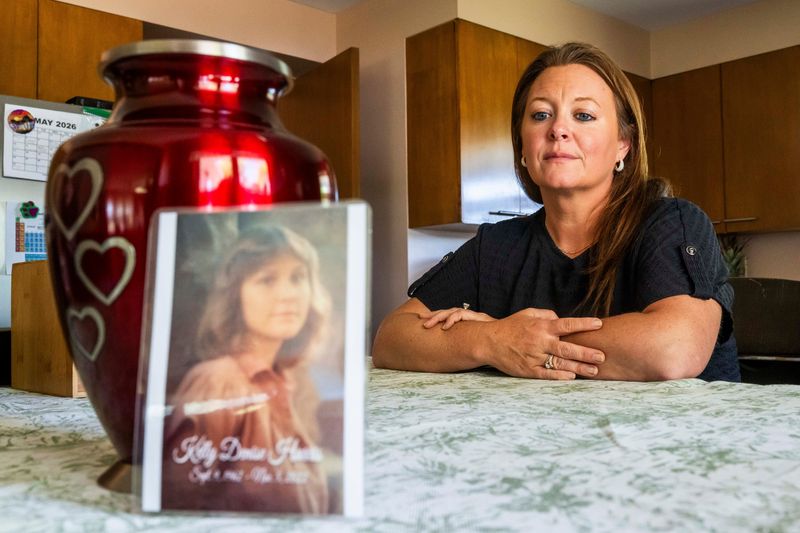
Sitting near a framed photo of her mother with her ashes in an urn nearby, Collins told The News that she wants accountability for her mother’s death. She said she does not believe Tucker-Fleischfresser’s life should be ruined, but she doesn’t want anyone else to suffer what happened to her mother. Families should have a way of knowing if their loved one could be at risk in a particular facility, she said.
“If there was a family down the road and they were searching for a nice AFC home, they could easily still walk into (Pleasant Lake Lodge) and see what I saw, and assume that they’re making a good choice for their family,” Collins said.
State prosecutors have charged Tucker-Fleischfresser with involuntary manslaughter, falsifying medical records to make it appear Harris had received insulin and obstructing an investigation by the Department of Licensing and Regulatory Affairs. Tucker-Fleischfresser’s attorney has challenged Harris’ cause of death, though, contending Harris had so many health problems that the medical examiner didn’t do enough to rule out other potential causes.
A trial is set to start in August in Wexford County’s Circuit Court after Judge Corey Wiggins in Cadillac’s 84th District Court bound over Tucker-Fleischfresser for involuntary manslaughter, a felony; two charges of falsifying medical records and one count of obstructing a LARA investigation, all misdemeanors. An involuntary manslaughter conviction could result in up to 15 years in prison.
The Michigan Attorney General’s Office declined to comment on the specifics of Tucker-Fleischfresser’s case, other than to say the prosecutor’s office is prepared to take the case to trial.
Details emerge in Kelly Harris’ death
Details of the days and hours before Harris’ death emerged in interviews with Collins and an April preliminary exam for Tucker-Fleischfresser.
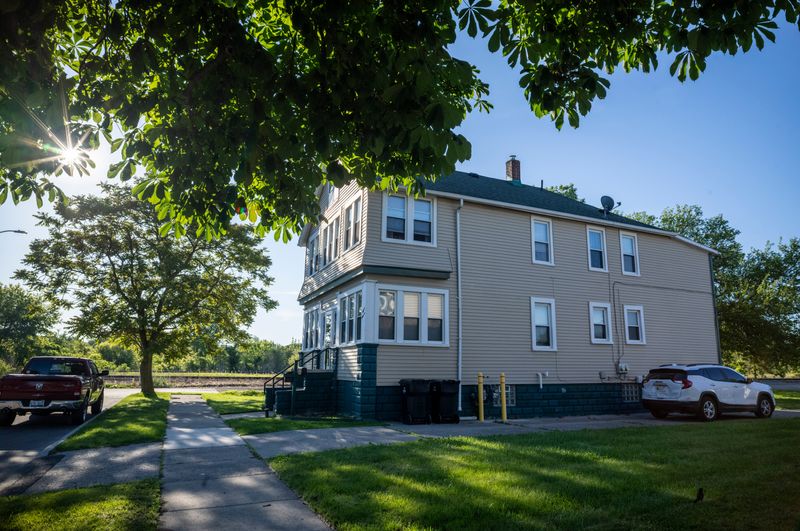
Harris moved into Pleasant Lake Lodge South, a large ranch-style home on a shady, remote gravel road in northwest Cadillac, on Nov. 1, 2022.
The 60-year-old had just come from a three-week hospital stay for complications from diabetes and high blood pressure, Collins testified during the preliminary exam. Those were just two issues on the long list of health problems plaguing Harris, and in recent months she had struggled with frequent falls while she was living with her daughter temporarily.
Harris could walk and do things for herself like cooking and laundry, but needed monitoring because of her health challenges.
Harris had initially been apprehensive about staying at the facility, but when Collins spoke with her for the last time on the night of Nov. 4, her mom was in good spirits. She told her daughter she’d just had a wonderful dinner with homemade cherry pie, and she had started to make friends with other residents.
“She said she was going to try to make it work, and that was the last time I talked to her,” Collins said.
Collins had sought a facility for her mom because she was teaching full-time in 2022 and couldn’t be home during the day to help Harris get around. Pleasant Lake Lodge seemed like a “nice” facility, she said.
“When the hospital sent Kristi the paperwork, my understanding was my mom’s health care was in good hands,” Collins testified.
But around 8 a.m. on Nov. 5, Collins got a call she couldn’t comprehend. Tucker-Fleischfresser called to say her mom was dead.
“I just asked her to repeat that a few times, and I said, ‘Are you sure? Are you sure you’re talking about my mom?’”
When Collins saw her mother’s stiff body later that morning. Harris lay on her back on a bed, her head toward the foot of the bed, her pajamas disheveled. The underside of Harris’ body had turned blue, Collins testified.
There was no attempt to resuscitate her mom, Collins told The News, although emergency medical technicians attended to her.
Harris’ medication records kept by Pleasant Lake Lodge didn’t indicate she needed insulin or blood sugar monitoring during her brief stay, two former care workers at the facility testified in the April court hearing. Harris arrived at the home by medical transport from Munson Medical Center Hospital with a paper prescription for insulin, according to an investigation opened by LARA in mid-November 2022, and she wore a glucose monitor on her arm.
A former employee testified Tucker-Fleischfresser sent Harris’ prescription to a pharmacy and followed up to get it filled — but that never happened. Harris’ records after she died, though, indicated she was given long-acting Lantus insulin four times from Nov. 2 to Nov. 4, with the initials of two caregivers appearing to be present on the records, which prosecutors contend Tucker-Fleischfresser forged.
Harris’ son, Nick Harris, said he’s grateful the attorney general’s office is pursuing charges. Having accountability is essential to ensure other people can trust these assisted-living homes, he said.
“I think it’s good that they are taking it to the state level and aren’t just sweeping it under the rug … that people aren’t just going to get away with not taking care of the people that are under their care,” Nick Harris said.
But he also wants more government oversight of adult foster care, subjecting them to random visits and interviewing staff to ensure proper care is occurring.
“For them to not have any oversight is, I think, absurd. Nobody is looking at all of these,” Nick Harris said.
Operator’s attorney questions charges
But Tucker-Fleischfresser’s attorney, Gerard Faber, has questioned Harris’ cause of death. During the preliminary exam, Faber questioned the amount of time Wexford County Medical Examiner Dr. Paul Wagner spent looking at Harris’ medical records.
He noted that the medical examiner only spent about half an hour looking through about 900 pages of Harris’ medical records and the multiple conditions Harris had besides diabetes, including coronary artery disease, high cholesterol, high blood pressure, obesity, peripheral artery disease and kidney disease.
“So none of those symptoms that she expressed could be symptoms of an impending heart attack or stroke?” Faber asked.
“As a physician, it’s my opinion she died of DKA,” Wagner replied. “Everything is possible. You’ve got to put everything on a differential, but based on the evidence and the data provided to me, I’m sticking by DKA, secondary to diabetes.”
Faber did not respond to a request for comment from The News about Tucker-Fleischfresser’s case.
What state found in Pleasant Lake’s records
LARA’s investigation report of Harris’ death — which does not identify who filed the complaint to the agency — found Pleasant Lake Lodge South’s failure to provide her with her needed insulin violated LARA’s rules for adequate health care for residents.
LARA also found that in 2024, a resident of Pleasant Lake Lodge North — which holds a separate license from its counterpart where Harris stayed — did not receive weekly insulin injections for about a month, according to a different investigation report by LARA, and was hospitalized in mid-May 2024. Tucker-Fleischfresser told a LARA investigator she had contacted the resident’s pharmacy in late April and was told the pharmacy was waiting for the resident’s insurance approval, according to LARA’s report.
The investigations after Harris’ death and the incident in 2024 both found violations of the state’s rules requiring the adult foster homes to follow the instructions and recommendations of a resident’s doctor or other health care professional on medications.
The state has renewed Pleasant Lake Lodge South’s license twice since Harris’ death — in 2023 and again in 2025.
“That’s completely negligent, if it’s happening again within that close amount of time,” Nick Harris said. “How many mishaps do you get until they don’t continue your license? Because I guarantee with my (electrician) license, if I burn a single house down, they’re not going to renew my license.”
Resident dies after wandering outside
In the case of Dennis Pollard, who lived in a Wyandotte adult foster care home, an investigation into his death was never sought, despite a record of at least one previous suicide attempt.
According to a police report from the Wyandotte Police Department, Pollard woke up the morning of Jan. 15, took his medication, showered and left the Rebirth Community Inclusion Program, an adult foster care facility on Superior Street in Wyandotte.
When he left around 11:45 a.m. on that winter morning, Pollard wore only black-and-red pajama pants, a black T-shirt and white tennis shoes. The high temperature that day was 18 degrees.
Fewer than three hours later, the Grosse Ile Fire Department pulled Pollard, 66, dead from the Detroit River north of the Grosse Ile toll bridge.
A care facility employee discovered him missing when she did her regular rounds about two hours after she’d last seen him, she told a dispatcher in a call to 911, and spotted footprints outside when she realized he wasn’t in his room or the home’s basement.
Snowy footprints just north of the fishing pier in Bishop Park clued Wyandotte and Grosse Ile police to where Pollard had jumped in the river.
“He’s suicidal,” the staff member told the emergency dispatcher, according to a recording of the 911 call.
Pollard had a history of mental illness. Following a suicide attempt in September 2025, police sent him to Henry Ford Wyandotte Hospital for a psychiatric evaluation. Officers found no suicide note in Pollard’s room in January.
LARA doesn’t have a record of Pollard’s death because there was no complaint filed. Police did not suspect foul play, and their reports don’t indicate evidence of wrongdoing by the foster home.
Is the system working as it should?
Jenny Post, vice president of assisted living services at the Health Care Association of Michigan, said the investigation of Harris’ death by LARA is evidence the system of oversight is working as it should.
Someone concerned about what happened to her filed a complaint with LARA, which looked into Harris’ death.
“The process is working. That investigation is happening; regardless of the result, people are looking at it,” said Post, who also chairs the state’s Adult Foster Care Advisory Council.
Despite their hurt and frustration over their mother’s death, Harris’ children try to focus on happy memories of her.
Collins, who lives in Mesick, about 25 minutes northwest of Cadillac, has a photo of Harris as a young woman, and another of the two embracing on Collins’ wedding day. Collins also found about 20 notebooks belonging to her mom, including one with notes on more than a half-dozen medications she took.
Collins keeps her mother’s ashes in a red-and-gold urn engraved with hearts, and she scatters them in places she knows Harris would love. She laughs when she recalls spreading some of the ashes last summer on flowers in the garden by Grand Hotel’s croquet field, a game her mother loved.
“She was the nicest and sweetest human being you could ever be around,” Nick Harris said. “She always found a way to understand people, whether they were good or bad to her, or anyone. She just always found a way to look at the positive in just about every situation.”
As they try to cope, Young, the state lawmaker, is working on draft legislation that she said is centered around “accountability, training and transparency” for adult foster care facilities.
The legislation she hopes to introduce would make certain information about adult foster homes public, such as staff-to-resident ratios, how many citations they’ve received, if they’ve ever had their licenses suspended and how many of their staff members are trained in administering medications.
Making these kinds of details easily available would ensure “people who are looking to place a loved one in one of these facilities will be equipped to make the best decision,” Young said.
jcardi@detroitnews.com
This article originally appeared on The Detroit News: Should adult foster care homes in Michigan be required to report deaths? Some say yes
Reporting by Julia Cardi, The Detroit News / The Detroit News
USA TODAY Network via Reuters Connect
By Julia Cardi, The Detroit News | USA TODAY Network