Pontiac — Following months of resident pushback on the Oakland County Sheriff’s Office’s use of drones and the company that provides them, county commissioners are looking to more explicitly regulate how county departments use drones.
Democratic Oakland County Commissioners Ann Erickson Gault of Troy and Brendan Johnson of Rochester Hills have put forth a framework for any county department that uses unmanned aircraft systems to meet. If passed by the full board, each department that uses drones would have to explicitly outline how they would be used, who would be allowed to use them and how the data collected by them would be stored.

“They’re wonderful tools, but people have legitimate concerns about the privacy and about the use of the data that’s collected by the drones. And so the goal is to balance those very competing concerns,” Erickson Gault said at a recent meeting of the commissioners’ Public Health and Safety Committee.
While the sheriff’s office has gotten the most attention for its drone program, it’s not the only county department that uses them, Johnson noted. He said the county parks department uses them to track invasive species, and that the treasury department uses them for property assessments.
If passed, the framework will require any county department that uses drones to explicitly outline: operator qualifications, certification and training; data retention, access, disposal, ownership, storage and collection; privacy protections; records management and public transparency; complaints and oversight; safety and maintenance; and compliance with federal, state and local laws.
Erickson Gault said any department that wishes to use drones in their operations would need to submit their drone policy — which would include all of these items — to the board of commissioners for approval.
“There are certain things that we want to look for in all of them — specifically, making sure that we’re not unintentionally violating the U.S. Constitution for provisions of freedom from unnecessary search and surveillance,” said Johnson.
Gault’s and Johnson’s move to strengthen the county’s rules around drone use comes about three months after a raucous county commissioners’ meeting on April 8 in which the commissioners voted to approve a nine-month free drone as first responder pilot program for the sheriff’s office.
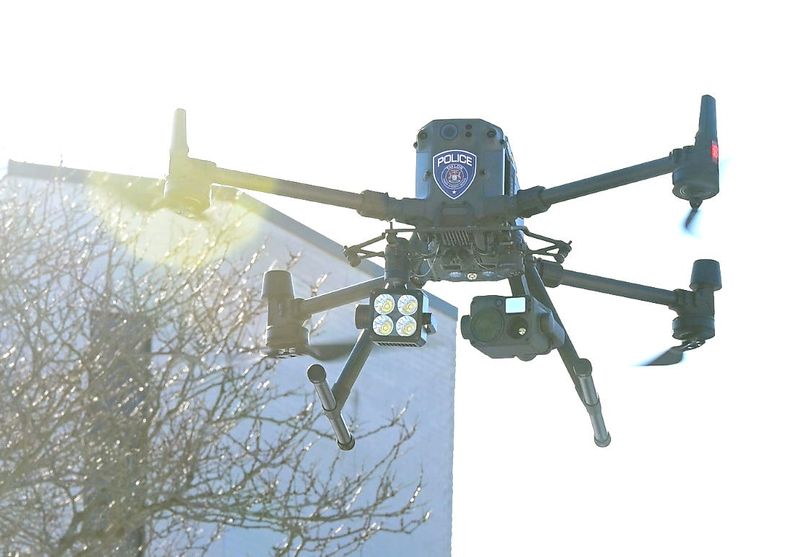
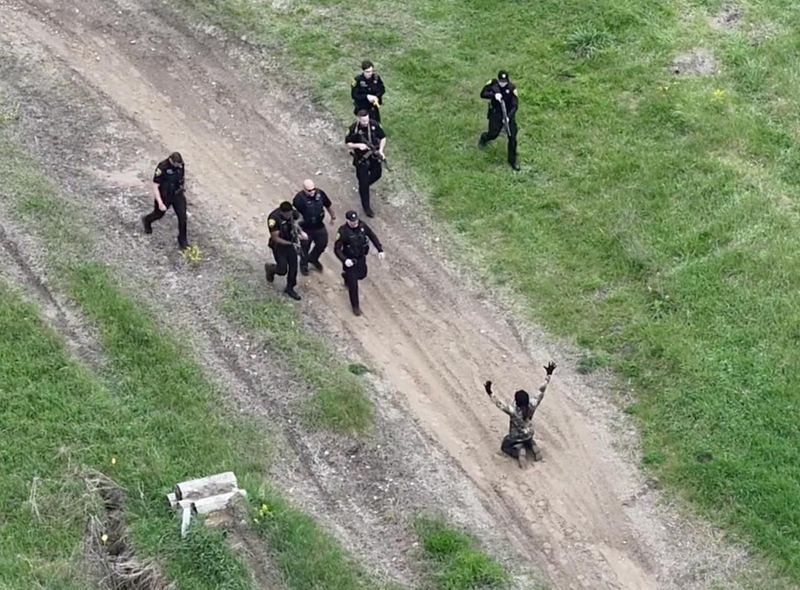
The program, through the prominent technology company Flock, includes seven drones that will be used for 911 calls, searching for missing persons and suspects, assisting other first responders and crime scene investigations, according to the Oakland County Sheriff Office’s drone policy.
If the county stays in the program, it will cost $2.5 million for two years, according to a memo from the commissioners’ Public Health and Safety Committee.
But some residents have raised concerns about Flock, the data it gathers and how that data is used.
Erickson Gault voted against the drone program; Johnson was not present for the vote. Democratic Commissioner Penny Luebs of Clawson, who signed on as a sponsor of the proposed policy change, voted for the program.
“It was a simple decision — yes. It’s a valuable tool. We need to continue this. To my surprise, many people objected to drones, or more specifically, the use of the company,” said Luebs, who chairs the Public Health and Safety Committee.
“My eyes, too, were opened,” said Oakland County Undersheriff Timothy Willis, who added that he was “pretty naïve” to people’s concerns about drones and other Flock technology.
In reference to the proposed policy change, Willis spoke highly of the sheriff’s office’s drone policy, which he called “pretty robust.” But Willis also said he’s open to the commissioners providing feedback or tweaks.
“I’m actually kind of excited about the idea of you guys saying, ‘Hey, this is what we’re looking for.’ It kind of helps me draft and decide how to manage that moving forward,” said Willis.
The drone usage framework will now go before the full Oakland County Board of Commissioners at the commission’s meeting at 9:30 a.m. Thursday for approval.
The drone program vote at the April 8 meeting was preceded by a motion to move public comment for scores of attendees to the end of the meeting. Commissioner Dave Woodward, the Royal Oak Democrat who chairs the Oakland County Board of Commissioners, held a vote to move public comment and denied a request for a roll call, which angered some commissioners and many attendees at the meeting.
Woodward’s actions at the meeting prompted the group I Am Oakland County to push for the chairman to be recalled. The recall efforts have stalled because Woodward has appealed them in court.
mbryan@detroitnews.com
This article originally appeared on The Detroit News: Drone controversy in Oakland County prompts commissioners’ regulation push
Reporting by Max Bryan, The Detroit News / The Detroit News
USA TODAY Network via Reuters Connect
By Max Bryan, The Detroit News | USA TODAY Network