Editor’s note: This story is the first in a four-part series about school desegregation in Corpus Christi and its aftermath, a process that began in the 1960s and spanned decades.
Read part two here. Parts three and four will be published on Caller.com on July 13.

Fifteen years after the U.S. Supreme Court ruled school segregation unconstitutional, about 84% of students in Corpus Christi ISD attended a segregated school.
In that post-Brown v. Board of Education but still segregated era, the stories children told their parents when they came home from school weighed upon their parents.
“One time I went to my dad, and I told him that the bathroom doesn’t have a door — one of the stalls was missing a door,” Christine Colunga told the Caller-Times in a 2026 interview.
It was the mid-1960s and Colunga was a new sixth grader at Prescott Elementary School. She’d attended the Westside school previously back in first grade, but for the past several years, she’d been attending Christ the King, a private Catholic school.
In comparison, the academics at Prescott Elementary School felt too easy. The facilities were in poor condition.
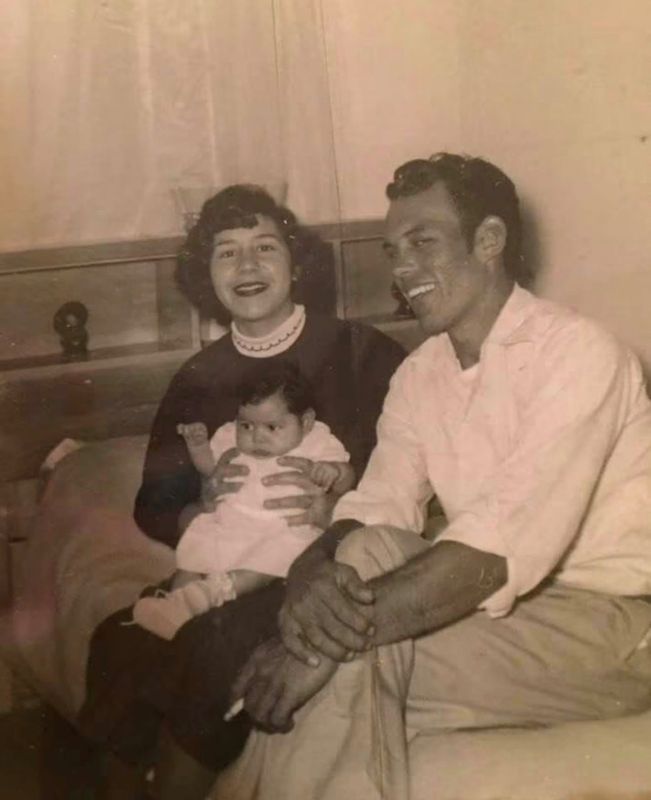
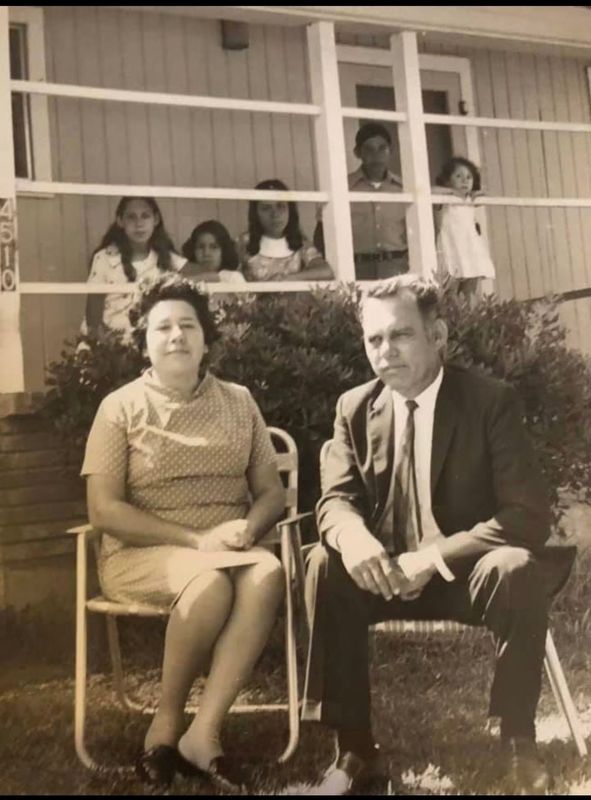
Colunga was the oldest daughter of Josephine and Jose Cisneros, a U.S. military veteran.
Cisneros went to the school to ask them to fix the stall door. There, he noticed a broken window. A school principal said it was useless to replace broken windows that would quickly be broken again, Cisneros told an investigative committee in 1976.
This didn’t sit right with Cisneros. And he wasn’t alone — other families had similar experiences.
Between 1966 and 1968, Cisneros and other Westside parents repeatedly sought to improve the quality of education in their neighborhoods.
The parents visited schools and attended school board meetings but “were just given the runaround,” Cisneros recalled in 1976.
Segregation had proved slippery, persisting in the form of racially unbalanced school enrollments for decades — long after the Corpus Christi Independent School District had stopped explicitly banning the intermixing of White, Black and Hispanic students.
The issue wasn’t laid to rest until after a landmark court case, lackluster “voluntary” integration schemes, a tumultuous busing plan and roughly 30 years of federal oversight and negotiations with education and labor advocates.
Perhaps more influential than any school district action were time and demographic shifts in the broader community.
But if there was one development that made a difference in Corpus Christi, it wasn’t Brown v. Board of Education. Here, the catalyst that changed the face of education was Cisneros v. Corpus Christi Independent School District, a lawsuit filed in 1968.
Today, many remember the case as the impetus for busing.
But that’s just the most memorable ripple.
The case is also connected to a push to bring more Black and Hispanic teachers into the classroom, a change to how Corpus Christi elected school board members and the establishment of a successful “special emphasis” school model that turned some of the district’s lowest-performing schools into state and nationally recognized campuses.
Allegations of discrimination
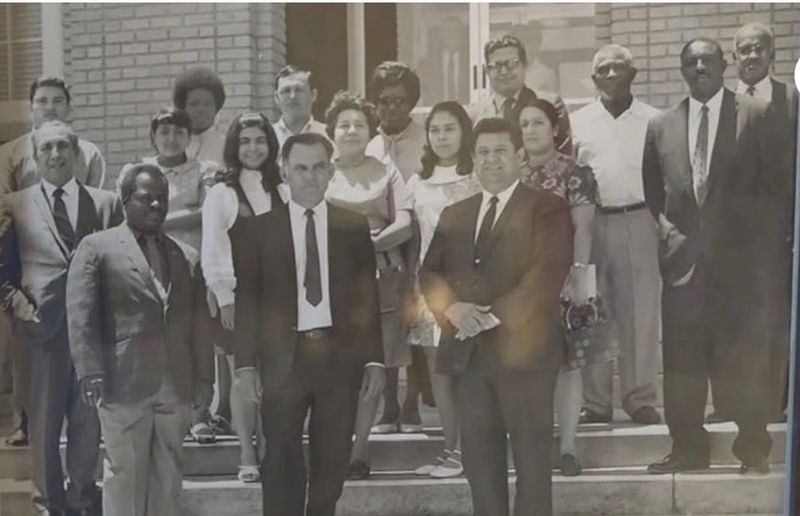
In 1968, two dozen Black and Hispanic members of the U.S. Steelworkers of America labor union banded together to file a lawsuit alleging that Corpus Christi ISD was discriminating against non-White students.
In addition to Cisneros, their names were Mike Zepeda, Marcelino Perez, Juan Gonzalez, Tony Dominguez, Rogerio Dominguez, E.R. Hinojosa, Pedro Resendez, T.S. Perez, Juan Gonzales Jr., Asencion Alaniz, Clemente Hernandez, Ramon Cisneros, Ciprian Gill, Inez Ramos, Alberto Rodriguez, A.E. Rendon, Manuel Pizana, John Amerson, Robert Russell, Sylvester Harris, Frank Bacy Jr., Oliver Brown and Johnie Cartwright.
As the first name on the list of plaintiffs, the spotlight shone strongest on Jose Cisneros.
The plaintiffs believed that Corpus Christi ISD funneled students into schools with clear racial majorities — there were the White schools in the Southside and the Black and Hispanic schools in the Westside and Northside.
“We brought this suit because we felt that our children were being discriminated against and that this discrimination was hurting their chance to get the same kind of education as other children,” read a 1970 note to the Corpus Christi Times signed by 10 Hispanic and Black plaintiffs.
This note was published the year the case went to trial, about two years after they’d filed the lawsuit.
Corpus Christi ISD leaders disputed that students were treated unequally, a position the district continued to hold years after a federal judge had ruled against it.
A CCISD assistant superintendent for instruction said in 1976 that he believed there had been “equal educational opportunities” prior to the integration plan, such as equipment lists and teacher qualifications.
“I myself was a principal in a ghetto school, so to speak, with 60 some odd percent black students for 8 years,” Gene Bryant said, according to an investigative report. “At no time would I have tolerated, nor did I ever feel that there was anything unequal about the kinds of equipment or teachers or education that our school was receiving or giving to students under my care.”
In those days, the materials and curriculums varied school to school, meaning that it is possible that individual experiences also differed.
But the plaintiffs weren’t alone in their complaints. Educator John Cole, who began teaching at Barnes Junior High School in 1969, agreed that there were differences between Westside schools and Southside schools.
The Westside schools were overcrowded and didn’t offer courses sufficient to prepare students to go to a good college, Cole told the Caller-Times in a 2026 interview.
“The reason that was explained to me was that these kids were going to grow up and pick cotton anyway and it was better that they not become too educated or they would be unhappy with their lives,” Cole said, describing a conversation in the teachers’ lounge he recalls from 1969. “It was frustrating and infuriating.”
The same conditions that inspired Black and Hispanic parents to sue Corpus Christi ISD inspired Westside teachers to form a teachers union. Cole would serve as the Corpus Christi American Federation of Teachers’ first president.
Racial makeup of schools
As early as the 1930s, the district had begun allowing Hispanic students to attend White schools. In the 1950s, Black students who had previously been limited to segregated schools on the northern edge of town were allowed to attend the schools of their choice.
In 1960, Corpus Christi ISD was actually the face of an integration victory — Miller High School’s 1960 football team was the first racially integrated team to win a state championship in Texas.
But in 1969, a tour of the district would have included 31 campuses where the student enrollment was either 90% White or 90% Black and Hispanic, though the data reports from the time used the labels “Anglo,” “Spanish Surname” and “Negro.” At another 16 campuses, between 70% and 90% of the students were either White or non-White.
That leaves about a dozen more CCISD campuses where the racial splits seem more reasonable in relation to the demographic split of the district, which had roughly the same amount of White and Hispanic students and a small population of Black students.
The district operated a neighborhood school model, meaning students were generally zoned to attend the school closest to where they lived.
And in Corpus Christi, White, Black and Hispanic families generally lived in different neighborhoods.
Socioeconomic factors likely played a role, but so did historical land contracts explicitly prohibiting Black and Hispanic individuals from living in certain neighborhoods.
Judge’s ruling in the case
In 1970, U.S. District Judge Woodrow Seals acknowledged that this landscape likely created de facto segregation in Corpus Christi schools, but he did not stop there. The segregated “dual school district” had its “real roots in the minds of men” and the “failure of the school system to anticipate and correct the imbalance that was developing,” Seals said in his ruling.
In drawing boundaries, choosing where to locate new schools, allowing a flexible transfer system and busing for White students to avoid minority schools, and failing to employ enough Black and Hispanic teachers, the school system made “calculated” decisions to maintain a dual system, Seals found.
The construction of Moody High School in the 1960s was part of this calculus.
When the district drew the boundary lines for this school, it “effectively sealed Mexican American and black children into the new high school zone and transferred significant members of both groups from other existing schools,” according to a 1977 report prepared by the Texas Advisory Committee for the U.S. Commission on Civil Rights.
The report was based on several hearings held in 1976. The committee included members like Dr. Hector P. Garcia and Carlos Truan.
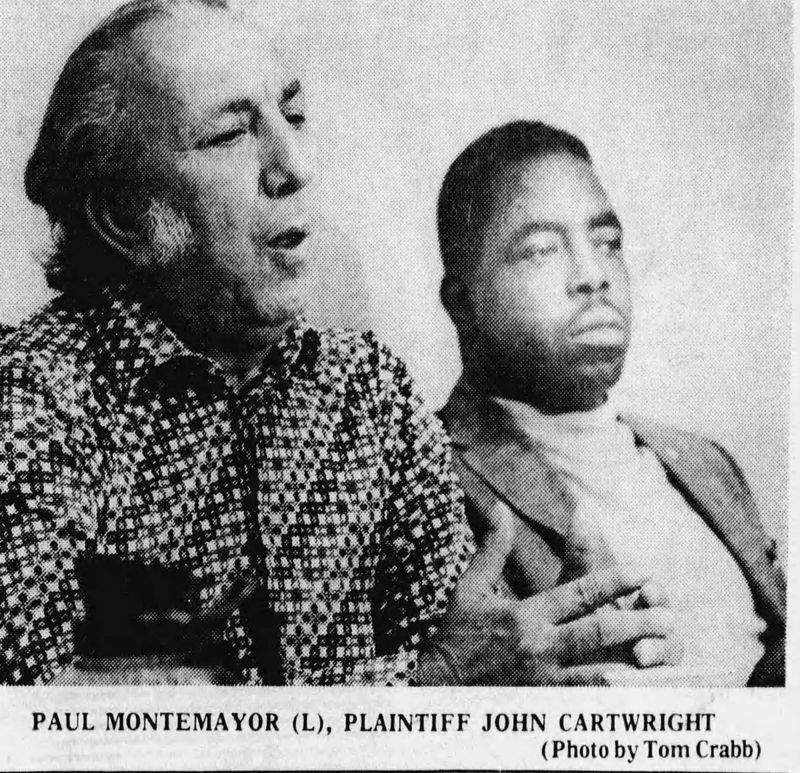
Paul Montemayor, a local labor leader who was involved in convincing the steelworkers union to fund the Cisneros v. Corpus Christi ISD lawsuit, told the committee that the school was pitched as an opportunity for the Mexican American community to have its own school.
He opposed the bond election to fund the school because he believed Moody High School would be an instrument of segregation, according to the report.
Moody High School’s enrollment was practically all-minority.
“Sure, we got a Mexican principal, a Mexican PTA, and a Mexican and black football team and an average grade level achievement after graduation of only an eighth grade,” Montemayor told the committee.
The U.S. Department of Health, Education and Welfare had concluded in 1968 that discrimination had played a role in the development of the Moody High School boundary lines, finding that the school board had been “much more responsive to the needs and the desires of the Anglo community than to those of the Mexican-American and Negro residents.”
A key point in the Cisneros case ruling is that Seals ruled that Mexican American students were an identifiable ethnic minority class.
What came next
But the fight was nowhere near over.
Over the next several years, the community was consumed with discussions of how to bring about integration.
Today, all Corpus Christi ISD schools are majority-Hispanic. Racial demographics do vary across campuses, but not to the same extent as they did in the 1960s and 1970s.
In the 2025-26 school year, White students made up 11% of Carroll High School, 11% of Collegiate High School, 12% of Branch Academy, 12% of King High School, 2% of Moody High School, 11% of Ray High School, 6% of Miller High School and 19% of Veterans Memorial High School, according to Texas Education Agency data.
White students made up 10.13% of the district population that year.
In 1997, U.S. District Judge Janis Graham Jack finally dismissed the Cisneros lawsuit, saying that the case had forever improved Corpus Christi education.
“There will never be any guarantee that what’s in place will stay in place,” Jack said, according to a 1997 Caller-Times article. “The guarantees, I think, are that the people of Corpus Christi are not going to let [education] go back to where it was.”
At the time, plaintiff representatives and school board officials agreed that the lawsuit played a role in improving education in the city, according to the 1997 article.
Cisneros’ descendants are immensely proud of him.
“Nobody else in our family’s quite like him,” Colunga said.
Cisneros told the Caller-Times in 1980 that he never regretted joining the case, though his name on the lawsuit meant that disgruntled and angry residents who opposed busing focused their attention on him.
People threw eggs at the house and unsolicited packages arrived. The family received countless phone calls, Colunga said. In 1980, Cisneros told the Caller-Times that callers had threatened the family.
Colunga remembers one time she answered the phone and the caller insulted her dad, asking if he was the “stupid idiot” from the lawsuit. Colunga passed the phone on to her dad.
He wanted to talk to them, Colunga said. He wanted them to understand.
“I just try and make them see why I did what I did,” Cisneros told the Caller-Times in 1980. “I’ve never changed many minds, though.”
Colunga recalls attending court proceedings a couple of times. At one point, one of the lawyers told her, “Your dad’s going to be in the history books.” Cisneros died in 1996.
This article is part of a multi-part series on school desegregation in Corpus Christi. Subsequent articles will explore how busing impacted the community in the 1970s and how the special emphasis school model boosted educational outcomes in the 1980s.
Olivia Garrett reports on education and community news in South Texas. Contact her at olivia.garrett@caller.com.
This article originally appeared on Corpus Christi Caller Times: Corpus Christi’s slow desegregation battle transformed local education
Reporting by Olivia Garrett, Corpus Christi Caller Times / Corpus Christi Caller Times
USA TODAY Network via Reuters Connect
By Olivia Garrett, Corpus Christi Caller Times | USA TODAY Network