The South Western City Schools Board of Education has unanimously voted to place a $220 million bond levy on the November ballot to raise money to replace the district’s two oldest high schools, but without raising existing property taxes.
If approved by voters, it would cost property owners an estimated 2.26 mills for each $1 of taxable value, which amounts to $79 for each $100,000 of county auditor assessed valuation over the next 38 years. However, according to a district spokesperson, the proposed bond issue would not increase existing taxes because the district plans to phase out old debt in December 2026.

Board President Camille Peterson said at the June 29 board meeting that it is important the district was able to keep its promise to taxpayers to not raise their tax bill.
“South Western district has kept its promise,” Peterson said. “This is something that is not going to increase the cost for parents to give their kids a great opportunity in a modern facility at no cost.”
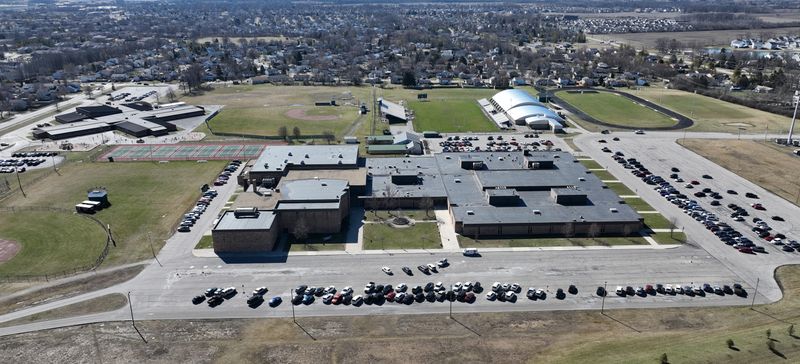
The funds from the bond issue would be paired with approximately $113 million contributed by the Ohio Facilities Construction Commission [OFCC] to fund the replacement of the district’s two oldest high schools, Grove City High School and Westland High School, according to information provided to The Dispatch by the district. Both high schools were constructed in the 1970s and are now more than 55 years old.
Peterson recalled the last phase of district improvements and how much pride it brought to the community.
“I remember when the building got done and the kids were like ‘Wow, we’re getting to go to school here?'” Peterson said.
If the bond levy passes, the district’s current plan is for the new Grove City High School and Westland High School to be built on their existing campuses over the next four years. Students will continue attending the two existing schools throughout the construction process.
The bond issue would also allow for “targeted facilities enhancements” at Franklin Heights High School and Central Crossing High School to include updates and additions to athletic fields and extracurricular spaces.
If the bond fails, the OFCC will give the funds to another community on their waitlist of schools across the state for other construction projects, the district said.
Peterson said it was important that the district took advantage of the opportunity provided by the state grant.
“I always say we can’t penalize the kids for an opportunity that will not increase your property taxes and we can give them new facilities,” Peterson said. “When your district is out of that opportunity, it moves on to the next (district).”
The district last placed a “no new millage” bond issue on the ballot in 2018, and last placed an operating levy on the ballot in 2009.
District also facing financial shortfall
As The Dispatch reported in February, South Western City Schools is operating under a multimillion-dollar budget deficit and may need to consider raising money through a levy in the coming years after nearly two decades without one.
The district began deficit spending in 2025 and is operating under an $11 million cash deficit in 2026. According to projections, the district may have a negative cash balance by 2030.
District administrators pointed to several challenges, including the 2025 state two-year budget, which did not adjust cost sets to account for inflation. The Dispatch previously reported that South Western is expected to lose around $7 million in state funding over the two-year budget.
Cole Behrens covers K-12 education and school districts in central Ohio. Have a tip? Contact Cole at cbehrens@dispatch.com or connect with him on X at @Colebehr_report
This article originally appeared on The Columbus Dispatch: South Western City Schools places $220 million bond on November ballot
Reporting by Cole Behrens, Columbus Dispatch / The Columbus Dispatch
USA TODAY Network via Reuters Connect
By Cole Behrens, Columbus Dispatch | USA TODAY Network