Indiana’s government, along with nonprofits and businesses, has launched an effort to make us one of the most artificial intelligence-ready states in the nation. However, Indiana has already made two errors that doom us to fall behind.
A state benefits from AI in four ways: Existing businesses start using it; new companies and jobs grow around it; we build infrastructure to run it; and AI-related businesses move in.

Indiana’s initiative focuses primarily on helping businesses adopt AI. This is a mostly harmless endeavor. Still, if a business needs state government to push it into adopting AI, well, it’s already failing.
Education decided who won the last tech boom
To understand our approach to AI, look back to the technology-driven productivity boom in manufacturing and how Indiana handled that episode.
Manufacturing employment in Indiana peaked in 1972 at over 750,000 workers. We are now at 516,200 workers and have lost 3,000 factory jobs over the past year. Almost all of this slide is due to technological progress that makes workers more efficient. Some is robotics and some is digitization of inventory management or statistical process control.
The Hoosier firms that adopted these technologies did well; Indiana’s manufacturing GDP hit an all-time record last year (adjusted for inflation). There was no state “office of robotics” helping firms adapt. It happened at a time of deep economic distress for Hoosier families and communities.
Not all places that lost factory jobs suffered economic distress. The predictor of economic success was not how many factory jobs were lost, but how well-educated the local workforce was.
The best-educated half of counties lost more factory jobs than the bottom half, but they also experienced much less unemployment, less economic disruption and higher wage growth.
In fact, a county’s educational attainment data from 1970 is a better predictor of current economic conditions than any policy effort, tax incentive or workforce development.
Indiana is a better-educated place than it was in 1970, but relative to the rest of the nation we are worse. The relative decline in our college-going rate is so extreme that we’ve moved from 38th to 42nd in less than two decades. We are poised to slip to 45th or 46th by 2040.
AI is even more dependent upon advanced human capital than the automation revolution of the 1960s through the 2010s. In fact, each successive technological advancement replaces repetitive tasks and allows people to do more human things.
The wheel, gunpowder, electricity, the internet, robotics and now AI focus value on advanced human characteristics — human capital. Because Indiana lags in human capital development, no matter what AI programs the state adopts, we will continue to lag the nation in AI adoption.
Right now, we are 35th in one measure of AI adoption, which means we are doing better than we should be. We are unlikely to sustain that level, and there’s no way to get around it without better educational outcomes.
Indiana’s extraordinary shift in focus away from academic excellence toward vocational training couldn’t have come at a worse time.
A tax law built for data centers
The second reason why Indiana will fail to be a leader in AI: We have a broken tax system.
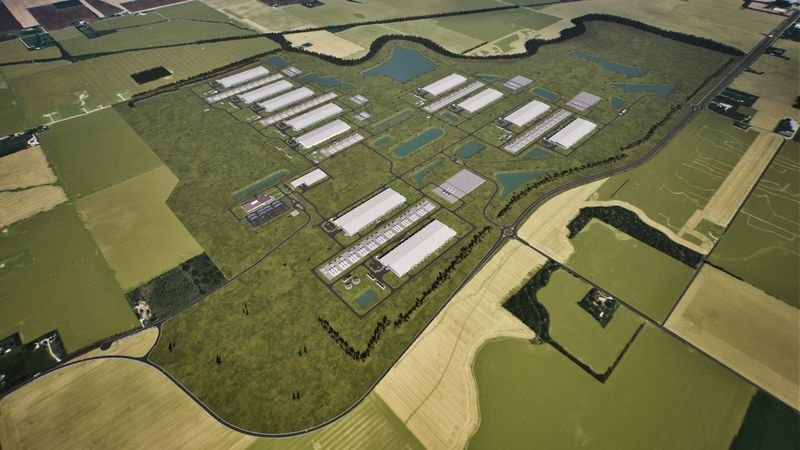
AI infrastructure, primarily data centers, is a capital-intensive venture. That means data centers hire few, if any, workers on site for what may be hundreds of millions to several billion dollars of capital. That capital is in expensive buildings and infrastructure and computing equipment, also known as “business personal property” in the lexicon of taxation.
Last year, Indiana passed a property tax law that was a windfall to capital-intensive industries, particularly data centers. Senate Enrolled Act 1 eliminated the 30% floor on taxation of depreciated property.
This sounds like a wonky tax issue, but it isn’t. If you buy a home, that home appreciates in value and you pay more taxes on it each year. But if a business buys a billion dollars of computers or expensive water-cooling systems, it can depreciate the value of that equipment, typically over eight years, and pay lower taxes.
This system was designed to ensure businesses buy equipment they need without paying a full tax rate on it forever. But Indiana has maintained a 30% minimum on that initial investment to protect local communities and taxpayers. That way, as long as the business kept using the equipment, it would have to pay taxes on at least 30% of the original investment.
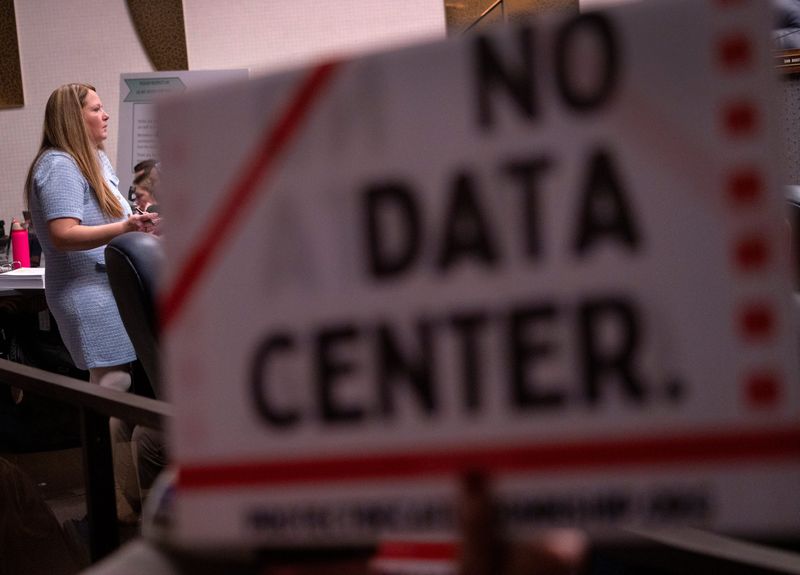
Now that the legislature eliminated that 30% floor on taxes, AI infrastructure, primarily data centers, rarely offers benefits to Hoosier communities. The egregious tax abatements combined with SEA 1 are fueling the backlash we are seeing against data centers.
That’s a shame, because data centers should be welcomed additions in many parts of the state. But this badly designed tax system creates another AI casualty — the supporting businesses.
Braun’s energy plan hits a tax wall
Gov. Mike Braun ran on a smart energy plan that focused on expanding energy production. He has done more than most governors in focusing attention on the need for all types of production, with special focus on nuclear energy.
If Indiana could attract more data centers, as well as more energy production, we could see lower energy prices in the years to come. That is what happens when you add more baseload energy production.
That progress will be stymied by last year’s property tax changes and probably worsened by the rush to remedy taxpayer anger at the bill, which will grow louder over the coming year.
Helping Indiana prosper in the 21st century means actually focusing on the basics. It requires stronger educational attainment and a tax policy that is more than just a collection of lobbyist talking points.
Michael J. Hicks is the director of the Center for Business and Economic Research and the George and Frances Ball distinguished professor of economics in the Miller College of Business at Ball State University.
This article originally appeared on Indianapolis Star: Indiana is already losing the AI race | Opinion
Reporting by Michael J. Hicks, Contributing Columnist / Indianapolis Star
USA TODAY Network via Reuters Connect

By Michael J. Hicks, Contributing Columnist | USA TODAY Network