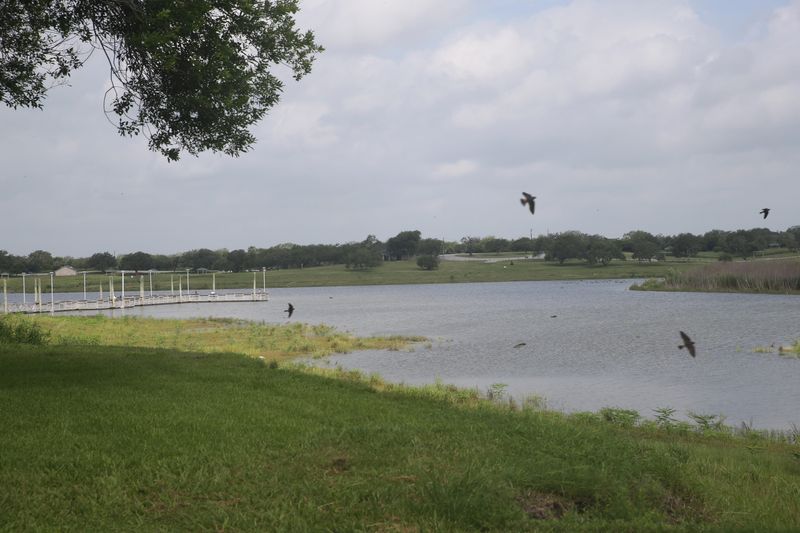
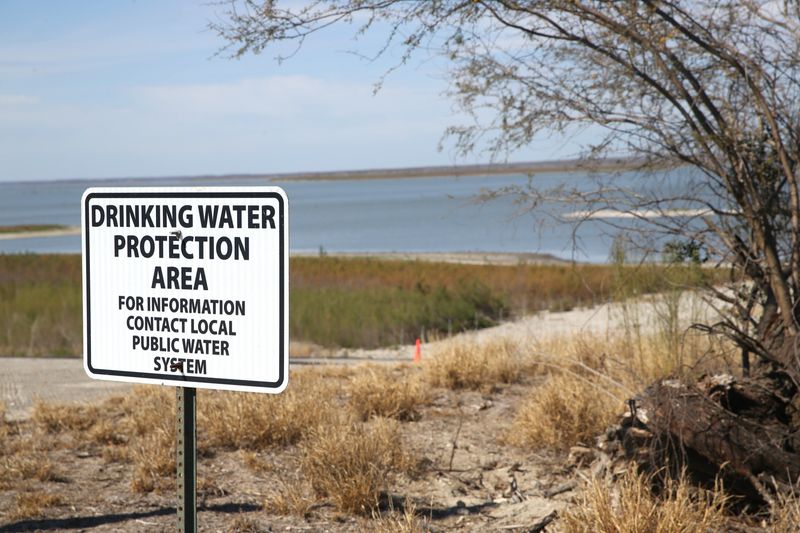
Despite rains in recent weeks, the region continues to endure drought, and city of Corpus Christi officials are continuing pursuit of multiple projects aimed at boosting supply and diversifying water sources beyond lakes and rivers.
Until recently, the city relied solely on surface water — Lake Corpus Christi and Choke Canyon Reservoir — as well as rights to acre-feet of water from the Lower Colorado River and Lake Texana, delivered to the city via the Mary Rhodes Pipeline.

Within the past year, city officials have worked to bring online new water supply projects that would, if realized, provide millions of gallons per day to bulk up available resources.
They have been referred to, at times, as “generational” investments. But they could also be key in staving off a water emergency, currently projected as potentially occurring in September 2027.
A water emergency would be called when it is expected that the city is within six months of its supply being unable to meet demand.
As of June 26, the combined capacity of Lake Corpus Christi and Choke Canyon Reservoir, the city’s main resources, measured 15.7%, according to city data.
Here’s a breakdown of what’s in the works or in consideration.
It will be updated as new developments occur.
Inner Harbor Seawater Desalination Plant
Corpus Christi’s proposed Inner Harbor desalination plant — the city’s marquee project — has been on a virtual rollercoaster for more than a year, with fluctuating votes and support on the City Council.
How much water would it generate?
The plant would produce as much as 30 million gallons of treated water.
Has the City Council approved it?
No. Although a proposed contract to continue its design had been scheduled for a vote June 2, the majority of the council opted to push back the decision to Sept. 1.
The new contractor, if supported, would be Corpus Christi Desal Partners.
A contract with a previous firm, Kiewit Infrastructure South Co., was ended by the council in September 2025.
Several members of the council said they were not prepared to approve it, pending additional environmental studies.
What is the timeline for completion?
Contractors estimated construction and mechanical completion by April 2030, according to the June 2 presentation.
It’s unclear what the timeframe for completion may look like with the vote delayed to September.
What obstacles has the project faced?
The project has a long history of opposition based on environmental, neighborhood and cost concerns, both in the community and among council members.
What is the cost?
It’s expected the plant would cost about $979 million. The state previously approved a low-interest loan of about $757 million. City officials are seeking grants, but ratepayers may pick up a significant portion of the tab.
Harbor Island Seawater Desalination Plant
The project isn’t spearheaded by the city of Corpus Christi; instead the Nueces River Authority is taking lead in pursuit of a private-public partnership.
How much water would it generate?
River authority officials have been planning a plant that would be capable of producing as much as 100 million gallons of treated water per day, although capacity could eventually reach 450 million gallons per day, according to previous Caller-Times reporting.
As much as 50 million gallons of water per day is earmarked for the city of Corpus Christi.
Has the City Council approved it?
The City Council approved paying the river authority a nonrefundable reservation fee in October 2025. The Nueces River Authority announced its preferred developer, IDE Technologies, in May.
What is the timeline of completion?
The plant is planned to go online in December 2029, according to a presentation made to the City Council in October 2025.
What obstacles has the project faced?
River authority officials had hoped for $140 million in state support; however, the application did not make the cut this spring for funding through the State Water Implementation Fund of Texas, according to earlier Caller-Times reporting.
The river authority has also been under increased scrutiny, including allegations that leadership misrepresented water sales amounts.
A later investigation determined there was no intentional wrongdoing, Caller-Times articles show.
What is the cost?
The city’s nonrefundable reservation fee came in at $2.7 million.
River authority officials in the October council meeting estimated the project cost from $5.5 billion to $6 billion, to include a conveyance line, according to previous Caller-Times reporting.
Evangeline groundwater
The Evangeline groundwater project has continued development, even as a question remains on the timeline that permits may or may not eventually be won.
It hasn’t been officially acquired by the city.
The developer of the project, Evangeline/Laguna LP, is required to meet certain conditions for the final transaction, including attaining all the needed permits for its operations.
How much water would it generate?
The project is proposed to pump as much as 24 million gallons of groundwater per day from about 23,000 acres of property in San Patricio County, near Sinton.
Has the City Council approved it?
Preliminarily, yes. That could change, however, depending on the timeline of the project’s progress. A yet-scheduled, but possible, contested case hearing could see a yearslong delay. The council will need to decide whether to continue pursuing it.
What is the timeline for completion?
Unclear at the moment. City officials had initially believed the first phase of the project could launch operations in November. However, protests against the proposed drilling and transport permits — and subsequent likeliness of contested case hearings — have extended the completion date to an undetermined time.
What obstacles has the project faced?
The project has seen substantial objections by the St. Paul Water Supply Corp. and the city of Sinton, where officials have voiced concern that the well field would negatively impact the quality and accessibility of water in their communities.
Both rely on groundwater for municipal needs.
City officials have said they have taken steps to address those concerns.
What is the cost?
About $676.5 million, taking into account both water rights and capital costs, according to a presentation made to the council June 2.
Nueces County Eastern Well Field
Work on what is known as the city’s Eastern Well Field — located on a 16-acre tract that runs along the Nueces River, near County Road 73 — started more than a year ago.
How much water would this project generate?
There are eight wells on the property, but total pumping is short of the 10 million gallons of water per day expected due to environmental restrictions, city officials have said in the recent past.
Has the City Council approved it?
Yes.
What is the timeline for completion?
The physical development of the well field is completed and pumping operations are continuing, although city officials hope to reach full production in the future.
What obstacles has the project faced?
Environmental concerns, largely related to conveyance to the Nueces River, as well as questions of potential impacts to private wells.
What is the cost?
Development of the Western Well Field is $60 million combined, with about half covered by a state grant, according to the June 2 presentation.
Nueces County Western Well Field
The Western Well Field, a 250-acre site located near County Road 666 and Northwest Boulevard, is currently operating, with more wells under development.
Production was temporarily paused after heavy rains in the area.
There is also an adjacent property owned by the Ed Rachal Foundation that may act as an extension of the Western Well Field.
How much water would this project generate?
Full production of the Western Well Field is expected to be 17 million gallons per day. However, with addition of the Ed Rachal Foundation property, that is estimated to be as much as 26 million gallons of water per day, according to city officials.
Actual production may be limited by environmental safeguards.
Has the City Council approved it?
Both well fields, as well as brackish reverse osmosis infrastructure and conveyance line, have been approved by council.
What is the timeline for completion?
Full buildout of the project is July 2026, according to officials. The pipeline to the reverse osmosis plant is anticipated for completion in December, according to a June 23 presentation to the council.
What obstacles has the project faced?
Environmental concerns, as well as questions about potential impacts to private wells used by residents for household needs, in addition to livestock and agriculture.
Similarly to the Evangeline project, city officials have said they have been addressing concerns.
Like the Eastern Well Field, full production is constrained by environmental plans.
What is the cost?
Development of the Western Well Field and Eastern Well Field is about $60 million combined, with about half covered by a state grant, according to the June 2 presentation.
An additional cost is a brackish reverse osmosis treatment plant for water produced from the Western Well Field, which would be developed at the O.N. Stevens Water Treatment Plant. That is estimated to cost $55 million, according to a June 2 presentation, while a pipeline to carry the groundwater to the plant is estimated to cost $120 million.
The Ed Rachal Foundation well field is anticipated to cost $28 million, according to city officials.
Wastewater effluent for industry
City officials are working with two industrial giants, Flint Hills Resources and Valero, to develop a system in which treated but nonpotable effluent will be made available for use in some of their plant operations.
How much water would this project generate?
The project in full is expected to eventually make as much as 8 million gallons of nonpotable water per day available to Valero and 3 million gallons of nonpotable water available to Flint Hills Resources.
City officials have indicated that other industrial companies have expressed interest in the program.
Has the City Council approved it?
Yes. The council approved a 30-year purchase agreement with Valero and a five-year purchase agreement with Flint Hills Resources for millions of gallons in reclaimed water.
Flint Hills Resources’ agreement involves buying as much as 2 million gallons of effluent — starting with 1 million gallons of water per day — sourced from the Alice Wastewater Treatment Plant, each year for a portion of its operations.
Plans include the company taking responsibility “for all infrastructure, permitting, and operational costs associated with receiving and processing the reclaimed water, including the installation of a City-approved meter that the City will own and maintain,” according to a city memo issued in January.
Valero’s plans would be phased, beginning with 3 million gallons of effluent per day, with an option of potential expansion eventually reaching as high as 8 million gallons of nonpotable water per day.
As part of its agreement, Valero would also commit to reimbursing the city for “chemicals, electricity, and mutually agreed‑upon treatment processes associated with producing and delivering the water,” according to a city memo.
“Valero will also pay its proportional share of operation and maintenance costs for shared delivery infrastructure,” it states
What is be the timeline for completion?
Construction on Valero’s infrastructure has launched, and Flint Hills is installing infrastructure, Nick Winkelmann, Corpus Christi Water chief operating officer, said June 12.
No timeline was provided on Valero’s work.
However, Winkelmann said it is believed Flint Hills Resources will be able to take effluent later in the summer.
What obstacles has the project faced?
The project hasn’t seen significant opposition or major apparent obstacles.
What is the cost?
Although the companies will pay for a large portion of the capital projects, ratepayers will still foot the bill for some of its costs.
While Flint Hills Resources would be picking up the brunt of the tab, Corpus Christi ratepayers will also pay more. That’s because the company’s switch from 2 million gallons of potable water to reclaimed water will mean a revenue loss of about $1.6 million.
City officials earlier this year had estimated it would increase average residential customers’ bills by 10 cents.
Revenue lost related to Valero’s contract would total roughly $4.7 million per year with the change-up to 3 million gallons of effluent purchase per day.
That would equate to an increase of about 30 cents per month for average residential households. That would look more like 80 cents, should Valero eventually reach purchasing 8 million gallons of treated wastewater per day.
The city also plans to construct a conveyance line from Oso Wastewater Treatment Plant to the Greenwood Wastewater Treatment Plant.
An estimate on the cost is about $107 million, according to a June 30 City Council agenda.
Barney Davis Seawater Desalination Plant
There have long been proposals for development of a seawater desalination plant near the Barney Davis Power Plant site in the Flour Bluff area.
The idea has been revisited multiple times over the years with little movement.
However, the council showed support earlier this year to again return to the concept.
How much water would this project generate?
No firm amount of water has been identified.
Has the City Council approved it?
The council approved staff discussions with CPS Energy, a San Antonio-based public utility that now owns the plant, but there hasn’t yet been a contract or plans brought to the council.
If approved, what would be the timeline on completion?
Unknown.
What obstacles has the project faced?
There hasn’t yet been a great deal of voiced opposition; however, the project has remained a concept and has not seen proposals, plans or contracts.
The property eyed for the project is not owned by the city, and its use for a desalination plant would need to be negotiated.
The city would also likely need to bring on board a private entity for a public-private partnership.
What is the cost?
No cost has been identified.
Corpus Christi Polymers
Like the Barney Davis concept, city officials have several times considered potentially employing a desalination plant at the site of plastics manufacturer Corpus Christi Polymers.
Neither the desalination plant nor the plastics plant has been completed.
In its most recent iteration, representatives are proposing to sell water treated by the desalination plant, once the facility is completed, to the city.
How much water would this project generate?
Developers say as much as about 9 million gallons of water per day initially, and potentially expanding by another 5 million to 6 million gallons of water per day.
Has the City Council approved it?
The council approved the staff to enter into negotiations with Aquatech, representing CCP in the talks. However, there hasn’t yet been a contract to consider.
However, there is a 25-year proposed agreement on the table, according to a June 23 presentation.
If approved, what would be the timeline on completion?
Company representatives have said about 9 million gallons of water per day could be provided as soon as one year after the agreement is executed and construction has started, according to a June 12 city memo.
Expansion to 12.5 million gallons per day would be about six months after the initial 12, and for 14 million gallons of water per day, another 18 months, according to the June 23 presentation.
What obstacles has the project faced?
Repeated attempts and failures to strike a deal over the years, and also potential environmental concerns.
What is the cost?
No cost has been publicly disclosed.
Li Ranch
How much water would this project generate?
Potentially 6 million gallons of water per day.
Has the City Council approved it?
The council gave preliminary approval to purchase water rights, but the transaction would not be final until the property owners met many of the same conditions outlined in the terms for the Evangeline project.
If approved, what would be the timeline on completion?
Currently undetermined.
What obstacles has the project faced?
Much of the acreage is located within the property where the Evangeline well field is planned, and the project will likely face similar opposition.
What is the cost?
The groundwater rights cost as much as $38 million.
Axe H20
AXE H20, a company with leadership that includes former high-ranking members of the military, was formed earlier this year.
The firm recently submitted a proposal to the city for a large-scale desalination plant in the Barney Davis Power Plant area.
How much water would this project generate?
About 150 million gallons of water per day, according to a news release issued by developers.
Has the City Council approved it?
The council gave the nod for staff to evaluate the firm’s business proposal; however, there is no contract currently available to vote on.
If approved, what would be the timeline on completion?
Two years from the start of construction, according to a company news release.
What obstacles has the project faced?
No apparent objections currently seen in the community.
City officials, however, have raised questions about the viability of the business proposal in the past.
What is the cost?
None currently available.
Seven Seas Water Group
One of the newer proposals, helmed by Seven Seas Group, would develop a well field on about 5,000 acres at Chapman Ranch.
How much water would this project generate?
At least 10 million gallons of treated groundwater per day, according to documents included in a May council agenda.
Has the City Council approved it?
The council approved opening negotiations on a sales contract; however, a contract has not yet come to the council for consideration.
If approved, what would be the timeline for completion?
Currently undetermined. Developers are seeking to begin a test well by the end of June, according to a June 23 City Council presentation.
What obstacles has the project faced?
None publicly disclosed at this time.
What is the cost?
Not yet publicly available.
Kirsten Crow covers city government and water news. Have a story idea? Contact her at kirsten.crow@caller.com.
Consider supporting local journalism with a subscription to the Caller-Times.
This article originally appeared on Corpus Christi Caller Times: Here’s a breakdown of all of Corpus Christi’s water supply projects
Reporting by Kirsten Crow, Corpus Christi Caller Times / Corpus Christi Caller Times
USA TODAY Network via Reuters Connect
By Kirsten Crow, Corpus Christi Caller Times | USA TODAY Network