I am the director of the Seneca Art & Culture Center at Ganondagan State Historic Site in Victor, located not far from Rochester. We represent an ancient Seneca town that stood in the late 17th century.
Since we are the only New York state historic site dedicated to telling a Native American story, many have asked us to respond to the anniversary of the British Civil War of 1776-1783. The moment could be characterized as the moment when the “Americans” became themselves, however for the Indigenous peoples of the east, it was devastating.

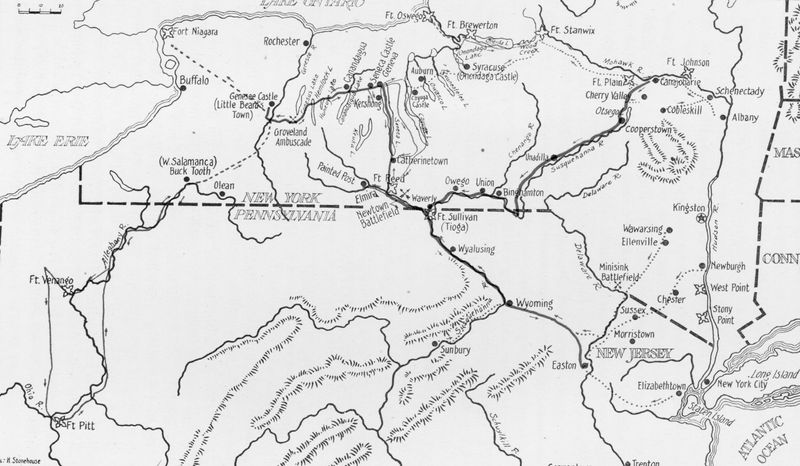
In 1779, the rebel Americans under the leadership of then, Gen. George Washington, chose to invade Haudenosaunee territory, the stated intent to punish the Haudenosaunee for upholding their long-standing agreement with the British crown and the mutual support it insisted on. Unofficially, the rebels were underfunded and needed to secure lands for growing their new country as well as to pay their officers once the fighting ended.
The new book, “Clearing Iroquoia: New York’s Land Grab in the 1779 Campaigns of the American Revolution” by Travis Bowman & Matthew A. Zembo (2025, Bloomsbury Publishing) outlines this disturbing but very real intention.
Forty Haudenosaunee towns were razed. The American army invaded and destroyed countless homes, apple and peach orchards as well as hundreds of thousands of bushels of corn. I sacrifice much of my precious word count to include these important words from Washington’s orders.
“The Expedition you are appointed to command is to be directed against the hostile tribes of the Six Nations of Indians, with their associates and adherents. The immediate objects are the total destruction and devastation of their settlements, and the capture of as many prisoners of every age and sex as possible. It will be essential to ruin their crops now in the ground and prevent their planting more….
I would recommend, that some post in the center of the Indian Country, should be occupied with all expedition, with a sufficient quantity of provisions whence parties should be detached to lay waste all the settlements around, with instructions to do it in the most effectual manner, that the country may not be merely overrun, but destroyed….
But you will not by any means listen to overture of peace before the total ruin of their settlements is effected. It is likely enough their fears if they are unable to oppose us, will compel them to offers of peace, or policy may lead them, to endeavour to amuse us in this way to gain time and succour for more effectual opposition. Our future security will be in their inability to injure us the distance to which they are driven and in the terror with which the severity of the chastisement they receive will inspire…”
— George Washington to Major General John Sullivan, 31 May 1779
The invasion would draw more than a third of the Continental forces into the great raid. The gamble ultimately did pay off, although the eventual land theft came as a result of economic forces rather than at the tip of the bayonet. The British-American peace terms in 1783, saw the Haudenosaunee left out of the negotiation, abandoned by their former allies and brothers. Encroachment and frontier violence precipitated the Treaty of 1794 at Canandaigua which “buried the tomahawk” and ended the direct bloodshed between the Haudenosaunee and the newly minted United States.
In the months after the Sullivan-Clinton invasion, the Haudenosaunee and other native allies sought refuge at Fort Niagara near Niagara Falls. The refugee camps stretched for three miles along the Niagara River escarpment away from the fort. The British were unprepared to support their allies, the storehouses at the fort were stretched thin. Reports were that the British were cutting caustic lime into the bags of flour they provided to their ancient allies to extend its usefulness.
Historian Lockwood Doty reported that John Montour, noted Lenape/Mohawk cross cultural interlocuter, suffered from eating the tainted flour, “Montour lived, but the poison resulted in an ulceration of his upper lip, which was quite eaten away, leaving both teeth and jaw exposed.” The Haudenosaunee today continue to prepare “burnt corn soup” and it is considered a delicacy although an acquired taste. Many still recount the events which lead up to the invention of the dish.
The suffering didn’t end with poison flour. The winter of 1779-80 was among the harshest and coldest of the 18th century. Hundreds of Haudenosaunee perished; the elderly and the very young were taken first. Stories of the speed and intensity of the snows told of springtime where the carcasses of frozen deer stood in their tracks unable to find shelter before the severe snows.
The Haudenosaunee sent people back to their burned-out villages to scrape together any viable sustenance left by the American soldiers. They returned with baskets of burned corn, which the people cooked into a sour broth, and some were able to survive the winter from it.
The invasion as a retaliatory strike to prevent the frontier war was a decided failure. It accomplished none of the stated objectives. The next year would see three times the number of war parties coming from Niagara; the people who lived rebuilt settlements and replanted their corn from seed they managed to save from their burned-out homes. The Haudenosaunee would continue to live and eventually restore a peace for themselves and their new cruel neighbors.
I inherited a mandate from my predecessors, to promote the message of peace. What exactly does that mean? For the Haudenosaunee people, peace is not a finish line but a responsibility. When the Haudenosaunee achieved a peace, it was always enshrined in an agreement, a treaty. Along with that agreement came a sacred document, a woven wampum “belt” or “mat”.
Wampum is made from marine shells, in two varieties, purple beads from the quahog clam and white beads from the lightning whelk. But that doesn’t limit wampum to a binary system, they can be colored with mineral paints to alter their meaning, red, green and even blue paint was variously used to modify or accentuate the mat depending on the agreements or intent.
Where then does the wampum mat reside that ended the hostilities between the new Americans and the Haudenosaunee? When was it made? Who made it and was it ratified? It would not be until 1794 when the new American government would send a representative, Timothy Pickering, to Canandaigua in the Finger Lakes, where the newly built courthouse would be the site of a great resolution.
The Canandaigua Treaty as it has come to be known, would define forever the rights of the Haudenosaunee as a sovereign nation, and also establish a homeland for many of the member nations. Each year, the Army Corps of Engineers sends $4,500 worth of cloth to the Haudenosaunee, the amount and quality much diminished over the past two centuries, but still a tangible symbol of the corporeality of the agreement. Regardless of the quantity and repeated attempts by the United States government to simply buy out of the agreement, the Haudenosaunee refuse and insist on receiving the cloth each year.
Of the many nations that fought during the American war for independence, it is the Haudenosaunee who have maintained intact, their aboriginal form of governance through it all. To witness true history and true resilience, I invite you all to Canandaigua on every Nov. 11, when the Haudenosaunee people converge and celebrate the lasting peace made in 1794 that would end forever the conflict.
To brighten the chain of friendship is essential to maintaining a peace, to remind ourselves of those times and continue to work on that peace is the Haudenosaunee way.
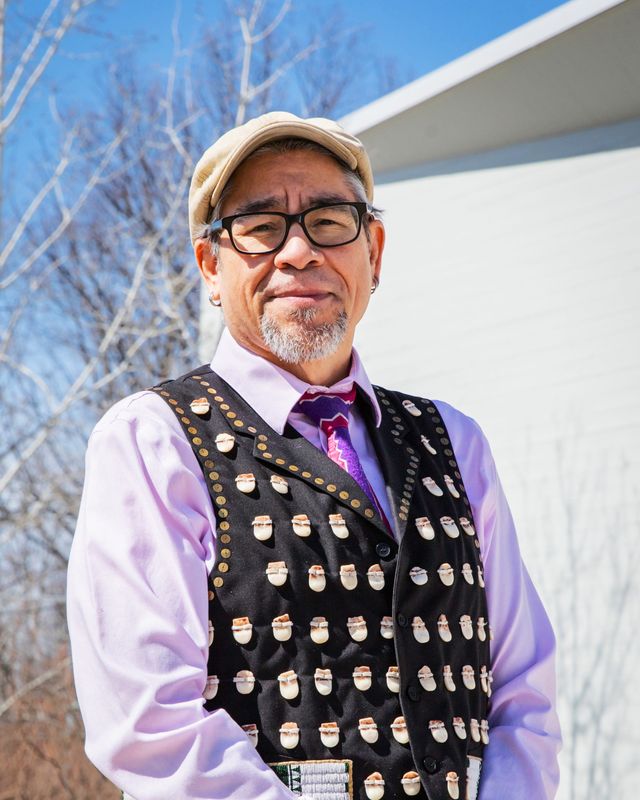
Michael Galban is historic site manager for Ganondagan State Historic Site and the Seneca Art & Culture Center in Victor, New York.
This article originally appeared on Rochester Democrat and Chronicle: Of burnt corn and peace: the Sullivan-Clinton campaign | Exclusive
Reporting by By Michael Galban, Special to the USA TODAY Network / Rochester Democrat and Chronicle
USA TODAY Network via Reuters Connect
By Michael Galban, Special to the USA TODAY Network | USA TODAY Network