

America turns 250 years old on Saturday, July 4, 2026, as measured by the adopting of the Declaration of Independence July 4, 1776, in Philadelphia.
Our nation and its 50 states and thousands of cities, towns and villages have made quite a journey in the two-and-one-half centuries since. To mark this historic occasion, the Democrat and Chronicle and USA TODAY Network-New York are revisiting New York’s state vital role and remarkable history during the War of Independence.

From the British invasion of New York City in 1776 to the Battle of Saratoga in 1777 to the Sullivan-Clinton campaign in 1779 to Gen. George Washington making his headquarters in the Hudson Valley at the American Revolution’s end, New York state was an epicenter of the history-making war that created our nation.
As America turns 250 years old and Americans discuss and debate the country’s history and heritage, its strengths and its challenges, here are some of the people and places in upstate New York related to our country’s origins before and during the American Revolution.
NY Revolutionary War history: About Fort Ticonderoga’s cannons
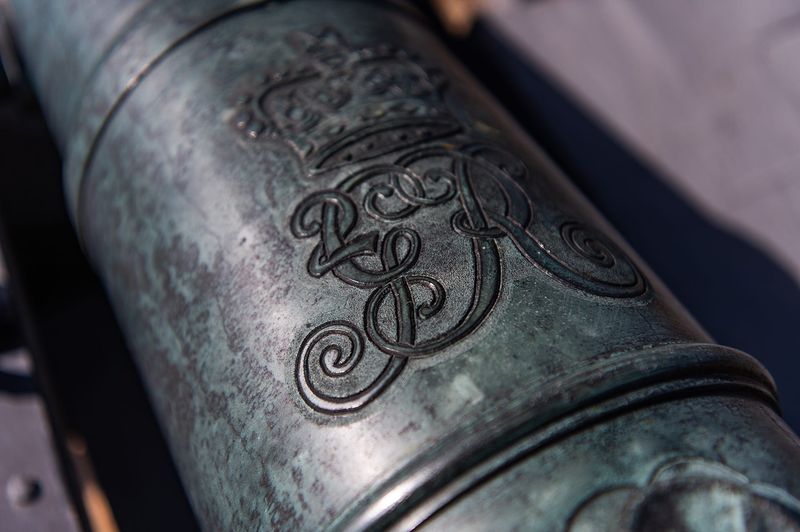
Not only did the British Army not foresee the raid and capture of Fort Ticonderoga in May 1775, its troops stationed at the remote outpost nestled between Lake Champlain and Lake George might not have even known the War of Independence had begun. First constructed by the French in the mid-1750s, the fort came into British possession in 1759, during the French and Indian War. Once the Revolution began in spring 1775, two enormous names — Ethan Allen of Green Mountain Boys fame and Benedict Arnold of more ill repute — teamed to take the fort from British hands. The real win for the colonial troops? Col. Henry Knox oversaw transport of the fort’s British cannons through snow and ice and rain all the way to Boston by early 1776, where they proved of great use in dislodging British control of Massachusetts’ main city.
— Mike Kilian, Rochester Democrat and Chronicle
NY Revolutionary War history: About the Battle of Valcour Island
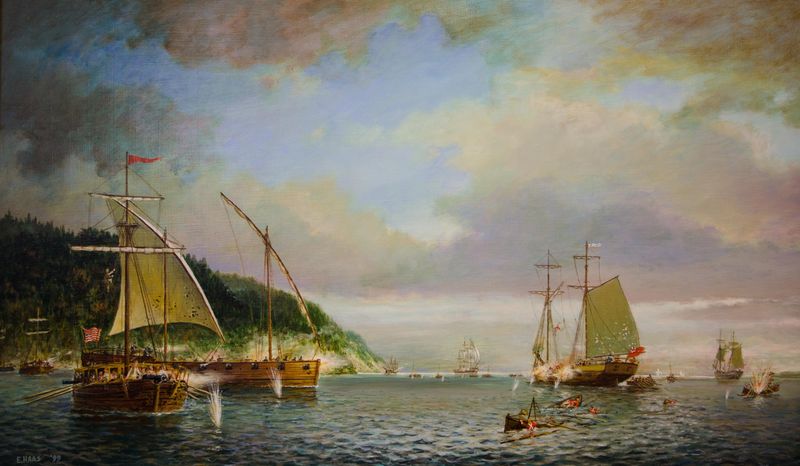
The Battle of Valcour Island took place on Lake Champlain on Oct. 11, 1776, with a small American fleet led by Benedict Arnold facing a much stronger British fleet. The Americans outmaneuvered the powerful navy, sheltering by the island before the battle and using thick morning fog to retreat through the British fleet. Once the wind changed direction on Oct. 13, the American fleet ran out of time. Arnold directed the ships to run aground, where they were stripped of parts and then burned. The battle delayed the British invasion from Canada until spring, buying the Continental Army time to regroup.
— Steve Howe, Rochester Democrat and Chronicle
NY Revolutionary War history: About Ft. Stanwix and Battle of Oriskany
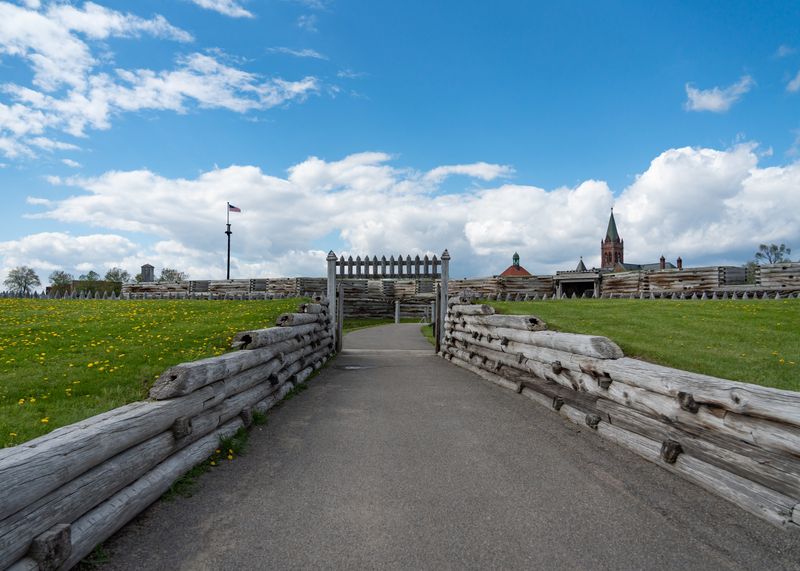
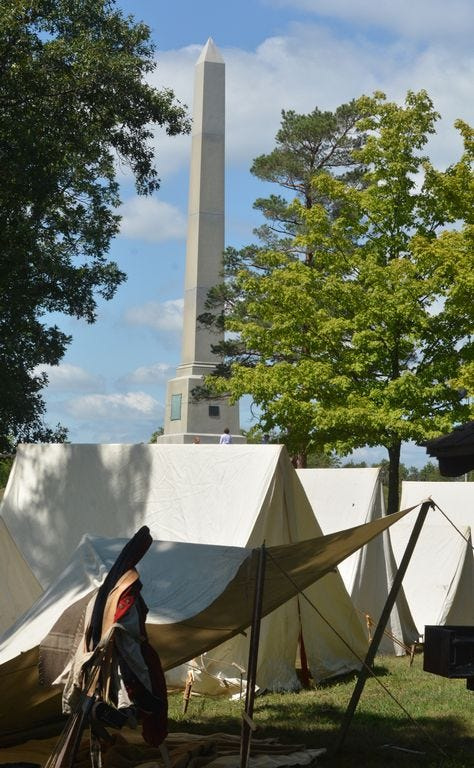
In August 1777, British General Barry St. Leger led troops to take back Fort Stanwix, an abandoned British fort on the Oneida Carry occupied by Continental forces. Learning of an advance led by General Nicholas Herkimer to join the Stanwix defense, a British dispatch ambushed the Continentals in Oriskany, compelling one of the bloodiest battles of the Revolution. Colonel Peter Gansevoort commanded withstanding a 21-day siege on Stanwix, till St. Leger, suffering abject losses, retreated in defeat. “The Oriskany Battlefield” is a state historic site, while the replica of Fort Stanwix in Rome is a National Monument, memorializing “the fort that never surrendered.”
— Cara Dolan Berry, Utica Observer-Dispatch
NY Revolutionary War history: About Gen. Nicholas Herkimer
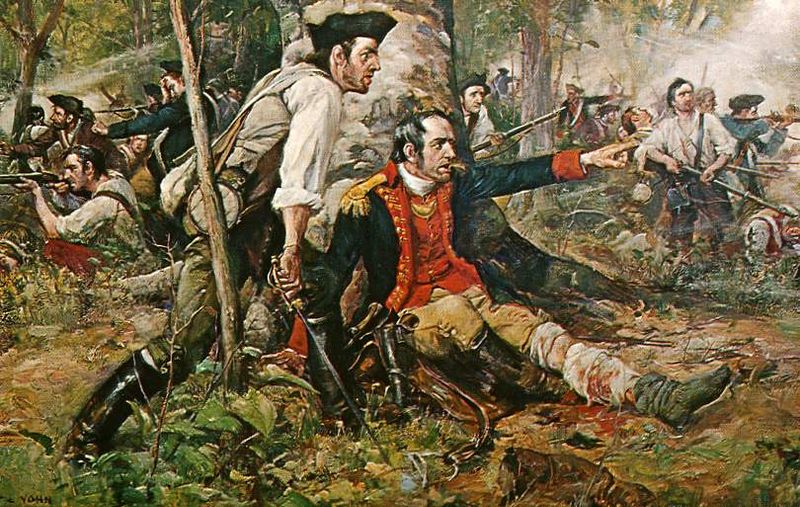
Nicholas Herkimer, a second–generation German Palatine colonist from the Mohawk Valley, served as brigadier general of the Tryon County Militia when conflicts arose between Britain and North American colonies. Herkimer led militia and allied Oneida Indian troops to join the defense of Fort Stanwix in August 6, 1777. Ambushed en route by British forces who learned of the advance. Herkimer, fatally wounded in the ensuing fight. Refusing to be removed from the field, he commanded his troops, forcing a British retreat from the Battle of Oriskany. Ten days later, Herkimer died a Mohawk Valley hero of the American Revolution.
— Cara Dolan Berry, Utica Observer-Dispatch
NY Revolutionary War history: About Molly Brant
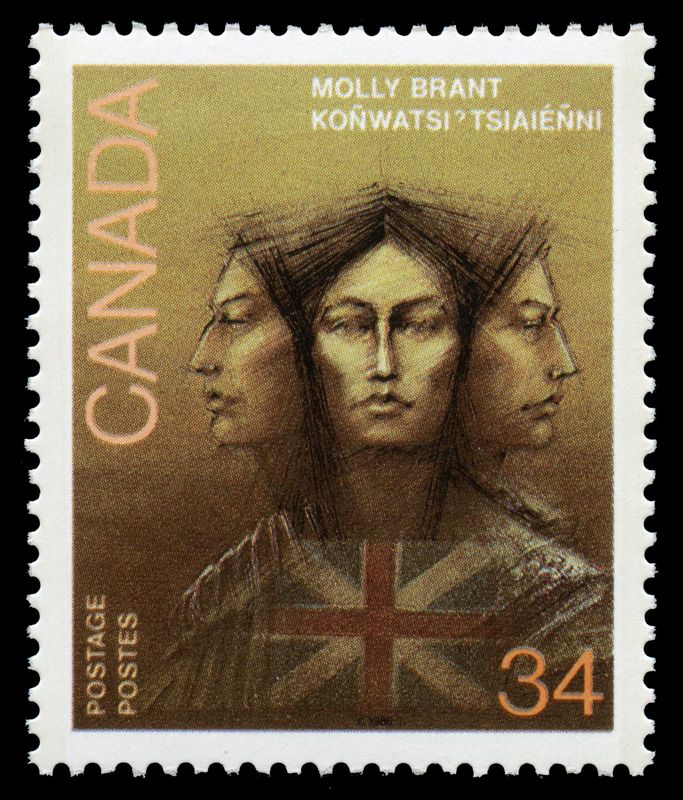
Crucial Revolutionary War assistance for the British came from a woman living along New York’s Mohawk River who was educated in European ways but had connections to the Mohawk people. Mary Brant, who often went by Molly, grew up in Canajoharie and was said to have been “equally at home” in both European and Native American culture. While she spent some time in Johnstown, after the death of Sir William Johnson, to whom she was romantically linked, she returned to the village along the Mohawk River. During the American Revolution, Brant provided shelter, food, arms and ammunition for British loyalists. Amid the war, she notified her brother and stepson in 1777 that American Gen. Nicholas Herkimer was on his way to rescue Fort Schuyler, which ultimately led her to flee to Fort Niagara on the opposite side of the state. After the war, Molly settled in Kingston, Canada, where she remained staunchly pro-British until her death in 1796, according to the National Park Service. In 1986, a Canada Post postage stamp commemorated Brant.
— Emily Barnes ,Rochester Democrat and Chronicle
NY Revolutionary War history: About the Battle of Saratoga
Most anyone who took social studies in New York state public schools back in the day recalls lessons on the British Army’s “three-pronged plan” to take over New York colony and divide the New England colonies from ones in the Mid-Atlantic and the South. The most vital prong was Gen. John Burgoyne’s army’s journey south from Montreal toward Albany. In two fierce battles, on Sept. 19 and Oct. 7, 1777, colonial troops stopped the British and forced their surrender in what is now the town of Stillwater on the western banks of the Hudson River. Word of the outcome served as a world-shaping force, giving enormous confidence to the Americans and drawing in allies to the fight, particularly the French. Key to this military upset of all upsets is a figure you remember for something else. Yet Benedict Arnold’s heroism on the Saratoga battlefield is unmistakable.
— Mike Kilian, Rochester Democrat and Chronicle
NY Revolutionary War history: About the Seneca Nation
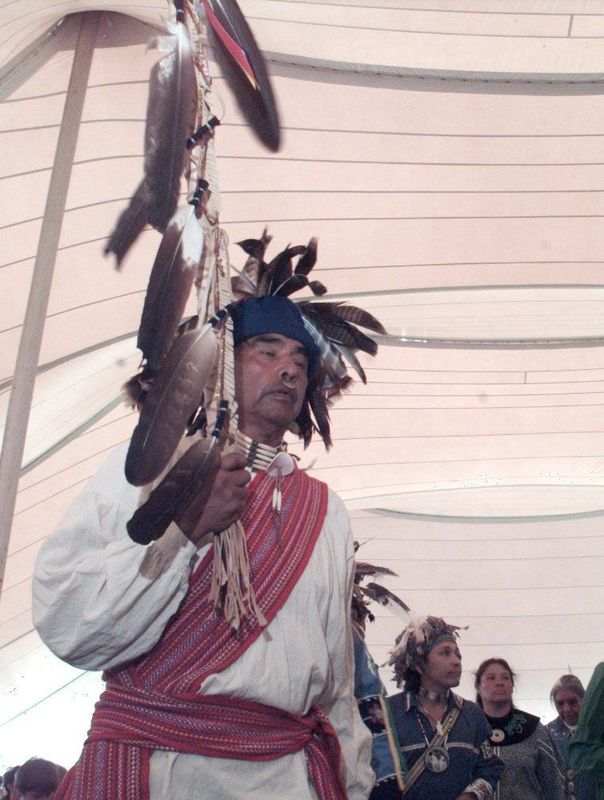
The Revolutionary War in Western New York divided the Haudenosaunee Confederacy and forced nations into difficult choices about survival. While the Oneida and others joined with the Continental Army, most Seneca sided with the British. It was thought to be the best course to preserve long-standing treaty relationships that might safeguard their homelands and sovereignty. The Seneca suffered devastating consequences at the hand of colonial troops. Thousands had to flee toward Fort Niagara in what many Seneca descendants and scholars have described as a campaign of cultural destruction or genocide. Livingston County historian Madeline Friedler said local history shows both the Confederacy’s divided alliances and a sustained effort to erase the resources aiding British-allied nations — destruction damaging the Seneca. But the nation would survive this and post-Revolution dispossession from their lands. Today, members remain today in places including the Salamanca area and land located along the New York State Thruway southwest of Buffalo. The Senecas’ history and cultural traditions are a key element of the Ganondagan State Historic Site in Victor.
— Rochester Democrat and Chronicle
NY Revolutionary War history: About the Sullivan-Clinton campaign
In August 1779, on orders from Gen. George Washington, Maj. Gen. John Sullivan and Brig. Gen. James Clinton combined forces just south of the New York/Pennsylvania border and launched a campaign to break the back of the Iroquois Confederacy, which had been aiding the British army. While marching northward along the Chemung River, the troops were confronted near what was then the Village of Newtown by a group of Iroquois and Loyalist forces. The advancing Continentals won that battle decisively and went on to destroy 40 Iroquois villages across Western New York. Newtown Battlefield State Park, near modern-day Elmira, was later created on a nearby hilltop to commemorate one of the key battles of the American Revolution.
— Jeff Murray, Elmira Star-Gazette
NY Revolutionary War history: About Fort Niagara
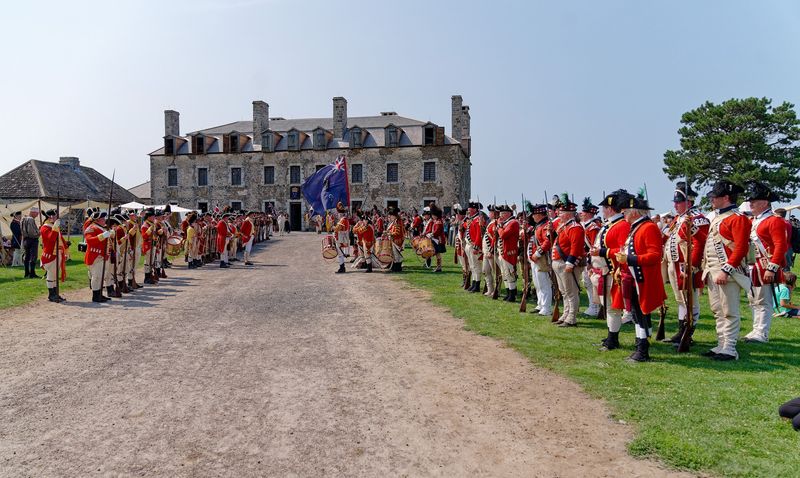
The strategic importance of the British-held Fort Niagara during the American Revolution cannot be overstated, even though there was no combat there. In fact, the fort, which Loyalist and Native American allies sought out for refuge as fighting intensified, never changed hands until years after the Revolutionary War’s end. The fort’s location at the junction of the Niagara River and Lake Ontario made it invaluable to the British, who had captured it during the French and Indian War. Here, the British shipped troops, supplies and weapons, controlled a portage route around Niagara Falls and gained access to the upper Great Lakes and the West. The fort, out of easy reach by Continental soldiers traveling on foot, also served as a base for raids that diverted resources from Gen. George Washington’s army and the theater of war farther east, according to Robert Emerson, executive director of the Old Fort Niagara museum. “As a base, it had a huge impact on events that happened in other places.”
— Mike Murphy, Canandaigua Daily Messenger
This article originally appeared on Rochester Democrat and Chronicle: These upstate New York moments helped decide America’s future | Exclusive
Reporting by Rochester Democrat and Chronicle / Rochester Democrat and Chronicle
USA TODAY Network via Reuters Connect
By Rochester Democrat and Chronicle | USA TODAY Network
