The Hudson River Valley was one of the most contested battlegrounds in America’s War for Independence. The war may have begun in Massachusetts at Lexington and Concord, but the conflict soon moved out of New England and focused on New York, especially the Hudson Valley.
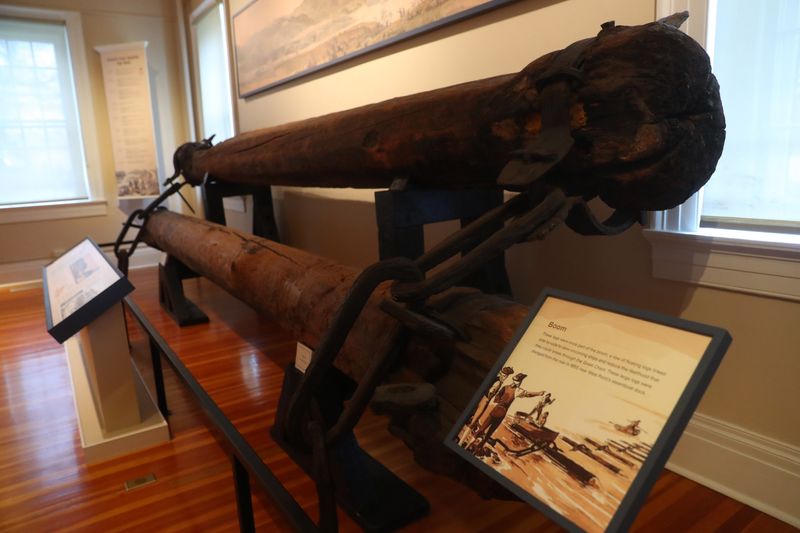
Control of the Hudson was a primary strategic objective of the British, who seized New York City in fall of 1776 and held it through the war’s conclusion in 1783. With its bustling port at Manhattan, its massive natural transportation and communication system and its rich agricultural bounty, the Hudson offered the British one of the most promising options for crushing the rebellion. But control of the river was just as important to Gen. George Washington, who considered the Hudson to be the “Key to Victory.” Washington and his Continental army spent more than one-third of the Revolutionary War in or in close proximity to the Hudson to defend it from British attack.

The Hudson Valley had several unique features that separated the region from the rest of the colonies in rebellion. The only one of the original thirteen colonies not settled by the English, but by the Dutch, a large part of the Hudson’s population was of Dutch heritage. The valley was further unusual with the existence of several large estates such as Rensselaerwyck and Cortland Manor, with thousands of lease-holding tenants – too poor to own their own land — living in a quasi-feudal relationship with the manor lords. Finally, New York was considered “the largest slave society north of the Chesapeake,” characterized by a substantial population of enslaved men and women of African descent whose labor generated the wealth of many farm families in the valley.
History happened here: See photos of these 16 Revolutionary War sites to visit around New York.
Following their invasion of New York in 1776, the British attempted to gain control of the entire stretch of the Hudson River and launched multiple military operations to do so. Beginning with the Battle of White Plains in the Fall of 1776 and following with engagements up and down the Hudson at Fort Constitution (1777), Fort Montgomery (1777), the burning of Kingston (1777), and the Battle of Stony Point in 1779, major fighting occurred in the valley throughout the war. Even the surprising American victory at Saratoga in 1777 – the “turning point” of the Revolution — was part of a larger British campaign to seize control of the Hudson from Albany to New York City.
While the “official” armies battled each other up and down the river, a brutal civil war took place throughout the valley with many participants using the conflict as an opportunity to settle old feuds and grievances. Some of the most infamous occurrences were around Westchester in the area known as the “Neutral Ground” where the two opposing armies encamped within a few miles of each other. There, patriot vigilantes known as “Skinners,” and loyalists called “Cowboys,” stole and plundered from friend and foe alike.
The homefront was no quieter. With the Hudson essentially closed to commercial trade from 1776 through 1783, farm families lost markets for their crops, both armies “requisitioned” (ie: “confiscated”) the produce of local farms, and items traditionally imported were now scarce and difficult to come by. The result? Soaring prices and shortages of necessities such as flour, salt, tea, among other commodities, precipitated dozens of food riots and market seizures in places like Poughkeepsie, Fishkill, and Westchester County. These riots — generally led and dominated by women — targeted storekeepers accused of price gouging or hoarding.
While independence from Britain was certainly foremost in the minds of many Americans, the Revolution offered opportunities for all types of changes in the Hudson Valley. The contradictions of the revolution – white Americans fighting for freedom from British ‘slavery’ while thousands of people of African-descent actually were enslaved — was not lost on New Yorkers. Although debate about slavery’s future continued for a decade after the war’s conclusion, an act gradually abolishing enslavement was approved in New York in 1799. Not waiting for this legal change, hundreds of enslaved people like “Rachel,” an enslaved woman in Dutchess County, used the chaos of wartime to escape their enslavers. Rachel set her enslaver’s house on fire in 1781 before running away to British occupied New York City and possible freedom.
Of course, many groups in the Hudson Valley were injured by the war. Those who remained loyal to the king are among the most obvious. Several hundred valley loyalists – Americans who remained supporters of the crown and empire — suffered imprisonment, banishment and confiscation of their property. The valley witnessed the largest land confiscation and property redistribution in 18th-century America as the state government seized hundreds of thousands of acres from loyalists, including massive estates such as Philipsburg Manor. For the first time many tenant farmers in the valley gained the opportunity to own their own farms when the property of loyalists was confiscated, sub-divided and sold at auction.
Exclusive: These upstate New York moments helped decide America’s future.
Following the American victory in Yorktown in Virginia, Washington brought his army back to the Hudson Valley and encamped at Newburgh and New Windsor. Fittingly, the last dramatic acts of the revolution occurred in the valley. In 1782 several of Washington’s leading officers – unpaid and angry at the perceived lack of respect and leadership from Congress — raised the proposition of Washington becoming King in something called the Newburgh Letter. A few months later high ranking Continental officers secretly discussed disbanding the army, sending the troops home, or worse, marching on the capital. The 1782 Letter and the 1783 “Newburgh Conspiracy” were both quelled by Washington, who rejected any proposal of Kingship and reminded his officers what their struggle had been about: the creation of a republic and the need for the rule of law.
Thomas Wermuth is Dr. Frank T. Bumpus Chair in Hudson River Valley History at Marist University and co-founder and director of the Hudson River Valley Institute.
This article originally appeared on Rockland/Westchester Journal News: Revolution brought violence, change to Hudson Valley | Exclusive
Reporting by By Thomas Wermuth, Special to the USA TODAY Network / Rockland/Westchester Journal News
USA TODAY Network via Reuters Connect
By Thomas Wermuth, Special to the USA TODAY Network | USA TODAY Network