Wichita Falls city councilors face different circumstances than in recent years when it comes to hammering out a budget for 2027.
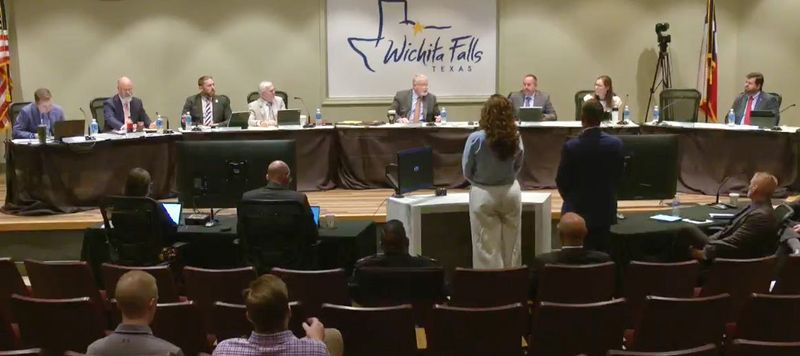
The city’s chief financial officer, Stephen Calvert, and senior budget analyst Kaitlin LeVasseur, presented councilors a budget workshop following the regular city council meeting on Tuesday.

While higher property values have provided the city more revenue in recent years, LeVasseur said, “we’re seeing a completely different picture than we’ve been seeing in the past.”
LeVasseur attributed that to a new state exemption for business personal property, which reduced tax values in Wichita Falls by $188 million.
City Manager Jeffrey Jenkins said the reduction cost the city $1.2 million, which he called “significant operational funds that were lost.”
On the flip side, LeVasseur said revenue from sales taxes grew 9.2% over the past 12 months.
She also said the Municipal Cost Index, which measures the inflation the city pays on the costs of labor, chemical and construction supplies, has risen by 4.8% in 2026, which LeVasseur called a “huge growth” from the previous year.
“Each year municipal costs remain higher than we would like to see,” LeVasseur said.
LeVasseur said the city is also continuing “to see pressure on wages as local governments compete for both private and public employees.”
“The bottom line is that many of our costs are growing faster than some of our revenue sources. That’s something we’ll have to keep in mind as we staff services and capital projects this budget cycle,” she said.
Although budgeting is in the early stages, Calvert proposed cost of living raises of 3.4% to all employees and said agreements with the fire and police departments will have a $3.8 million impact on the budget.
He said the city will have “next to no flexibility to increase staffing levels.”
“We’ve got to do this in a way that keeps staffing levels almost exactly the same,” he said.
He also expects to see the city’s contribution to employee health care insurance increase significantly.
He said his staff recommends a property tax rate that’s lower than the rate that would force voter approval but higher than the “no new revenue” rate to offset rising costs. He gave no exact figures.
He also said the budget will propose a modest increase on utility bills at the household levels.
Calvert said he “got really excited” as he worked with consultants to understand the impact on the city of the Skybox data center proposed to be built on land purchased at the city’s business park.
“I want to look hard at any of these potential increases,” Mayor Tim Short said. “I know some of them may be necessary, but that’s difficult.”
The city must have a proposed budget by July 31 to be followed by some hearings before adopting a new budget and tax rate on Sept. 1. It would take effect on Oct. 1 at the beginning of the city’s fiscal year.
This article originally appeared on Wichita Falls Times Record News: Wichita Falls faces a tougher landscape going into new budget cycle
Reporting by Lynn Walker, Wichita Falls Times Record News / Wichita Falls Times Record News
USA TODAY Network via Reuters Connect
By Lynn Walker, Wichita Falls Times Record News | USA TODAY Network