No one asked for Richard McCormick’s help.

Not a 911 caller, not a passerby, not another police officer.
The Thiensville officer knew Mequon police were called earlier in the night to Highland and Cedarburg Roads for two stray dogs.
As McCormick approached the intersection hours later, he saw them.
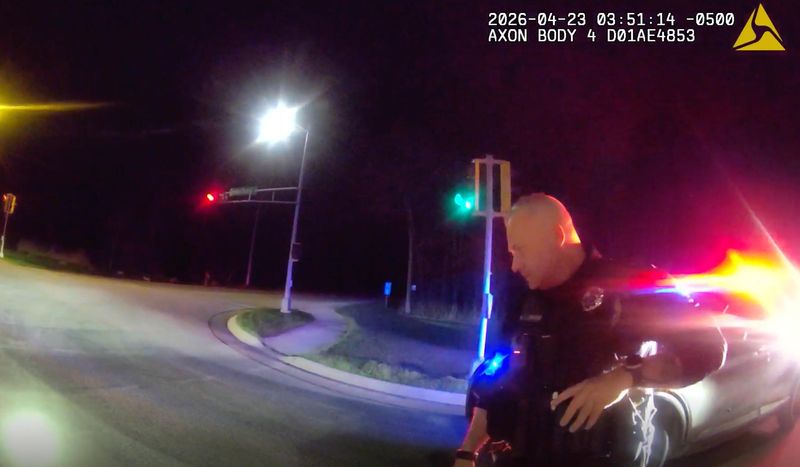
He parked and stepped out, later saying he wanted to get the dogs into his squad. Instead, he fired 16 shots, killing one dog and wounding another.
Body camera footage obtained by the Milwaukee Journal Sentinel showed the dogs bounding toward him, then running away as he first fired his gun. McCormick continued to shoot across the road, even after one of the dogs collapsed on the ground and howled.
The circumstances of the shooting and the aftermath raise questions about transparency, accountability, training and hiring standards at one of Ozaukee County’s smallest police agencies. It also underscores the risks agencies take when hiring officers, such as McCormick, who resigned or were fired during internal investigations at other departments.
James W. Crosby, a national law enforcement expert who reviewed the officer’s report and body camera footage, said there appeared to be “valid concerns” with what took place.
Crosby, who retired from the Jacksonville Sheriff’s Office in Florida, has helped write model policies and training guides for how police should interact with dogs, in an effort to reduce injuries to officers and animals.
“If the dogs are moving away from him, what was the perceived threat?” he said. “Once the dog flops down, again, he’s no longer a threat.”
Thiensville Police Chief Curt Kleppin said he took the situation seriously and immediately placed the officer on leave after the shooting. As of June 16, the shooting remained under review by the Ozaukee County District Attorney’s Office.
“I’ve always been open and transparent,” Kleppin said in an interview. “I had no intention of hiding anything.”
McCormick resigned while under investigation for the shooting, marking the second time he has done so in his career. Attempts to reach McCormick for comment, including through his former union, were not successful.
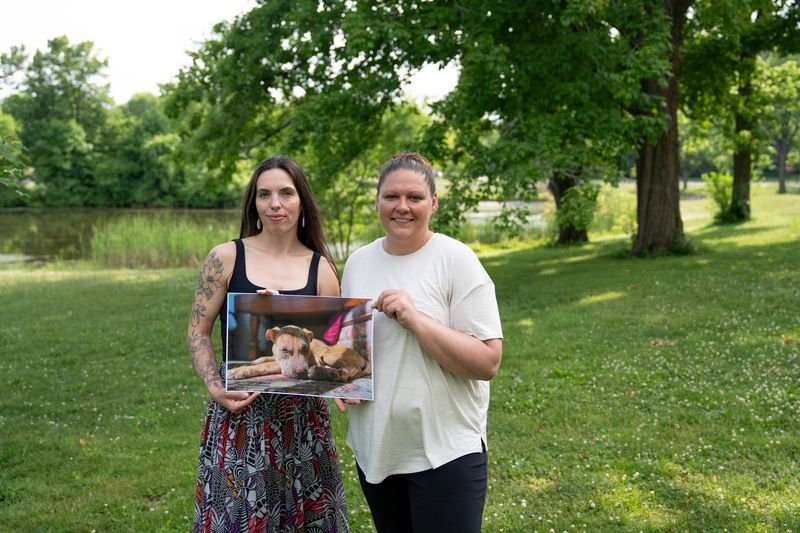
The shooting came to light after three women tracked and safely trapped the wounded dog that had escaped into the woods.
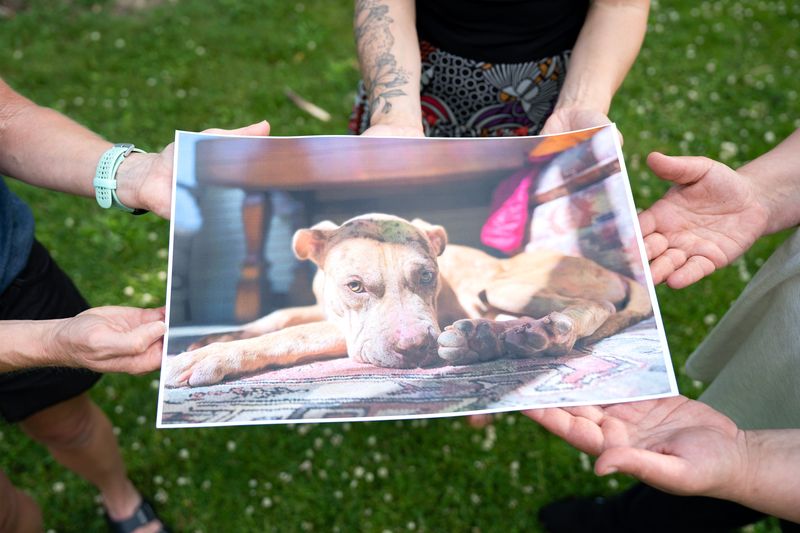
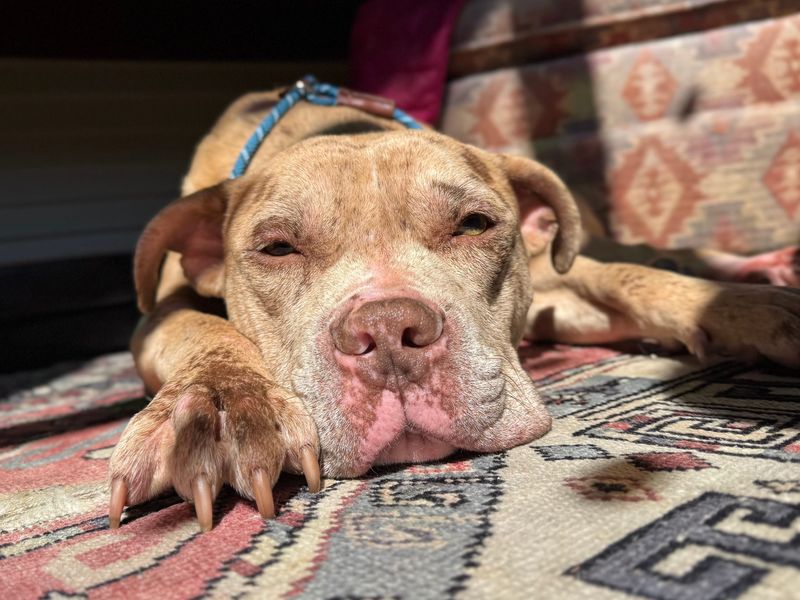
The dog, whom they named Ranger, had a bullet in his hip.
As the rescuers tried to figure out what had happened to Ranger, they filed public records requests, received a visit from Thiensville’s police chief and asked Mequon police to log the bullet retrieved from Ranger as evidence.
They came to one conclusion.
“The way that the situation unfolded was preventable,” Karen Bohlmann said.
A rescue effort for an injured dog turns into more
The first clue came from a Facebook comment.
A photo of Ranger had been shared online to help identify and capture him.
Under one image, someone wrote: “Wonder if this is the one the BD police shot and Mequon PD was pissed about it since they were out of jurisdiction? Sad hope they find him.”
Danielle Dietz and Alicia Hegedus had been following the thread and noticed the comment. So did Bohlmann. The three women have years of experience tracking and safely capturing stray or missing dogs, on their own and with local rescue groups. Dietz also is certified to trap wildlife through the state Department of Natural Resources.
They checked Mequon’s publicly posted weekly bulletins of police activity. None of the calls involved a dog. A Mequon police captain later told the Journal Sentinel that was not unusual, as the highlighted calls typically relate to scam prevention and would not include actions by other agencies.
The women contacted the person who posted Ranger’s photo, then connected with the homeowner who had last seen Ranger.
On May 10, Dietz and Hegedus baited a test trap in the homeowner’s backyard and set up cameras. Ranger showed up in less than hour, ate and left. Then, they set the trap for real.
“He just walked right in it,” Dietz said.
Ranger, a pitbull, was emaciated. He had a wound through his hip and injuries under his tail. His back paw was raw with an infection.
“It was essentially rotting off of his leg,” Dietz said.
She brought him home that Sunday night and kept a close watch. In the morning, she and Hegedus took him to the Wisconsin Humane Society Ozaukee Campus.
Dietz and the other volunteers contacted Mequon police. That’s when they learned the dog had been shot by a Thiensville officer – not a Brown Deer officer as the Facebook poster had suggested – and that another dog, whom they nicknamed BD, had been killed in the same incident.
Dietz filed a records request with Thiensville for reports and body camera footage.
Then Thiensville’s police chief, Kleppin, called and asked to meet with her.
He came to her house, Dietz recalled, and asked why she wanted the material. She said she wanted to know what happened to Ranger to better care for him. If the dog was aggressive, that would affect his ability to be fostered or adopted.
She said the chief told her the video was graphic, and that the officer had quit when questioned about it.
Kleppin told the Journal Sentinel he wanted to warn Dietz about the video’s contents, and that he assumed once she had the footage, it would become public.
When the department gave Dietz the material, she and Hegedus watched the video together. Bohlmann chose not to view it.
They were so disturbed by what they saw, they didn’t sleep that night.
Mequon police said dogs ‘did not pose a current threat,’ planned to return in morning
A man delivering newspapers spotted the dogs first.
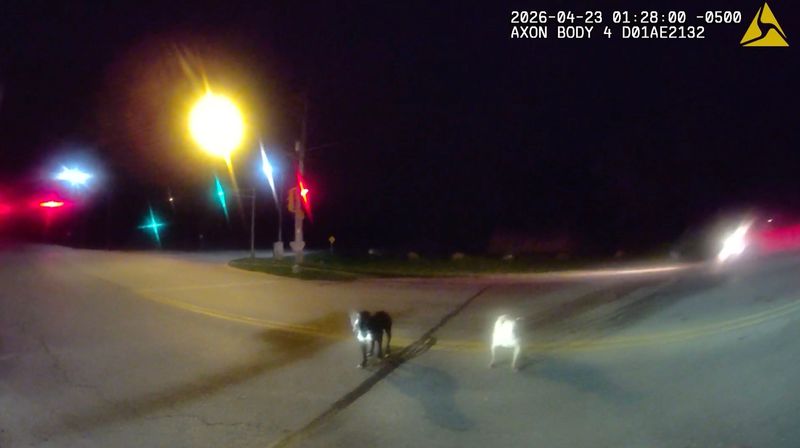
He called police shortly after 1 a.m. April 23, telling dispatchers the dogs were running in circles near the intersection of Highland and Cedarburg Roads.
They seemed “friendly,” he said, according to dispatch audio.
Mequon Officers Nathan Brown and Richard Toeller responded with a catch pole, a device used to loop around a dog’s neck to restrain it.
In their reports, they described the dogs as pitbulls that seemed protective of each other.
The dark brown dog, they wrote, appeared more skittish, barked and growled. Toeller kept his duty gun in his hand, at his side, according to his report.
Body camera footage showed the dogs cautiously approaching Brown and stopping a few feet away as the officer tosses them treats. The tan dog’s tail wags, and the other dog barks.
But the officers were not comfortable trying to snare the dogs and believed if they captured one dog, it might prompt the other to attack them, according to their reports.
Brown went to the Wisconsin Veterinary Referral Center Ozaukee, a 24-hour emergency vet service, for help. One employee suggested he try to bait a kennel and trap the dogs.
Brown and Toeller decided to contact the humane society when it opened the next morning.
“The dogs did not pose a current threat to ourselves or to others,” Toeller wrote.
When Brown and Toeller had called a supervisor from the scene that night, neither said anything about the dogs advancing in an aggressive manner, according to a report from Sgt. Robert Glefj.
Brown’s report notes a conversation he had with McCormick, the Thiensville officer.
Brown said he told McCormick the pitbulls could not be captured because of their “unfriendliness /aggression.” The two officers talked about past experiences with unfriendly dogs, “especially pitbulls,” the report said.
About two hours later, McCormick went to the same intersection but had a very different outcome.
Police shootings of dogs common across country
The U.S. Department of Justice estimates police officers shoot more than 10,000 dogs each year.
But the number is just that, an estimate. The full scale is not tracked through any federal statistics.
It’s common enough that multiple cities have issued hefty payouts in lawsuits over the issue. Dogs are considered private property, and courts have held that the unjustified killing of a pet violates the owner’s Fourth Amendment rights against unreasonable seizure.
In Milwaukee, the 2004 death of a Labrador-springer spaniel mix named Bubba led to a federal civil rights trial. The jury ultimately sided with the officers who shot and killed the dog. At the time, the Journal Sentinel reported that Milwaukee police had shot more than 400 dogs in the line of duty in a nine-year span, ending in 2005.
As recently as this past Memorial Day, Milwaukee police shot two dogs that officers said had attacked them as they responded to a call for loose animals. The department later said doctors euthanized the dogs.
McCormick was hired by the Milwaukee Police Department in 2019 and came under internal investigation four times during his three years with the department.
In 2021, McCormick and another officer responded to a domestic violence call and failed to make a mandatory arrest. McCormick also did not call for medical help, despite a request for it, and he allowed the suspect to walk away, records show. He received a 17-day suspension.
The internal affairs interviewer noted multiple times when the officer’s statements conflicted with body camera footage. However, the discrepancies did not result in an integrity violation.
A year later, McCormick was investigated after a citizen complaint was filed related to a 2020 incident that started as a child neglect call. McCormick interviewed at least three people at a chaotic scene but never filed any reports. Internal affairs found he had violated department rules, but McCormick resigned before any discipline was decided.
Kleppin, whose department has eight sworn officers including him, said he was aware that McCormick previously had resigned during an internal investigation before hiring him in Thiensville.
McCormick’s time in Milwaukee seemed to shape his response to the dogs in Mequon.
“From experience in Milwaukee with pitbulls, some of them were nice, some of them are really aggressively mean,” McCormick told a Mequon officer that night, according to body camera footage.
“I didn’t want to have to do that but I’m not chancing it either,” he said. “I’m not getting my arm gnawed off.”
A few shots, then a volley of gunfire
In the video, the dogs can be seen running toward McCormick as soon as he opens a rear door on his squad.
His goal, he later said, was to get them into the backseat.
There’s no sound in the first 30 seconds of the recording. That is typical for body cameras which, once activated, automatically save the previous 30 seconds of footage without sound.
McCormick wrote in his report that the darker dog was growling at him, and that he told the dogs to get back.
As the dogs got closer, McCormick fired at least two rounds toward the ground in what he later said was an attempt to scare them. Many police departments, including Thiensville, prohibit the use of warning shots.
The dogs immediately turned away from him and started running across the street, according to the body camera footage.
McCormick kept firing.
That’s the moment when Crosby, the national trainer, questioned the continued use of force.
“The dogs flee,” Crosby said in an interview. “At that point, my argument would be there is no longer a credible threat.”
Officers are governed by agency policies and state laws but universally have a right to protect themselves from injury or death. Still, Crosby said, they have to use “the appropriate level of force.”
McCormick fired at least five more shots before the dark brown dog fell to the ground, writhing and howling. Still across the street, McCormick fired six more times until the dog’s cries stopped.
McCormick told dispatchers about the shooting. Mequon officers quickly arrived and asked what happened.
“I thought, actually, I could get them in the car because the other one seemed friendly and was wagging its tail, and when I got out, that one came over and then started grr-rrr,” McCormick said, imitating a growling noise.
“I’m like ‘Get back’ and he didn’t, and I pulled and I shot, like, just to shoot to see if he’d get away and he didn’t,” McCormick continued. “The other one took off in the woods over there.”
McCormick said he was not sure if he had shot the tan dog. Then, he and the officers realized the dark brown dog was still breathing. McCormick moved close to the dog and fired a final shot to euthanize it.
A Mequon officer asked if someone had flagged him down for help.
“Nope, I was just driving around and I saw both of them were sitting, like right here, on the sidewalk,” McCormick said.
The officers lamented the limited options for dealing with loose dogs and debated what to do with the one dead in the road.
Ultimately, officers took the dog to the Mequon Department of Public Works.
Since then, Mequon has changed its policy and now has an agreement to turn over deceased dogs to the humane society.
Officer resigns during internal investigation, wounded dog to get a new home
McCormick drafted a report that conflicted with body camera footage and Mequon’s reports.
He wrote that “Mequon units had been unable to locate” the dogs during the earlier call, even though a Mequon officer wrote that he had told McCormick about encountering the dogs.
McCormick also wrote that the darker dog “continued to behave aggressively” after his first warning shots, despite footage showing it running away.
His report remained a draft. In a supplemental report dated May 14 – three days after Dietz filed her records request – Lt. Brian Neuman explained why.
McCormick was put on leave right after the shooting and no longer had access to department records, and then he resigned.
Thiensville’s use-of-force policy cites Wisconsin law and states an officer may kill a dog if threatened with serious bodily harm by the dog and other restraint actions were tried and failed, or immediate action was necessary.
Kleppin, the chief, said the incident was “a lot of small things” that ended in something that “did not need to be.” The officer going outside of his jurisdiction without reason and the warning shots were among the chief’s concerns.
Kleppin said he has no idea what was in the officer’s head because McCormick quit before answering questions. After the resignation, Kleppin showed the footage to his other officers and said he’s open to more training on how to handle dog encounters.
Ozaukee County does not have an animal control agency. The Wisconsin Humane Society is the primary shelter for stray animals in the county but workers generally do not go into the field with law enforcement, a spokeswoman said.
“Regardless of whether animal control is available to assist officers, the lesson here, I think, for this officer and any officer, is if you’re going to discharge your weapon, certain conditions under the law have to apply,” said Jim Palmer, executive director of the Wisconsin Professional Police Association, which represents officers in Thiensville.
“The officer opted not to see it through and, unfortunately, that leaves anyone to draw whatever conclusion they can,” Palmer added.
After the shooting, Mequon officers called a phone number and went to a Milwaukee apartment associated with the deceased dog’s microchip but could not identify or find the owner.
Police did not ask the public for help finding the injured dog because officers already had responded to multiple sightings, Mequon Capt. John Hoell said in an interview.
The department is experienced with handling lost and stray dogs, Hoell said, and the officers that night in April had a plan to return in daylight.
“It never should have happened,” Hoell said of the shooting. “We just wish he wouldn’t have taken it upon himself to come into our city.”
The three volunteers who rescued Ranger share that perspective. And while they are grateful the district attorney’s office is reviewing the shooting, they want more to be done.
They are willing to help Thiensville and other police agencies with training and to be a resource for future rescue efforts.
For now, their focus is on Ranger, who is recuperating at the Wisconsin Humane Society.
The 3-year-old dog “has been a great patient” after having surgery and is continuing to heal, said Angela Speed, Wisconsin Humane Society spokeswoman.
Ranger still has ongoing medical needs, so it’s not known exactly when he’ll be released for foster care or adoption, Speed said.
Dietz and Hegedus are ready when he is.
One of them – they’re still deciding who – will adopt him.
And Ranger will get a new home, for good.
This article originally appeared on Milwaukee Journal Sentinel: They rescued a wounded dog. Then they found out a police officer shot him
Reporting by Ashley Luthern, Milwaukee Journal Sentinel / Milwaukee Journal Sentinel
USA TODAY Network via Reuters Connect
By Ashley Luthern, Milwaukee Journal Sentinel | USA TODAY Network