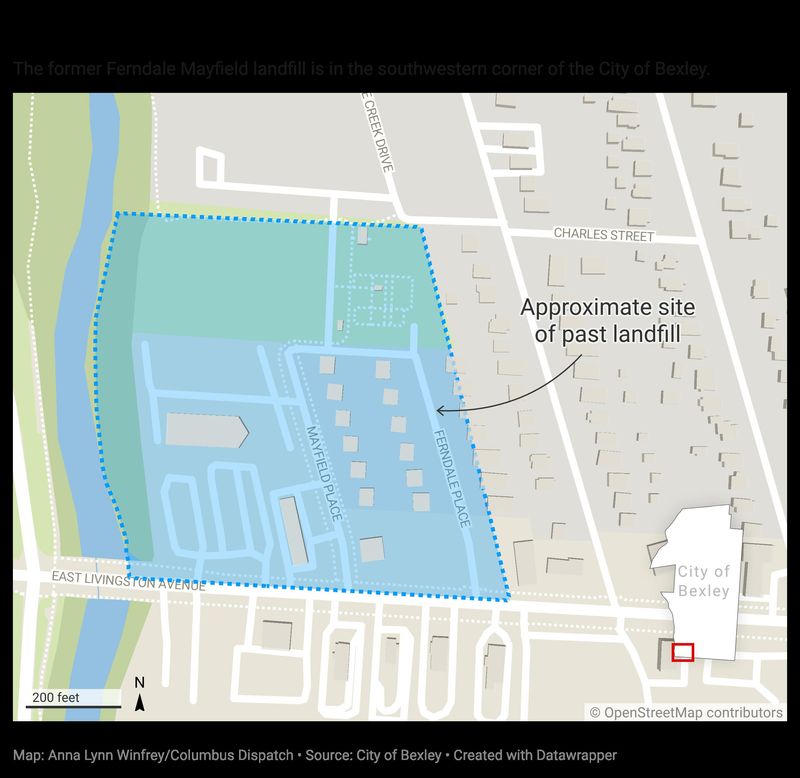
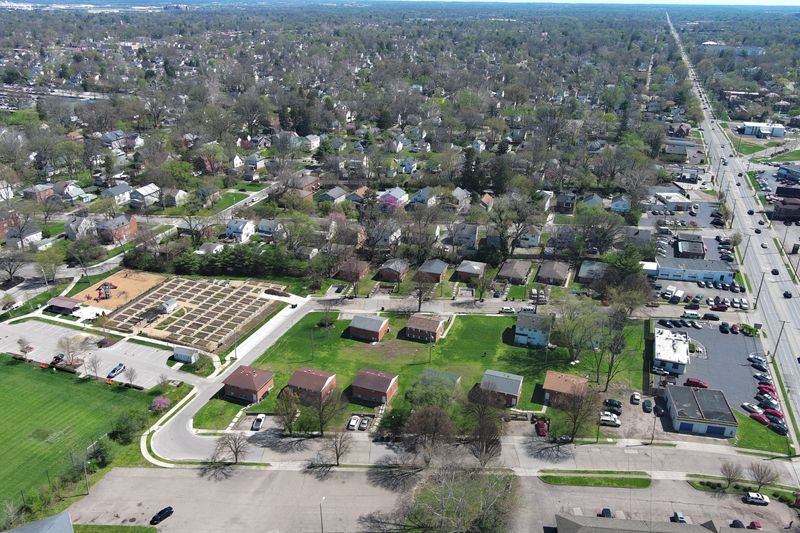
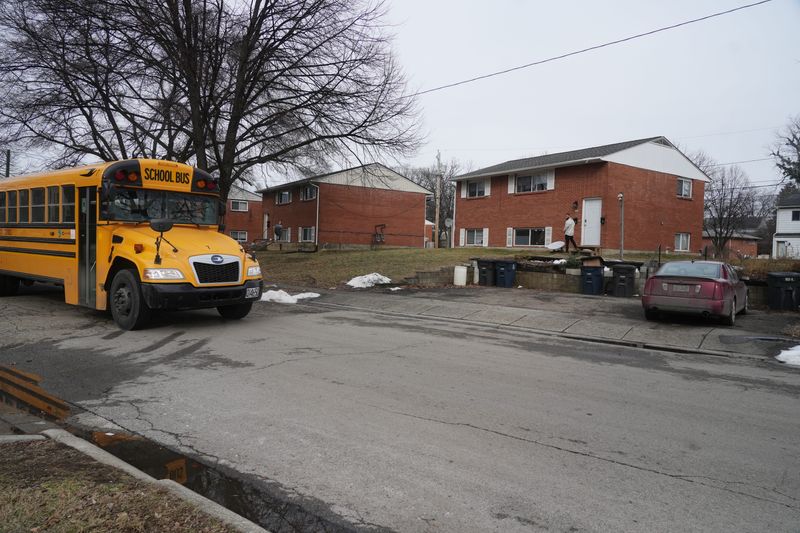
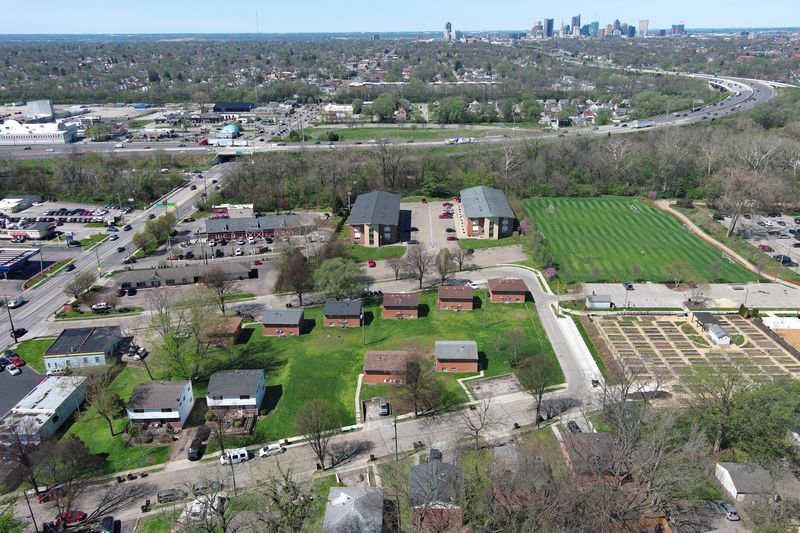
On the southwest side of Bexley, just off of East Livingston Avenue, several apartment buildings and a few homes are what the city’s mayor describes as “housing of last resort.”
Many of the residents that occupy the horseshoe-shaped area just north of East Livingston Avenue are poor, and the buildings and homes are in deep disrepair, said Bexley Mayor Ben Kessler.

But city officials say they have also had their eyes on this area because residents there are living on what was once a privately owned and unregulated landfill that dates back to the 1930s. Environmental studies commissioned by the city have found the land is contaminated with several heavy metals, including lead, arsenic, and chromium.
“Literally, you can take a spoon and dig into that soil, and you’re going to find some landfill right underneath where you dig,” Kessler said.
Because the landfill was improperly closed before modern environmental laws and regulations were established decades later, there is no clay cap over most of the landfill to prevent leaching from this contamination.
The city also lacks a legal mechanism to force landlords to clean up and remediate the site, and there are no legal requirements mandating that property owners disclose to tenants that the apartments sit on a former landfill, according to Kessler.
The affected apartment buildings and homes – 16 structures owned by 10 private landlords and one owner-occupied home – were built on the roughly 10-acre tract sometime in the 1960s, according to a historical timeline created by Bexley city officials.
The former landfill was owned and operated by the Holtzman Piano Stool Company, which later became known as H. Holtzman and Sons, according to the city. The company became known throughout Ohio and beyond for manufacturing piano stools and piano covers. The Holtzman company operated out of 2094 E. Main St. – the building that is now home to the Kroger supermarket in Bexley. The company eventually ceased operations in 1959.
Frank Holtzman, president of the Holtzman company, also served as the first mayor of Bexley from 1908 to 1916, according to records maintained by the Columbus Metropolitan Library.
The former landfill – known by the city as Ferndale-Mayfield after the two streets bordering the neighborhood – is the only improperly closed landfill in central Ohio with occupied housing on it, Kessler said, a situation that leaves the city without a model it could follow to remediate the site.
In January 2025, the city applied for but was denied a $300,000 Brownfield Environmental Assessment grant from the Ohio Department of Development. The grant would have allowed the city to conduct a more comprehensive assessment of the contamination of the landfill site to better understand the scale of contamination across the area.
The assessment also would have answered the key question of a path toward remediation: whether to cap the soil in place and leave the apartment buildings alone, or relocate the current residents and demolish the apartment buildings before remediating the property.
Kessler and environmental law experts who spoke with The Dispatch said capping the site with the buildings in place would be significantly more expensive and probably impractical since some of them have basement apartments.
“With that grant going away, we are now kind of taking a step back and deciding what are the best next steps,” Bexley City Administrator Megan Meyer said. The city is not “actively engaged” in any applications for the site, she said.
“The city is considering other potential next steps for the site, but has not made any decisions or engaged property owners on a path forward,” Meyer said.
Mason Waldvogel, a spokesperson for the Ohio Department of Development, said the city’s application was denied because it was the last one the ODOD received before the application portal was closed. Applications are considered on a first-come, first-served basis, Waldvogel said.
“Given the large number of applications we received for this round, funding was depleted before we were able to consider an award for this specific project,” Waldvogel said.
Ohio EPA has no oversight, enforcement authority over former landfill
While the former landfill presents environmental hazards to some Bexley residents, enforcing clean-up is hampered because the landfill operated and closed decades before the Ohio Environmental Protection Agency came into existence in 1972.
The Ohio EPA refused multiple requests from The Dispatch for an interview with an agency official. Meghan Harshbarger, communications coordinator for the agency, said in an email that since the landfill was created before environmental laws existed within Ohio, Ohio EPA has no enforcement capabilities. The agency also said it doesn’t have records on the landfill’s former owners.
Since the Ohio EPA has no oversight over the landfill area, Harshbarger said responsibility for remediating the property would fall on the property owners.
Frank Reed, an environmental attorney representing Bexley in ongoing landfill talks and a former special counsel to the Ohio Attorney General’s Office, criticized the Ohio EPA’s hands-off approach to the Ferndale-Mayfield landfill.
“Their job is to protect human health and the environment,” Reed said. “[Ohio EPA] shouldn’t just say, ‘Well, because this dump was created before the EPA’s existence, we can’t do a thing.’ I think that’s wrong.”
Kessler said Bexley doesn’t have a legal authority to compel property owners to remediate the site. He also expressed doubt that property owners could realistically pursue such action, noting that doing so would be extremely expensive and unlikely since there is already a noted lack of investment in the properties.
Even if the Ohio EPA did have oversight, it likely wouldn’t get involved in enforcement, experts told The Dispatch.
“The trigger for enforcement [from the Ohio EPA] is an imminent and substantial threat to human health or the environment,” said Christopher Jones, an environmental attorney and former director of the Ohio EPA.
In this case, vapor intrusions detected in the apartments would be the only reason the Ohio EPA would get involved from an enforcement perspective, Jones said. The agency is also unlikely to pursue action against landlords or property owners, he said.
“If it’s not an imminent threat [to tenants], then it becomes a question of priorities,” Jones said. Environmental tests commissioned by the city did not identify vapor intrusions, according to copies of the testing results commissioned by the city.
But Sonya Lunder, director of the Community Science, Environment, Equity, and Justice Center at the Natural Resources Defense Council, said that there are still persistent health risks due to exposure to the contaminants found in the soil.
While the city has alerted property owners of the toxicity of the soil around the apartment buildings and asked them to notify tenants as well, Lunder said this is a short-term and unsustainable solution.
“Lead and arsenic don’t break down,” Lunder said. “Even if you’re not digging, you’re tracking dirt into your house. That contamination doesn’t stay outside. Time doesn’t make them less toxic.”
The potential health consequences of being exposed to elements like lead, chromium, and arsenic have long been documented and examined by environmental scientists. Long-term exposure to lead, for example, can impact learning, memory, and attention and cause an increase in blood pressure and weakness in the extremities, according to Franklin County Public Health and the Ohio EPA.
For children, exposure to lead can negatively impact cognitive development and stunt physical growth. Lunder noted that toddlers are at particular risk of ingesting lead because they naturally like to crawl and put things in their mouths as they’re exploring their environment. Although someone would have to disturb the soil to be heavily exposed, there is also the risk of tracking dirt into the home, Lunder said.
Another chemical compound found on parts of the property through environmental testing was benzo(a)pyrene (BAP), a carcinogen commonly found in the air, surface water, soil, food, dust, and cigarette smoke, according to the National Institutes of Health.
High concentrations of BAPs are usually found in soil, and it is described as “very toxic” by the NIH. Research has found that exposure to BAPs can lead to infertility, cancer, and other health issues, according to the NIH.
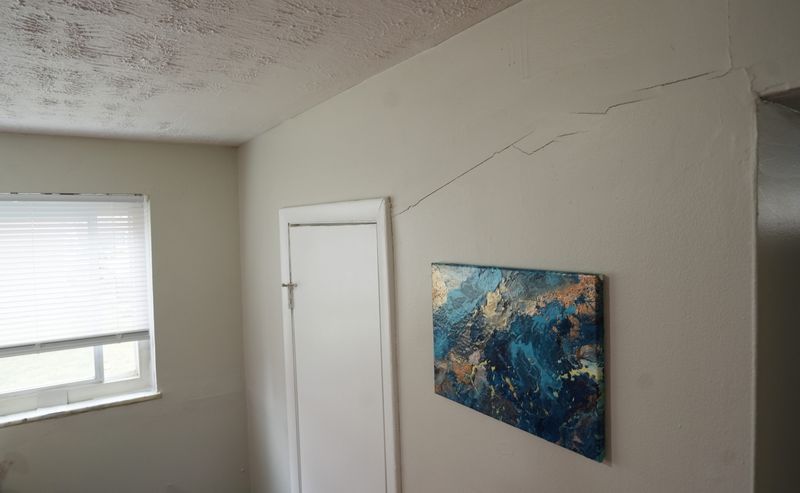
Jones and Lunder also warned that residences built atop former landfills, like those in the Ferndale-Mayfield area, can face serious structural instability. As buried organic waste slowly decomposes, it releases gas and causes the ground beneath it to settle and sink, a process that can leave floors sloping and cracks creeping up walls, quietly undermining a home’s structure, Jones said.
Both Jones and Lunder said the risk is widespread in Ohio, where hundreds of landfill sites were created decades ago – before the Ohio EPA existed and before regulations prevented construction on unremediated dumps. Lunder said many of those sites were never tracked, making it common for entire communities to be built on or near former landfills and leaving gaps in knowledge about where hazardous chemicals were dumped.
“People just [placed] drums of chemicals or waste in their backyard,” said Lunder. “People burned a lot of stuff, and the further back you go in time, the less tracking [of landfills] there was.”
Ohio environmental laws don’t protect tenants, buyers attorneys say
While Ohio home sellers must disclose hazards like lead and asbestos, landfills are not explicitly required on the Residential Disclosure Form. Cleveland environmental attorney Gregory DeGulis said that’s partly because former landfills are so common across the state that requiring their disclosure could slow real estate transactions or even lead to litigation.
“Residential disclosure is more geared toward indoor issues, not what I’d call exterior issues like a landfill,” DeGulis told The Dispatch, adding that such a requirement could bog down the “hundreds of thousands” of home sales that happen each year.
Hunter Cavell, founder of Cavell Law LLC in Cleveland and a real estate law attorney, said Ohio’s residential disclosure laws fail to protect renters if they move onto or near contaminated sites. Tenant protections would vary by municipality, Cavell said.
“Disclosures really protect buyers, not tenants,” Cavell said. “There’s no real statewide law that protects tenants the way it protects a buyer and seller.”
Tenants who spoke to The Dispatch said they had no idea that the Ferndale-Mayfield area once housed a landfill or that the soil was contaminated.
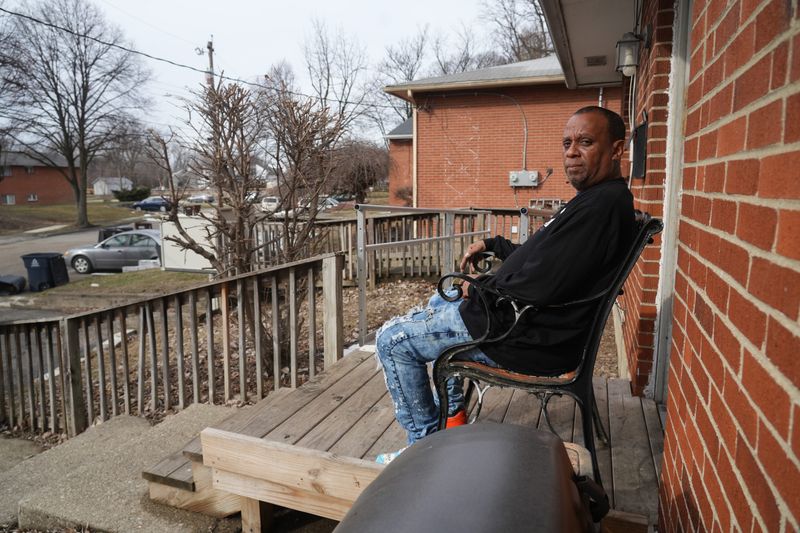
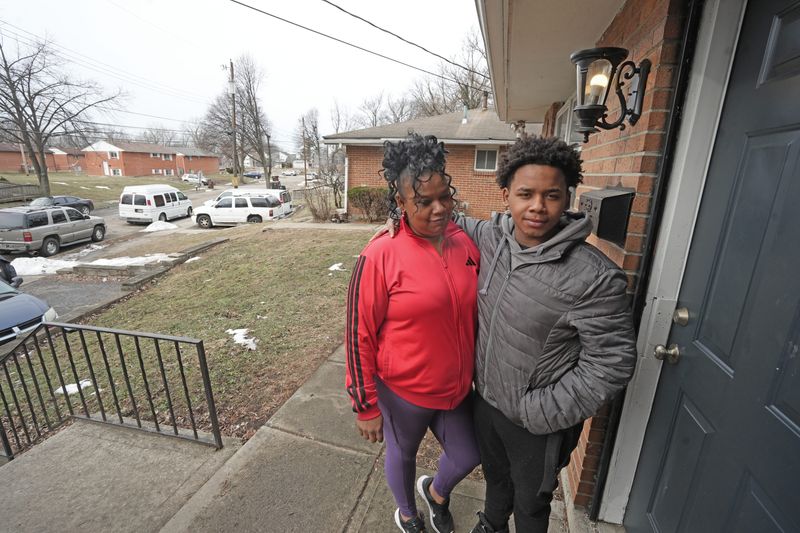
Taylor Douglas, 42, said she has lived in her home on Ferndale Place since September 2025 and said she had no clue that the neighborhood was the site of a former landfill.
“After looking at the houses, I guess it makes sense,” said Douglas. “I’m shocked.”
Another resident, who asked to remain anonymous out of fear of retaliation from the landlord, said she thought something was amiss when the property owner told her that she couldn’t dig to plant flowers outside her rental home.
“I thought it was bizarre,” the tenant said.
The tenant told The Dispatch she moved to the home in October 2025. Inside, the foundation of the house was uneven and sloped downward – a feature in many of the houses on the property, Kessler said.
“[The floors] are like tectonic [plates] shifting,” said Kessler.
Holtzman landfill demonstrates ‘nexus of issues’
Lunder, the analyst from NRDC, said low-income communities often face the brunt of environmental justice issues, such as the Ferndale-Mayfield landfill site. To make matters worse, they often don’t have the resources to leave these areas to find safer housing or the political power to advocate for themselves.
“This is just a really hard nexus of issues where, across the board, people with more means and more money are able to both have better [housing] options when they’re thinking about where they’re going to live,” said Lunder.
While Ferndale-Mayfield is a glaring environmental justice issue, Kessler said that it’s also an example of what he doesn’t want in Bexley.
“We don’t want [Ferndale-Mayfield] to be what affordable housing is in Bexley,” Kessler said. “We don’t want it to be last‑resort housing.”
Kessler emphasized that the city envisions affordable housing as safe, structurally sound, and properly integrated into the city.
As part of Bexley’s effort to expand affordable housing, the city is backing a 42-unit development between East Livingston and Cassady avenues, led by The Community Builders, a national nonprofit developer that focuses on developing homes for children, the elderly, and people with disabilities. The development would be built on land owned by the Bexley Community Improvement Corporation, a quasi-governmental entity formed in 2012 by Bexley City Council to help redevelop the Ferndale-Mayfield site. The project will be partially funded with Low-Income Housing Tax Credits.
Kessler said the housing units could play a role if residents of Ferndale-Mayfield need to be relocated so the city can conduct a full site remediation of the landfill, which would involve demolition of the apartment buildings and homes. At the same time, the city has also set aside at least $3.5 million to purchase all of the properties from the landlords, razing the properties, and remediating the site, Kessler said, although he warned that such an undertaking would be expensive.
“We want to make sure that we’re proactively bringing affordable housing development to Bexley, knowing that at some point in time, we’re also going to need to address Ferndale-Mayfield,” said Kessler.
But Kessler also acknowledged that the effects of this plan may be limited. He said that even once the affordable housing units are ready to be occupied, many of the residents of Ferndale Mayfield may not qualify for the units due to income requirements and background checks.
Nate Green, chair of the Bexley CIC, said he would like residents living in the Ferndale-Mayfield area to have access to all city services and overall greater connectivity with the city.
If the homes are ultimately razed so the site can be remediated, the city could possibly do what it has already done with Schneider Park, which sits just north of the properties that were also part of the former landfill.
After discovering that the park was contaminated, the city placed two feet of clay capping – in line with Ohio EPA Voluntary Action Plan standards, Kessler said. The city then developed parts of it into usable park space and installed a splash pad, a skate park, a playground, athletic field and a community garden.
“Affordable housing can be great housing,” said Kessler. “It can be housing that gives people a step up in life, not keep them down and in rough situations.”
Reporter Shahid Meighan can be reached at smeighan@dispatch.com, at ShahidMeighan on X, and at shahidthereporter.dispatch.com on Bluesky.
This article originally appeared on The Columbus Dispatch: Some Bexley residents live on a toxic former landfill with no easy fix
Reporting by Shahid Meighan, Columbus Dispatch / The Columbus Dispatch
USA TODAY Network via Reuters Connect

By Shahid Meighan, Columbus Dispatch | USA TODAY Network