A legal fight over whether Ohio cities can ban flavored tobacco could have sweeping consequences for how local leaders regulate everything from firearms to mobile homes.
On June 9, the Ohio Supreme Court will listen to legal arguments about a lawsuit that strikes at the heart of municipalities’ ability to govern themselves, a concept called “home rule.”

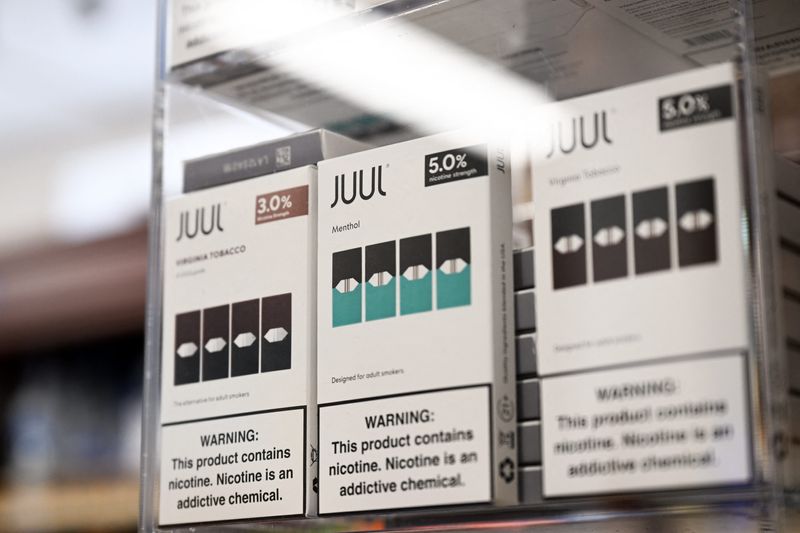
In recent years, Columbus, Bexley, Grandview Heights, Worthington and other cities banned the sale of flavored tobacco and nicotine products, including menthol cigarettes, vape liquids and chewing tobacco. Opponents of these products point to studies that show young people prefer fruit or candy-flavored e-cigarettes, leading to an unhealthful habit.
But Ohio legislators passed a state law to block these local bans and allow the sale of flavored tobacco products. That change was set to take effect in 2024 against Gov. Mike DeWine’s wishes. The governor supports restrictions on flavored tobacco and had lobbied unsuccessfully for a statewide ban.
Twenty-one Ohio cities, including Cincinnati, are suing. They argue that the Ohio Home Rule Amendment, approved by voters in 1912, allows city leaders to set rules for their residents, including a ban on flavored tobacco.
A local judge and an appeals court sided with city leaders. Now, the case heads to the Ohio Supreme Court, which will have the final word.
Who’s in charge?
The Ohio Constitution gives municipalities the authority “to exercise all powers of local self-government and to adopt and enforce within their limits such local police, sanitary and other similar regulations, as are not in conflict with general laws.”
But determining whether local rules conflict with general state laws can be difficult. And those conflicts are piling up as Ohio’s GOP-controlled Legislature takes issue with rules set by the state’s mostly Democratic city leaders.
A 2002 Ohio Supreme Court decision created a four-pronged test to determine if local rules can trump state law. Under that test, Canton was allowed to restrict manufactured or mobile homes with its local zoning laws.
Attorneys for Ohio’s cities argue that the ban on flavored tobacco restrictions fails that four-pronged test. The state law limits locals’ power without creating a general rule for Ohioans to follow.
But Ohio Attorney General Dave Yost’s office contends that the four-pronged test is flawed. Voters in 1912, and now, would expect that Ohio lawmakers would have the power to limit cities’ rules.
Why does home rule matter?
This case has high stakes for state and local leaders alike.
Groups representing gun owners, businesses, grocers and retail merchants want state lawmakers to have the power to pass uniform laws.
Groups representing mayors and city attorneys argue that home rule is necessary to empower cities and villages to govern themselves in local matters without first needing state approval.
Seventeen state and national public health organizations have asked the Ohio Supreme Court to uphold the ban on flavored tobacco. They say local regulation of tobacco products and sellers is necessary to protect children.
State government reporter Jessie Balmert can be reached at jbalmert@gannett.com or @jbalmert on X.
Tell us what you think
This article originally appeared on Cincinnati Enquirer: Ohio Supreme Court to weigh cities’ flavored tobacco bans, home rule
Reporting by Jessie Balmert, Cincinnati Enquirer / Cincinnati Enquirer
USA TODAY Network via Reuters Connect
By Jessie Balmert, Cincinnati Enquirer | USA TODAY Network