Tick presence in Ohio is on the rise compared to previous years due to increases in wooded areas, increasing risk for common tick-borne illnesses like Lyme disease, experts say.
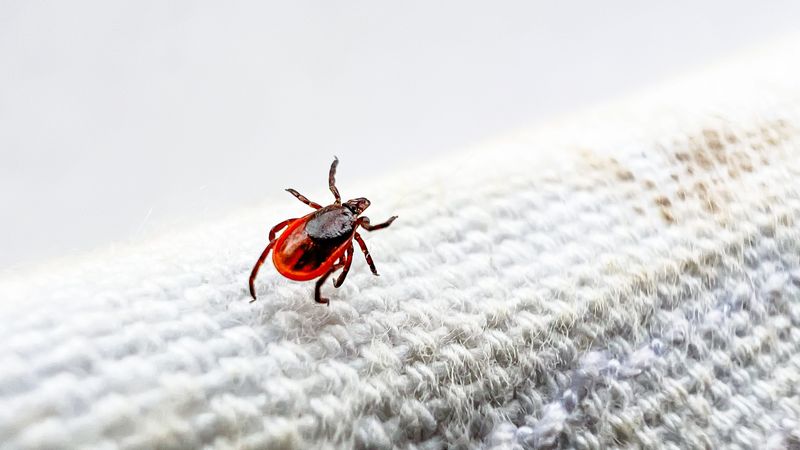
About one in five Black-Legged Ticks – a common tick in Ohio also known as the Deer Tick – carry Lyme disease bacteria, according to Vanessa Varaljay, chief research officer at Ohio State University’s Infectious Diseases Institute.

In some areas of Ohio, that number increases to as frequently as one in every two ticks, which is comparable to higher risk areas like Connecticut.
Varaljay said more residential neighborhoods are being built into wooded areas around Ohio, where tick populations “are thriving.” There were 44 cases of Lyme disease reported in 2010, and about 2,647 cases reported in 2025, showing a 60-fold increase in 15 years.
“The tick risk in Ohio is real and growing, but we’re not trying to spread a panic,” she said.
Dr. Nasir Shahrestani, assistant medical director in the Mount Carmel East Emergency Department, said although there isn’t a significant increase in tick presence this year compared to last year, the increase over the past decade has been “ten-fold.”
Although ticks become more prevalent in the spring and summer, there is no official season for ticks and they’re present year-round, according to Varaljay, who said the idea of a “tick season” is a “common misconception.”
Tick-borne diseases include Lyme disease, Rocky Mountain Spotted Fever
Ticks can carry a variety of diseases, but Lyme disease and Rocky Mountain Spotted Fever are the most common, according to the Ohio Department of Public Health.
Lyme disease typically appears with flu-like symptoms, Varaljay said. It can also lead to a rash or lasting pain and swelling around the area of the tick bite. When not treated with antibiotics in a timely manner, Lyme disease can lead to long-term effects like fatigue and body aches.
While a rash is a symptom of Lyme disease, Shahrestani said it doesn’t always appear in sick individuals.
“You don’t need a rash,” Shahrestani said. “A lot of people don’t develop a rash at all, and they think that by not having a rash, they don’t have a tick-borne illness. That’s not true.”
Cases of Lyme disease reported between 2016 and 2025 were mostly concentrated in eastern Ohio counties like Harrison, Carroll, Belmont and Jefferson, according to a map from the state health department.
Shahrestani said eastern Ohio is a higher risk area when it comes to ticks. He said Central Ohio is on the same trajectory, it’s just a few years behind.
“Eastern Ohio was colonized first – it borders Pennsylvania and West Virginia, which are high-incidence states” for tick bites, Shahrestani said. “The Appalachian foothills, the river systems, the forested terrain all create ideal corridors for ticks to spread via deer.”
Shahrestani said as long as the proper measures are taken, there shouldn’t be any major fear around Lyme disease.
“The treatment is very easy and its very effective,” Shahrestani said. “If you go and get care, it’s very treatable.”
Lone Star Ticks, which are found in Ohio, can sometimes result in Alpha-gal Syndrome. Alpha-gal is a molecule found in the body of most mammals, and AGS results in a sensitivity in the tick-bite victim to eating foods like beef, pork and lamb, according to the Centers for Disease Control and Prevention.
Ohio is home to a dozen types of ticks
While there are more than a dozen types of ticks found in Ohio, only five of them are medically relevant to humans, according to Varaljay.
The Black-Legged Tick and American Dog Ticks are present throughout Ohio relatively evenly. Lone Star Ticks are found primarily in southern Ohio, while Longhorned Ticks are mainly found in southeast Ohio, according to maps from the state health department based on data collected between 2010 and 2025.
How to prevent tick bites
To prevent tick bites, Shahrestani said you can wear long sleeves when active near wooded areas and tuck in your clothes to remove the tick’s access to your skin. He said it’s important to do regular tick checks on yourself, your family and your pets.
“When it comes to treatment, prevention is the best way to go,” Shahrestani said.
For further protection, Shahrestani recommended treating your clothes with Permethrin, an insecticide that repels and kills ticks and other insects. Wearing light-colored clothes can make the ticks easier to spot, and running clothes through the dryer on high heat after returning home can kill any ticks hiding in the fabric.
In the case of a tick bite, remove the tick’s head from your skin immediately with fine-tip tweezers, place the tick in a bag with rubbing alcohol and place it in the freezer. The tick can be sent to a testing facility such as the Buckeye Tick Test – which offers testing for $50 – to be screened for diseases. In the meantime, continue to monitor yourself for symptoms.
Shahrestani said he sees patients in the emergency department who have contracted tick-borne diseases. Those who live in the woods or near wooded areas are usually the most diligent in preventing ticks, but he said it’s important that everyone take preventive measures regardless of where they live.
“There’s a misconception that people have thought of it as a deeply wooded area problem, but its very present in your yard,” Shahrestani said.
Reporting intern Lilli Malone can be reached at lmalone@dispatch.com or on Instagram at @lillimwrites.
This article originally appeared on The Columbus Dispatch: Rise in ticks brings increased risk for tick-borne diseases
Reporting by Lilli Malone, Columbus Dispatch / The Columbus Dispatch
USA TODAY Network via Reuters Connect
By Lilli Malone, Columbus Dispatch | USA TODAY Network