Broome County is the resting place of many prominent historical figures.
From Revolutionary War and Civil War veterans to famous architects and Binghamton’s first mayor, local residents may be surprised to learn that very important members of history are buried right here in Broome County.

Here’s a list of some of the names found in local cemeteries, and some insight as to how they contributed to the history of Broome County and the country as a whole.
Prominent historical figures buried in Broome County
Sherman Phelps
Sherman Phelps, originally born in Connecticut, moved to Binghamton in 1854, according to Phelps Mansion Museum Educator Joe Schuerch. Phelps was the president of two banks, an early investor in WaterWorks and GasWorks, and eventually became the fifth mayor of Binghamton in 1872.
Phelp’s mansion was built in 1870 by architect Isaac Perry, who was also buried in a local cemetery. The mansion still stands on Court Street in Binghamton, now as the Phelps Mansion Museum.
Phelps died in 1878 and is buried in Spring Forest Cemetery.
David Ireland
Colonel David Ireland was a member of the military during the Civil War, according to the New York State Library website, first as part of the 79th New York State Militia Regiment before being promoted to captain in the 15th U.S. Army Regiment, which brought him to Binghamton. In 1862, Ireland was promoted to colonel of the 137th New York Volunteers regiment, made up of men from Broome, Tompkins and Tioga counties. This regiment was part of the Battle of Chancellorsville and the Battle of Gettysburg. He died in 1864 in Atlanta, but was moved back to Binghamton to be buried.
Schuerch explained Ireland was married to Sherman Phelps’ daughter Sarah, and is now buried very close to the Phelps’ mausoleum in Spring Forest Cemetery in Binghamton.
John C. Robinson
John C. Robinson was born in Binghamton, served in the Civil War and was a prominent figure during the Battle of Gettysburg, serving as lieutenant colonel, according to the Civil War Index website. Robinson retired from the military as a major general and eventually served as elected lieutenant governor of New York until 1876. After retiring from that position, Robinson lived out his days in Binghamton and died in 1897. He is buried in Spring Forest Cemetery.
Isaac Perry
Isaac Perry was a prominent New York architect who designed several buildings throughout the Binghamton area. Perry was originally hired by Joseph Edward Turner in 1854 to build the New York State Inebriate Asylum, according to Schuerch, which was the first of many buildings he would design. Other Binghamton-area buildings designed by Perry include various local churches, the Broome County Courthouse and the Phelps Mansion.
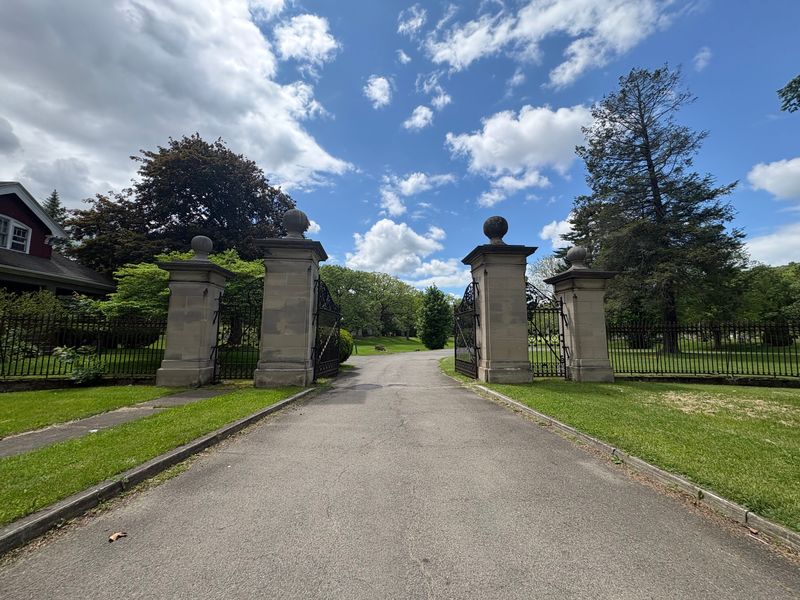
Perry also redesigned the entrance to Spring Forest Cemetery, where he is now buried, Schuerch explained, and was the first to go through the new entrance after he died in 1904.
Daniel Dickinson
Daniel Dickinson was born in Connecticut, but his family moved to Chenango County soon after he was born, according to the Historical Society of the New York Courts. Schuerch explained Dickinson was a prominent lawyer and politician before serving as the first president — the position would become city mayor — of Binghamton in 1834. Dickinson was also a member of the New York State Senate and served as lieutenant governor of New York from 1842-44.
He was elected New York State attorney general before being appointed by Abraham Lincoln as the United States attorney for the Southern District of New York in 1865, the website states. Dickinson died in New York City in 1866 and his body was transferred back to Binghamton to be buried in Spring Forest Cemetery.
Robert Harpur
According to a book written by the Sons of the American Revolution – Binghamton Chapter, Robert Harpur was the founder of the Village of Harpursville after settling there in 1795. He also owned 60,000 acres of land in the Town of Colesville. He was a member of the state convention, which created the first constitution, and was deputy Secretary of State and eventually Secretary of State in 1791.
Harpur died in 1825 and is buried in Riverview Cemetery in Harpursville.
The Mersereau Brothers
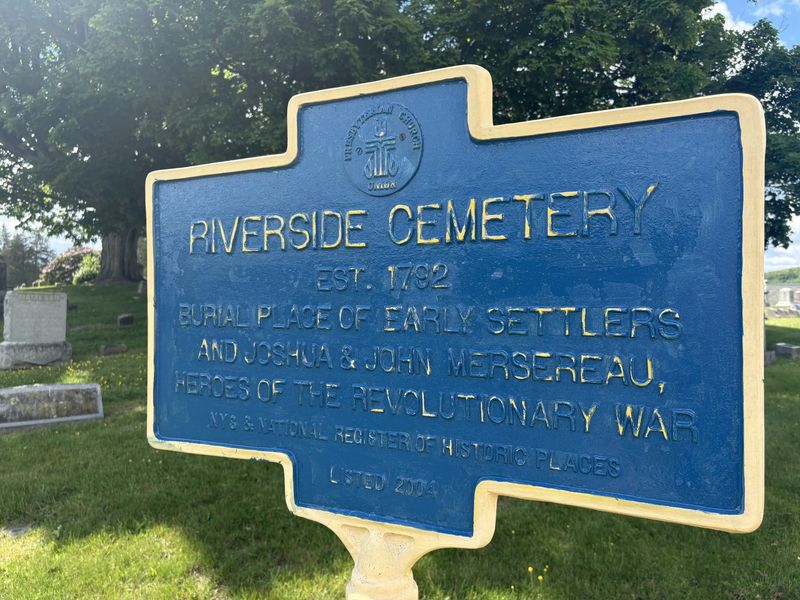
Joshua Mersereau moved from New Jersey to Vestal in 1789, according to the SAR’s book, and was a “distinguished soldier and a close personal friend of General George Washington.” He died in 1804.
John Mersereau moved from New Jersey to Vestal in 1792, according to the SAR’s book, after serving as a captain in the Revolutionary War, and acted as a spy for General Washington. He died in 1820.
Both brothers were significant in preventing the British Army from crossing the Delaware River in pursuit of Washington’s army, the book states. Along with this, the Mersereau brothers started a line of stage coaches from New York to Philadelphia. John Mersereau introduced the first mail coach in the United States from England, according to the book.
Both brothers are buried in Riverside Cemetery in Endicott.
Caleb Hyde
Caleb Hyde served during the American Revolution, according to the SAR’s book, including being a sheriff during Shay’s Rebellion, a violent uprising led by veteran Daniel Shays regarding the debt crisis at the end of the war.
Hyde was also second major in Colonel James Sisson’s Regiment, and a major colonel. Hyde eventually settled near the Town of Barker and Whitney Point. He died in 1820 and is buried in Riverside Cemetery in Whitney Point.
John Rush
John Rush served as a body guard for Major General Washington, according to the SAR’s book, however some of his biography remains undetermined. Though the book references Rush to be a close relative of Dr. Benjamin Rush, the SAR’s 2018 biological write-up of John Rush explains there are some discrepancies to this, further stating that Rush’s two pension applications do not reference this relation, nor do they reference him being a body guard.
Despite this, the pension applications, according to the SAR, do state that he enlisted as a private soldier and was commanded by Captain Willian Payette in Colonel Ogden’s regiment during the war. The SAR further states the applications note he was involved in various battles including Hog Back Hill in Tioga County.
John Rush died in 1838 and is buried in the Vestal Park Cemetery in Vestal.
Kentucky Derby winner racehorse Exterminator
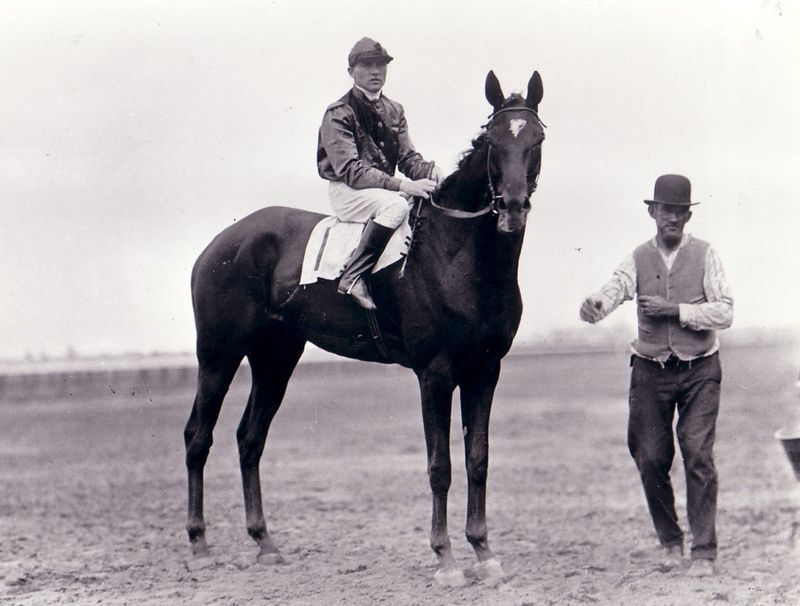
Exterminator, owned by Willis Sharpe Kilmer, won the 1918 Kentucky Derby despite 30-1 odds. When Exterminator’s racing partner, Sun Briar, had to be pulled from the race due to a medical issue, Kilmer was forced to put Exterminator in the competition, who was only considered a workhorse up until that point.
Exterminator won by lengths, then went on to win 49 more races over the next few years, winning a total of 50 out of 99 and making him Horse of the Year in 1922. Exterminator retired in 1924 and was brought back to Binghamton, where he died in 1945 at the age of 30.
Exterminator, along with Sun Briar and other horses, is buried in Whispering Pines Pet Cemetery in Binghamton.
This article originally appeared on Binghamton Press & Sun-Bulletin: These are some prominent historical figures buried in Broome County
Reporting by Sunshyne Lynch, Binghamton Press & Sun Bulletin / Binghamton Press & Sun-Bulletin
USA TODAY Network via Reuters Connect