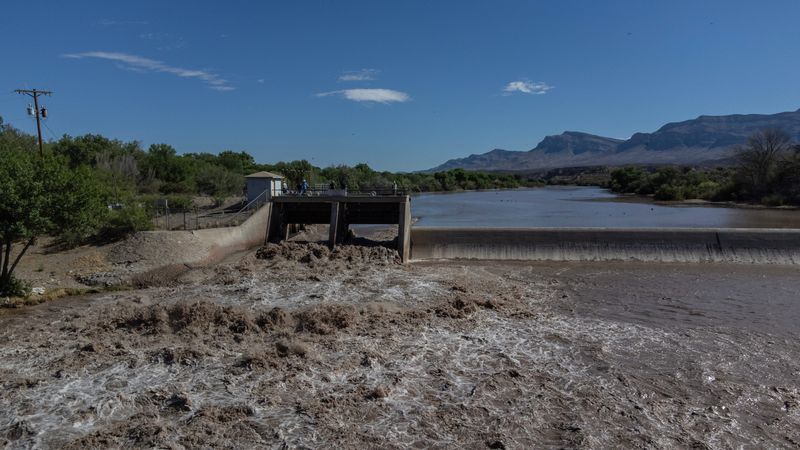
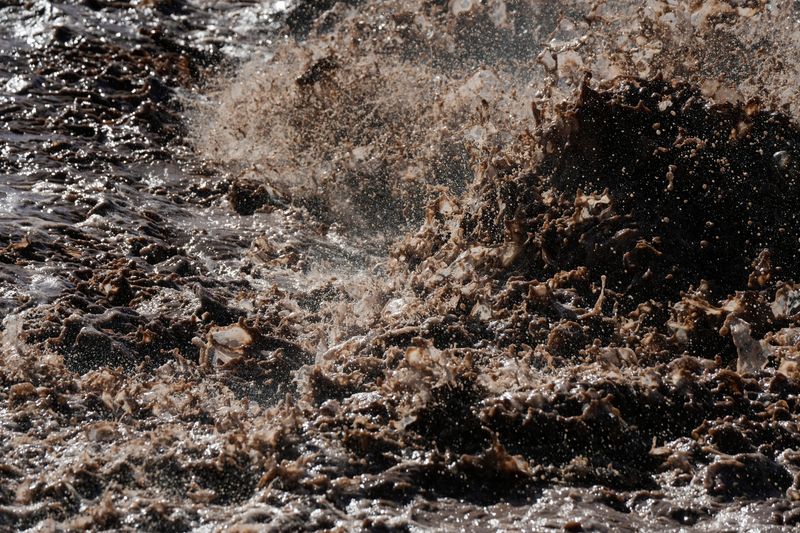
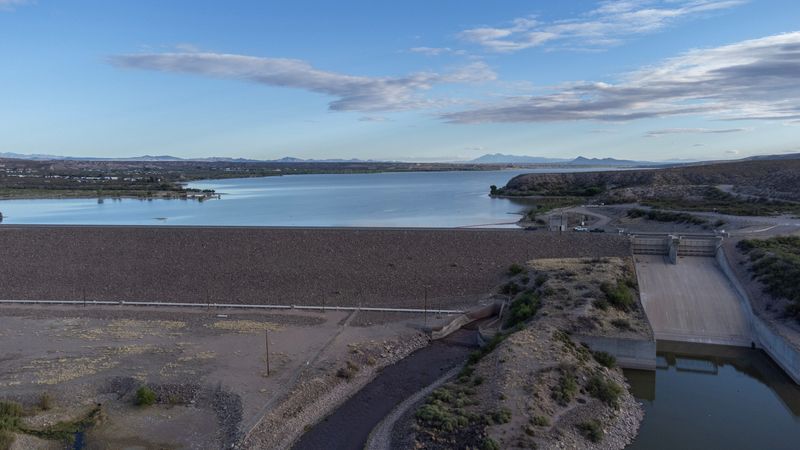
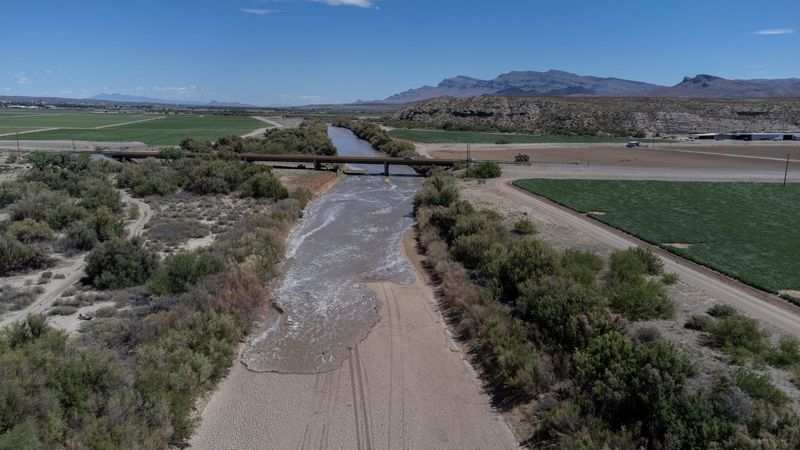
The annual release of water from Elephant Butte Dam is underway, sending stored water first into Caballo Reservoir and then into the Rio Grande toward El Paso.

An initial release of 600 cubic feet per second began at 7 a.m. from Caballo Dam on Friday. It was increased to 2,800 cubic feet per second an hour later, James Narvaez, irrigation systems director for the Elephant Butte Irrigation District, said.
“We are about two hours ahead of schedule,” he said. “We estimate it to be (at La Llorona Park) anywhere between 5 and 6 p.m. (Saturday),” Narvaez said.
He warned the public to avoid the riverbed, as water is flowing faster than modeling predicted during the initial phase of the water release.
The water will flow through the Mesilla Valley and into the Borderland, where it supports agriculture, provides drinking water to the city of El Paso and briefly supports the Rio Grande’s ecosystem.
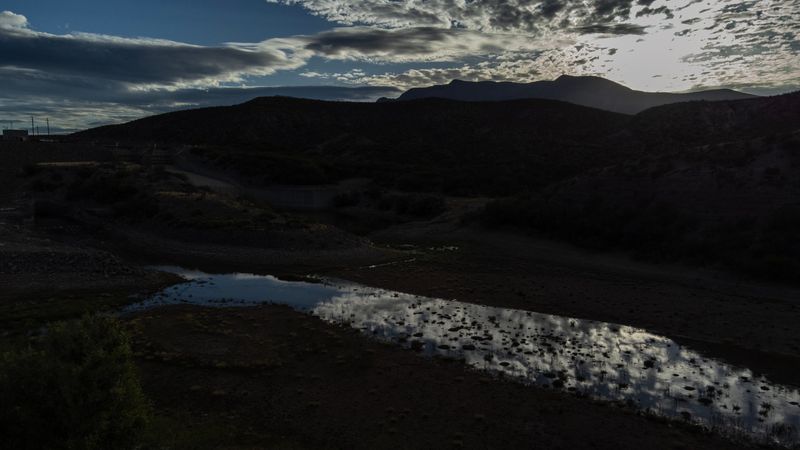
For months, the Rio Grande has been dry in Las Cruces and southern New Mexico.
With historically low storage at Elephant Butte, this year’s allocation is expected to last about 30 days for Texas, New Mexico and Mexico. Despite ongoing concerns, water managers expressed optimism as the flow returns life to the river.
The Rio Grande is one of North America’s longest rivers. It originates in the San Juan Mountains in Colorado. It flows south through New Mexico, into Texas and into Mexico.
In Mexico, the river is called the Rio Bravo and flows through four Mexican states: Chihuahua, Coahuila, Nuevo León and Tamaulipas.
Battle for Rio Grande water
The U.S. Supreme Court early last week approved an important settlement ending a long-running dispute over management of the Rio Grande.
A key provision of the settlement package reins in groundwater pumping along the Rio Grande to ensure that enough water reliably reaches Texas from New Mexico.
The court accepted a special master’s recommendations to move forward with the agreement proposed last year by officials in New Mexico, Texas and Colorado.
Texas filed a lawsuit in 2013 over the growing practice by farmers in New Mexico of using groundwater near the Rio Grande to irrigate their pecan orchards and chile fields.
The Rio Grande is a complex issue. The river is facing dire conditions due to poor snowfall in the north, drought and resource use. Its management — ensuring the Rio Grande’s sustainable use — is vital for millions of people who rely on the binational river.
“Water is the foundation of New Mexico’s agricultural economy and the lifeblood of communities across the southern part of our state,” said Gov. Michelle Lujan Grisham in a news release. “This settlement means farmers in the Lower Rio Grande can plan for the future, communities have certainty about their water supply and New Mexicans aren’t on the hook for a liability that could have cost billions.”
Under the settlement, New Mexico must reduce its groundwater pumping significantly over the next 10 years. It must also work to improve water management, support conservation and strengthen water data and monitoring.
“We all rely on water, and this settlement helps protect New Mexico’s water future while supporting the communities, farms, and businesses that depend on the Rio Grande,” said New Mexico Interstate Stream Commission Director Hannah Risely White. “We are grateful for the years of effort among the many parties that brought us to this agreement, creating a collaborative path forward grounded in science, law, and long-term stewardship.”
This article originally appeared on El Paso Times: Water delivery flows into Rio Grande toward El Paso for 2026 season
Reporting by Omar Ornelas, El Paso Times / El Paso Times
USA TODAY Network via Reuters Connect