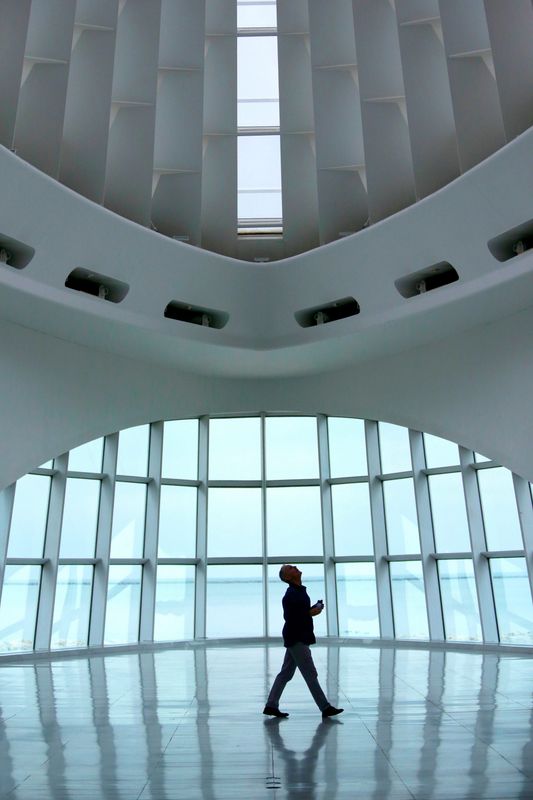
The Milwaukee Art Museum’s international acclaim is for more than just its postcard-perfect Calatrava addition. This year, the museum has exhibits that an outsider might think punch above the weight of this local treasure.
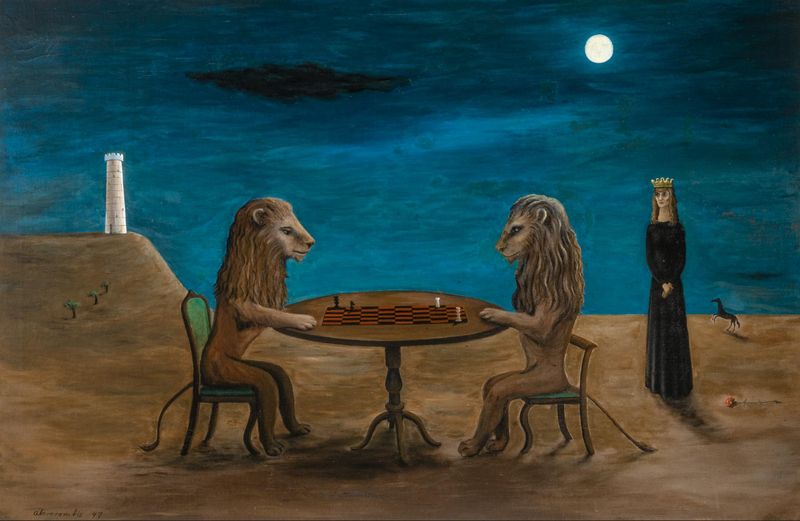
The nationally touring retrospective for Gertrude Abercrombie, who was known as “The Queen of Chicago,” skipped the very Windy City that Abercrombie called home to make its only Midwest stop at the Milwaukee Art Museum. “The Whole World is a Mystery” is in on view in the Baker/Rowland Galleries through July 19.

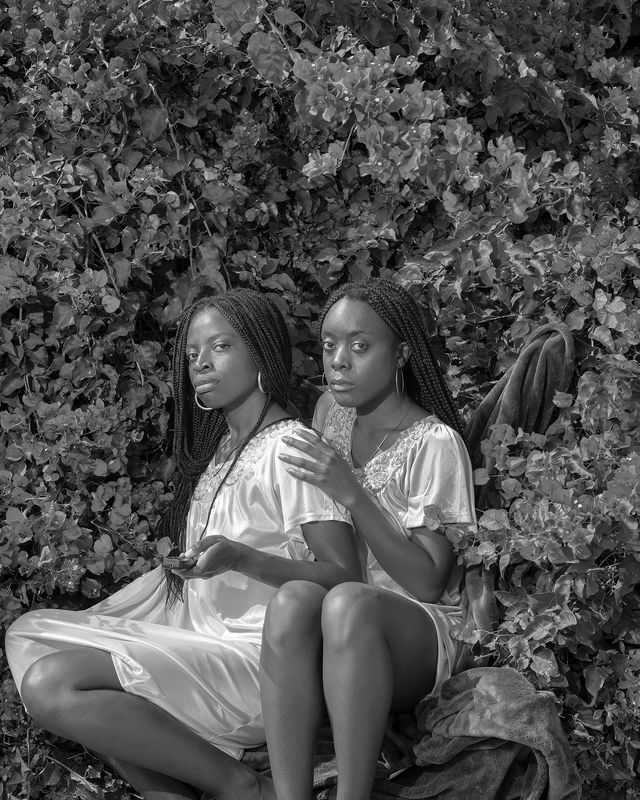
On May 8, Haitian-born, New York-bred and Los Angeles-based artist Widline Cadet, who is quickly becoming a household name, made her continental museum debut at the Milwaukee Art Museum. The artist’s first solo museum exhibition in the country, “Currents 40: Widline Cadet,” is on view through Aug 9 in the Herzfeld Center.
And the list goes on.
One is left to wonder how the museum attracts exhibits of this caliber time and again.
Kristen Gaylord, Herzfeld Curator of Photography and Media at the Milwaukee Art Museum, said she gets almost a pitch a day from artists, gallerists and fellow curators who have exhibition ideas.
Gaylord, who can only curate two shows a year, has had to get in the habit of saying no.
“It’s never meant as a judgement,” Gaylord said. “If I’m going to do two shows a year, it’s going to be fiercely competitive for which those shows are.”
Gaylord says it’s not enough for her just to like an artist’s work. Museum exhibitions require logistical, thematic and philosophical alignment between the artist and the institution.
“Not everything I’m interested in is adaptable to the scale of an exhibition,” Gaylord said.
The journey from idea to exhibition has several off-ramps, as the curator called them. Often times, exciting themes and talented artists aren’t exhibited for reasons that have nothing to do with the quality of the work.
For Gaylord, one of the most important questions is whether an artist’s work will continue to be dynamic and interesting even after they’ve made hundreds of pieces. For a space as big as the Herzfeld Center, exhibiting artists need several dozen works that, though in dialogue with each other, represent distinct aspects of the artist’s practice.
Cadet, for example, exhibited around 50 pieces.
“There might be an artist, [or] I see a photograph, and I’m like, I really like this person, let me keep an eye on them,” Gaylord said. “But I don’t immediately jump to, oh, I can fill 5,000 square feet with them.”
More than that, the artist’s work must remain interesting for several years – as most exhibitions are proposed two to five years before they open to the public.
Museum staff – including financial specialists, loan experts and conservationists – advise on exhibition proposals that are in the works, bringing critical expertise to curators. Though they may not have the authority to reject a proposal, their feedback can make or break whether an exhibition comes to fruition.
A proposal with prescient themes may be compelling, but if it’s not financially feasible or the museum can’t access the works, then a curator must adjust the plan. In the same way, feasibility alone is not reason enough. Curators have to justify why their museum is the right place to host an exhibition, and why now is the right time to put resources toward it.
When proposing “Currents 40,” Gaylord noted how the museum’s extensive Haitian collection would contextualize Cadet’s contemporary pieces.
Gaylord first met Cadet a few years ago during a visit to Southern California to see family. After seeing the up-and-coming photographer’s work popping up in prestigious group shows around the country, she cold-called Cadet and scheduled a studio visit. That visit gave her an in-depth look at the artist’s practice and a feel for their professional compatibility.
Gaylord brought the show idea to Liz Siegel, the Milwaukee Art Museum’s chief curator. She got Siegel’s support and drafted a formal proposal. Proposing the idea to Cadet, the photographer was thrilled. Not one to turn down an offer from a major museum for a solo exhibition, Cadet also was intrigued by how her work could be in dialogue with the Haitian collection.
“Being in the U.S., my experience with Haitian art is fairly limited. I’m always interested to see how previous generations made work and also to see the connections that I’m making through different mediums,” Cadet said.
Group shows require even more logistical planning – and justification for that planning. Curators have to ensure that the museum will have access to work often owned by several different galleries. They have to coordinate transportation for all the pieces, guarantee that those pieces work well together and in the gallery space, and more.
Curators then address all these factors when proposing a show, justifying why museum resources should be dedicated to the exhibit.
In 2023, the museum opened “50 Paintings,” featuring the work of 50 contemporary painters from around the globe.
“That was a logistical feat,” Gaylord said. “Fifty different artists means almost that many galleries and shipping locations … and do they all fit, and all of that.”
Once an idea holds enough water for a curator to seek approval, they submit proposals with respective staff. In Gaylord’s case, that includes Siegel and Milwaukee Art Museum Director Kim Sajet.
“The buck stops with the director, in the end,” Gaylord said. “So that’s the person who in the end says yes, this is something that the museum as an institution is going to put support behind.”
For named galleries, it’s possible that the titular family or company has a say in whether a proposal is approved. In the case of the Herzfeld Center, Gaylord has never been met with opposition. Though the curator keeps the Herzfeld Foundation up-to-date on shows in development, the foundation has only had positive feedback for her thus far.
Gaylord, like many established curators, has never lost an exhibition to logistical errors. When pursuing an artist or crafting an exhibition, feasibility is one of her first considerations. If an exhibition doesn’t come to fruition, it won’t be because she didn’t address practical concerns.
“I see my job very much as being in the public interest, and I think there’s a reason that museums in general are nonprofits,” she said. “And so, I try to be careful with the money and resources and staff time of the museum.”
Though outsiders may be inclined to underestimate the Milwaukee Art Museum, its bold and calculated curatorial decisions have made it the site of many stellar exhibitions.
“We put the shows that we pitch through such a stringent process because, in part, its not just being judged on its own merits. It’s being judged against everything else we could have done,” Gaylord said.
Anya Sesay covers arts and culture for the Milwaukee Journal Sentinel. Send her story ideas, things to see and people to meet at asesay@usatodayco.com. Follow her on Instagram @anyanic0lette.
Anya’s reporting is supported by the Richard and Ethel Herzfeld Foundation, the Maine-based Rabkin Foundation, and reader contributions to the Journal Sentinel Community-Funded Journalism Project. Journal Sentinel editors maintain full editorial control over all content. To support this work, visit jsonline.com/support. Checks can be addressed to Local Media Foundation (memo: “JS Community Journalism”) and mailed to P.O. Box 85015, Chicago, IL 60689.
The JS Community-Funded Journalism Project is administered by Local Media Foundation, tax ID #36-4427750, a Section 501(c)(3) charitable trust affiliated with Local Media Association.
This article originally appeared on Milwaukee Journal Sentinel: How the Milwaukee Art Museum lands exhibits like Widline Cadet’s
Reporting by Anya Sesay, Milwaukee Journal Sentinel / Milwaukee Journal Sentinel
USA TODAY Network via Reuters Connect