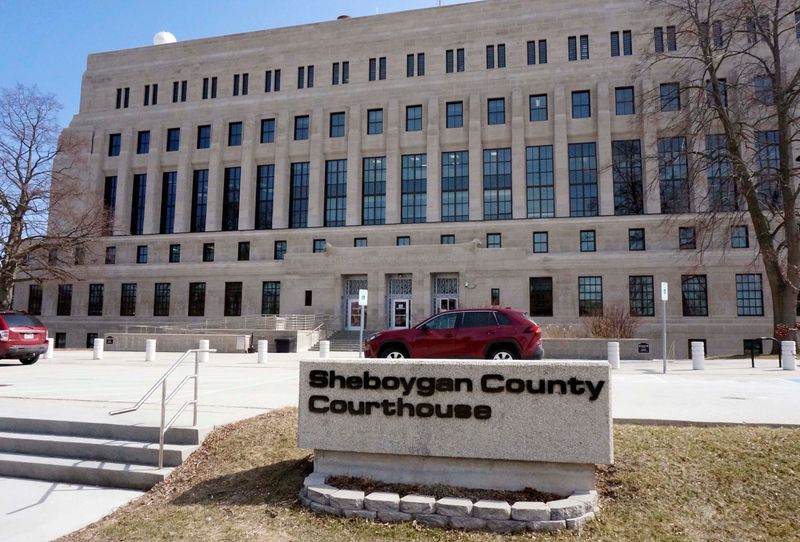
SHEBOYGAN – The second day of Tommie Dixon’s jury trial in a 2024 officer-involved shooting centered on law enforcement testimony, video evidence and Dixon’s interview with police.
Testimony resumed May 27 with the Sheboygan officer who shot Dixon, other Sheboygan officers and members of the West Bend Police Department. The trial began May 26.

Tommie Dixon shooting case background
The criminal complaint says the officer believed Dixon was about to shoot the two officers who responded to a Sept. 8, 2024, report of a person waving a gun.
Dixon’s family has said the officer shot him eight times. Dixon was taken to a local hospital and later flown to HSHS St. Vincent Hospital in Green Bay for surgery. Sheboygan police said both officers were placed on administrative leave.
Court records describe conflicting accounts of the Sept. 8, 2024, encounter. Prosecutors allege Dixon grabbed an officer’s gun and intended to kill the officers. Dixon has said he acted out of fear because he believed police were going to shoot him.
Dixon, 25, has pleaded not guilty to attempted first-degree intentional homicide and repeater offenses related to the Sept. 8, 2024, incident near Knowles Chiropractic, 1509 N. 13th St. He also is charged with felony disarming a peace officer and bail jumping, misdemeanor resisting or obstructing an officer, and two additional misdemeanor bail-jumping counts.
Dixon’s attorneys and family have declined to comment.
Here are key takeaways from Day 2. Court resumes at 8:30 a.m. May 28. Judge Rebecca Persick said closing arguments are scheduled for Thursday morning, followed by jury deliberations.
Responding officer faces cross-examination
After District Attorney Joel Urmanski finished his direct examination at the end of the first day, the defense cross-examined Marcus Renzelmann, one of the Sheboygan officers who responded to the Sept. 8, 2024, report of a person waving a gun.
Kirk Obear, one of Dixon’s attorneys, asked whether Renzelmann was able to assess whether Dixon had a gun. Renzelmann said he did not recall saying at the time that he was 100% certain Dixon did not have a gun before police arrived, but no gun was recovered from Dixon at the end of the incident.
Renzelmann testified the gun did not leave the holster while Dixon was in possession of it, but he said he could not guarantee it was still in the holster at the end of the incident.
Renzelmann said the incident unfolded quickly, but he believed Alison Meyer, his partner, was under attack after being disarmed when he exited his vehicle. He said that when he shot Dixon, he did not think Meyer was still under attack.
Obear asked whether Renzelmann was emotional about nearly killing someone.
“Overall, I am emotional about the entire situation,” Renzelmann said.
Roof of chiropractic building inspected for firearm
Jurors were shown drone footage taken by the West Bend Police Department of the roof of the chiropractic building.
On cross-examination, Stacie Bruss, a detective with the West Bend Police Department, testified she had been told there was an initial 911 call about an individual waving a firearm near the chiropractic building.
Bruss said that based on her law enforcement experience, a suspect who realized officers were approaching could hide evidence. She said the building was low enough that someone could easily throw something onto the roof or try to discard it there.
Bruss said the department did not locate any evidence on the roof.
Defense highlights lack of shots from disarmed weapon
Through several witnesses, the defense established that law enforcement found no shell casings from Meyer’s weapon, indicating Dixon did not fire any shots while in possession of it.
Investigators found only nine shell casings from Renzelmann’s weapon at the scene.
Images show opening in holster
Renzelmann testified Monday that Meyer’s gun could still be manipulated through the type of holster issued by the Sheboygan Police Department, and he believed Dixon remained a threat while holding the gun inside the holster.
The West Bend Police Department photographed evidence from the scene, including Meyer’s gun and holster. Images shown in court revealed a small rectangular opening in the holster where the gun’s muzzle sits.
Jurors were shown nearly 20 images of damage to Meyer’s holster, including photos that Bruss said showed scuff marks and a broken plastic piece that allowed the holster to slide into an attachment on a duty belt.
On cross-examination, Bruss said she could not be certain what caused the damage to the holster.
Police yell at Dixon to roll away from gun
In video shown at trial, Shannon McKay, a retired Sheboygan police sergeant, can be heard yelling at Dixon to move away from the gun when additional officers arrived. McKay said Dixon did not appear to be able to walk.
“Roll if you want to live!” McKay yells in the video.
McKay said Dixon appeared to hesitate when officers told him to move, so using a “verbal stun” was appropriate to try to get him to respond more quickly, move away from the gun and allow officers to render aid.
Dixon ultimately rolled toward officers.
During cross-examination, McKay said he did not see Dixon roll toward the gun, see a gun on his person or see any shell casings near him.
Dixon interview with police shown, but audio difficult to hear
Jurors were shown a Sept. 9, 2024, hospital interview of Dixon by West Bend Police Lt. Thomas Lichtensteiger. West Bend detective John Otte and Todd Danen, a former Sheboygan police detective, also attended the interview. Neither Otte nor Danen testified.
Persick noted the audio was difficult to hear.
Last fall, Ryan Dicke, one of Dixon’s attorneys, filed a motion to suppress statements Dixon made to investigators at the hospital that day after he was shot, arguing Dixon could not voluntarily waive his Miranda rights because of his condition, because he initially said he did not want to speak with officers, and because Lichtensteiger misrepresented why officers were there. Persick denied the motion.
Video shows disputed interaction between Dixon and police
In the video, Dixon said at least twice that he did not want to interact with officers when Lichtensteiger asked to speak with him and later to photograph him.
After Dixon hesitated to speak with officers and said he wanted to talk to his mother, Lichtensteiger gave him a letter from her. Later in the video, amid some conversation about Chicago and Spider-Man, Lichtensteiger again asked whether officers could take photos and swab Dixon for DNA, and Dixon said yes, though the audio was difficult to hear.
Also in the video, Lichtensteiger told Dixon he was there to investigate the officer-involved shooting. He repeatedly told Dixon throughout the interview that he wanted to hear his side of the story.
Lichtensteiger motioned to Danen, who was in the room, and said: “He won’t talk to you. He won’t answer a question from you. He’s simply here because we need that jurisdiction process.”
Dixon says he could not breathe during interview
In the video interview, Dixon said he could not breathe. Lichtensteiger paused the interview and asked for a nurse. She assisted Dixon for several minutes, repositioning his injured arm, sitting him up in bed and bringing him an oxygen mask.
Later, during cross-examination, Obear asked whether Lichtensteiger had consulted Dixon’s physician to determine whether he was fit to be interviewed less than 24 hours after being shot several times.
Lichtensteiger said he had not, and that it is common practice for law enforcement to gauge whether a person can provide a statement rather than consult a doctor.
Dixon says he was about to leave area before confrontation
During the interview, Dixon said he was about to leave the bench near the chiropractic building when he saw Renzelmann’s squad car approach because he thought he might be on private property. But he said he stayed because he thought leaving would look suspicious.
Dixon said he did not sit on the bench often, but he had been there before.
Asked whether anyone else was in the area before the incident, Dixon said two people had been there earlier.
Dixon says he felt harassed by police
When Lichtensteiger asked why he gave false information, Dixon said he gave officers a false birthdate and an alias. He said he did not think he had a reason to give them information.
Dixon said he felt he was being harassed when they kept asking him questions about his identity, according to the video of the interview.
Dixon says he wanted to protect himself and feared being detained
Dixon told Lichtensteiger he did not have a gun.
He told Lichtensteiger he was scared and thought he was being detained. Dixon said he wanted to brush off Meyer and get the gun away from the situation while Renzelmann was in his squad car trying to identify him.
Dixon said he moved to get up and saw Meyer reach for her gun. He said he did not want to get shot, so he tried to grab her gun, planning to run off with it toward his house. Dixon repeated during Lichtensteiger’s questioning that he wanted to get the gun away from the situation.
He said he and Meyer struggled over the gun. After he got the gun and ran away, Dixon said he aimed it at Renzelmann because Renzelmann was aiming his gun at him and he believed he would be shot.
Dixon said he intended to shoot the gun, but wanted to protect himself. He said he tried once to get the gun out of the holster.
“If you shoot that, you understand that a gun can kill somebody, right? So you understand that if you shoot someone, you are intending to kill them, is that accurate?” Lichtensteiger asked.
Dixon said yes.
“So, you could not get ahold of the holster, but if you did, your intent would have been to shoot that officer and kill him, correct?” Lichtensteiger asked.
Dixon appeared to say something disagreeing with Lichtensteiger.
“Well, you understand that’s a likely cost, right? I’m not trying to put words in your mouth,” Lichtensteiger said.
Dixon said he did not know whether he was still holding the gun when he was shot the first three times and fell to the ground.
Juror interruptions include phone buzzing and sleeping
Several juror interruptions occurred during the second day of trial. In the morning, one juror attempted to ask Persick a question, but she interrupted to tell jurors they were not allowed to ask questions.
Persick later was distracted by a buzzing sound and asked whether any jurors had a phone with them. One juror said they did.
After the lunch break, while Lichtensteiger’s interview with Dixon was being shown through body camera footage, a different juror fell asleep. The central courtroom lights had been turned off to make the video easier to see.
The jurors were briefly dismissed. Persick asked the attorneys whether they wanted to use that juror as an alternate, which would mean the juror would not deliberate. Persick and Obear said they also saw the juror looking drowsy the previous day.
Urmanski suggested rewinding the video for about 10 minutes, the period when the juror appeared to be asleep.
Persick decided the video would be rewound and the lights turned back on because the court might need the juror to participate in deliberations if the two alternates were needed during the trial.
Dixon does not testify in court
Dixon decided not to testify, a decision Obear said he had made consistently.
Defense calls no witnesses and moves for dismissal
The defense did not call any witnesses. Obear moved to dismiss all counts, arguing there was not sufficient evidence. Persick denied the motion, agreeing with Urmanski that the jury could find Dixon guilty on any of the charges based on the evidence presented in court.
Contact Alex Garner at 224-374-2332 or agarner@usatodayco.com.
This article originally appeared on Sheboygan Press: Key takeaways from Day 2 of Tommie Dixon police shooting trial
Reporting by Alex Garner, Sheboygan Press / Sheboygan Press
USA TODAY Network via Reuters Connect