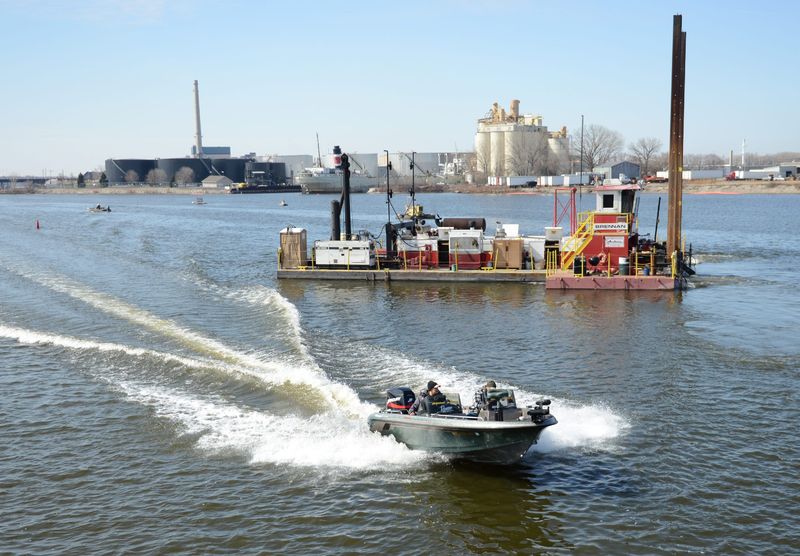
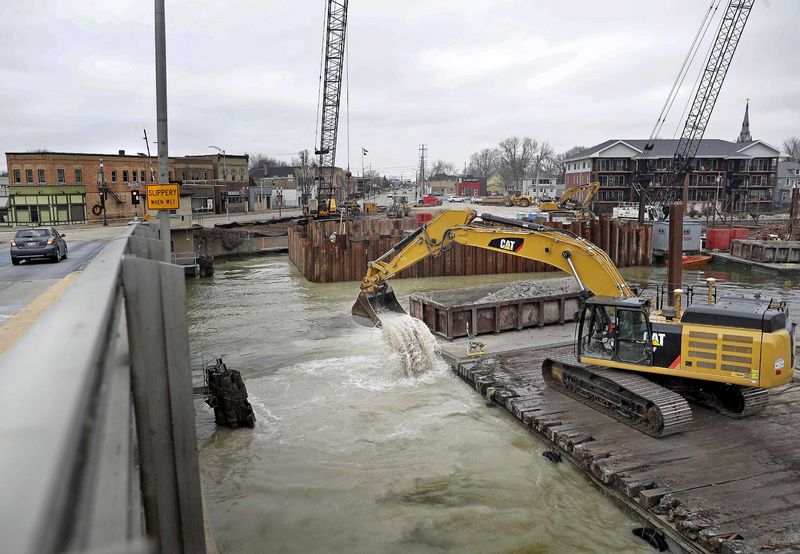
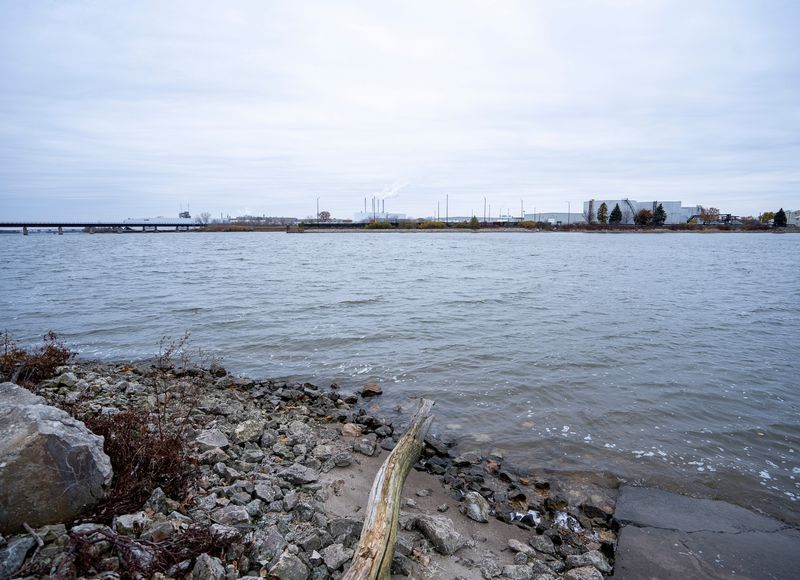
Nearly a half century after the U.S. banned polychlorinated biphenyls, also known as PCBs, communities around the Great Lakes are still digging the toxic chemical out of rivers, harbors and lakes.
Those cleanups are massive, expensive and slow-moving projects, raising lot of questions for the people living nearby.

So, what are PCBs and why were they used in the first place? Who is most at risk of PCB exposure? Here’s what to know.
What are PCBs, and why were they used so widely?
PCBs are a class of more than 200 manmade chemicals first produced by the Swann Chemical Company in Alabama in the late 1920s. The chemicals were later manufactured exclusively by Monsanto.
The chemicals were useful because they were made to be virtually indestructible. Resistant to extreme heat and other chemicals, PCBs were used for industries where fire resistance and durability were critical, like electrical insulation. In the Green Bay area specifically, they were used by paper mills, which were once one of Wisconsin’s dominant industries, in newly invented carbonless copy paper and its recycled scraps.
Where are PCBs still found today?
Monsanto produced roughly 1.4 billion pounds of PCBs before it stopped production in 1977. Two years later, the U.S. Environmental Protection Agency banned the toxic chemicals under the Toxic Substances Control Act, due to severe health risks and environmental persistence.
Even though PCBs were banned, they may still be present in older electrical equipment and building materials. They also persist in soil and water, continuing to pose serious health and environmental risks.
How do PCBs get into rivers, soil and the food chain?
For decades, many industries discharged wastewater containing PCBs directly into rivers and other waterways, often with little or no treatment. Because PCBs break down very slowly in the environment, the toxic chemicals settled into riverbeds and lake bottoms across the Great Lakes region, where much of that contamination remains today.
PCBs enter small organisms living in or near contaminated sediments on the bottom of rivers and lakes. As fish take up PCBs from the water, sediment and by eating contaminated prey, the compounds accumulate in their fatty tissues. The chemicals build up and increase at each step up the food web, so much so that PCB levels in fish and other wildlife can be thousands of times higher than the surrounding water.
Extensive cleanup efforts around the Great Lakes have focused on dredging, capping and otherwise removing PCB‑contaminated sediments from rivers and harbors, including in Milwaukee.
Why are PCBs dangerous to human health?
PCBs have been shown to damage multiple organ systems, including the brain, immune system, liver and thyroid system.
PCBs can also increase cancer risk. The International Agency for Research on Cancer classifies PCBs as carcinogenic to humans. The EPA and National Toxicology Program call PCBs probable human carcinogens, noting that not all of the hundreds of individual PCB compounds have been shown to cause tumors.
Monsanto – which German pharmaceutical company Bayer acquired in 2016 – has faced numerous lawsuits alleging it sold PCBs through the 1970s while concealing their health risks.
Who is most at risk from PCB exposure?
While PCBs have been banned for decades, their risks remain serious. People can be exposed through soil, dust, air, water and fish, with health effects documented even at current environmental levels.
People who frequently eat contaminated fish and game are especially at risk, including subsistence anglers and their families, as well as communities that depend on local waters with PCB fish advisories, such as the Great Lakes.
Women can expose their children to PCBs through pregnancy or breastfeeding, which can impact early phases of brain and immune development.
Workers involved in PCB cleanup efforts are also at risk for exposure, as well as communities living near contaminated waterways.
How can communities and families reduce their exposure to PCBs?
Communities and families can reduce PCB exposure mainly by being careful about what fish they eat and following posted fishing guidelines. Communities can ask health departments to provide clear fish-consumption guidelines in multiple formats and share those with organizations and schools.
People can also reduce exposure in older homes, schools and public buildings. For instance, qualified professionals should check buildings constructed from 1950 to 1979 for materials such as sealants, paints and old light ballasts, all of which may contain PCBs. During renovations, people should use trained contractors to ensure PCBs are not spread through dust.
Communities can ask local and state agencies to identify PCB-contaminated sites, press for testing in older schools and include measures to protect nearby residents during cleanup efforts.
What does PCB cleanup and remediation involve, and why does it take so long?
Cleanup usually means finding where PCBs are, removing or isolating the contamination, and then safely treating or disposing waste. It often takes years because PCBs are persistent, tightly regulated and expensive to handle at low concentrations over large areas.
For instance, the PCB cleanup along the Lower Fox River took about 17 years, from 2004 until the completion of dredging, capping and sediment removal in 2020. The nearly $1.3 billion effort, which removed about 6.5 million cubic yards of contaminated sediment, is widely described as one of the world’s largest PCB cleanups.
The EPA officially certified the cleanup as complete in 2023, and long-term monitoring is expected to continue for decades.
Who is responsible for cleaning up PCB contamination in my community?
In most communities, cleanup is led by the responsible company under EPA and state oversight. The EPA lays out cleanup rules under the Toxic Substances Control Act, reviews cleanup plans, enforces requirements and can step in if responsible parties fail to act. The Lower Fox River cleanup, for example, was paid entirely by paper companies.
If the responsible parties cannot be found or refuse to act, the EPA or state can use Superfund or similar programs to perform the cleanup and then try to recover costs from the responsible party later.
In Milwaukee, the cleanup is being paid for largely by the EPA through the Great Lakes Restoration Initiative and the bipartisan infrastructure law. The non-federal sponsors include the Milwaukee Metropolitan Sewerage District, City of Milwaukee, Milwaukee County Parks, Wisconsin Department of Natural Resources and We Energies. The polluted sediment is associated with the former Third Ward Manufactured Gas Plant, which was operated by one of We Energies’ corporate predecessors.
This article originally appeared on Milwaukee Journal Sentinel: PCBs linger in Great Lakes waterways. What to know about the toxic chemical
Reporting by Caitlin Looby and Tamia Fowlkes, Milwaukee Journal Sentinel / Milwaukee Journal Sentinel
USA TODAY Network via Reuters Connect