The most revealing economic indicator in America right now may not be inflation, unemployment, the Dow Jones Industrial Average or even the latest gross domestic product report. It may not be what the governors at the Federal Reserve Bank have to say about the state of the economy.
It may be something less tangible, but equally consequential, and that is the confidence of the people who own businesses in our communities.

Confidence is what persuades a small business owner to hire another worker. It is what convinces a local Detroit entrepreneur to open a second location, purchase new equipment or expand into a new market.
More: Voters are unhappy about much more than high gas prices
To put it simply, confidence is the invisible currency that fuels risk-taking, innovation and growth. When confidence weakens, business owners hesitate about making the next investment and sometimes live in doubt about the future of their innovations.
Of recent reports about the state of the economy, what captured my attention the most are recent findings from the National Federation of Independent Business, which reveal a sobering reality. Small business owners are increasingly uncertain about the future. Optimism remains subdued. Concerns about inflation, taxes, labor costs, interest rates and economic policy continue to cloud business decisions.
For some, these reports may appear to be little more than another economic survey. But frankly, they are not. They are a warning signal ahead of the midterm elections.
Small businesses account for nearly half of private-sector employment in the country. They are not merely participants in the economy; they are among its primary engines. They are the neighborhood manufacturers, contractors, retailers, restaurant owners, technology startups, family-owned service providers and entrepreneurs who transform ideas into livelihoods.
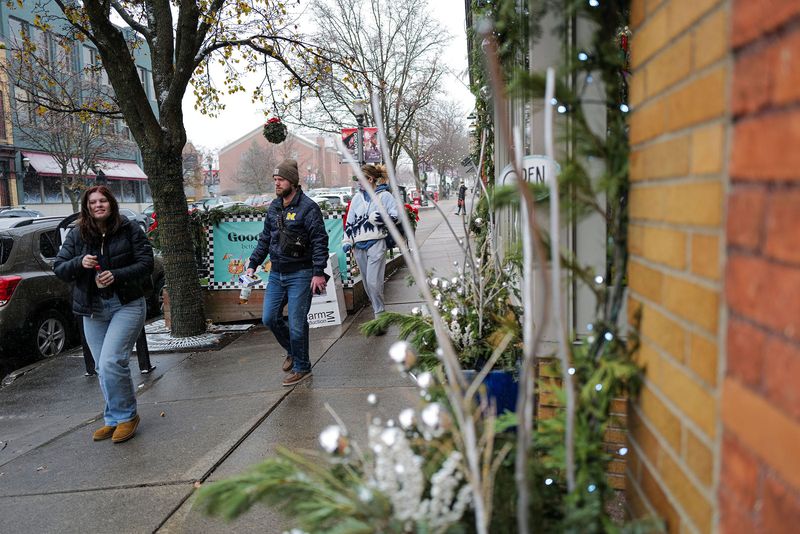
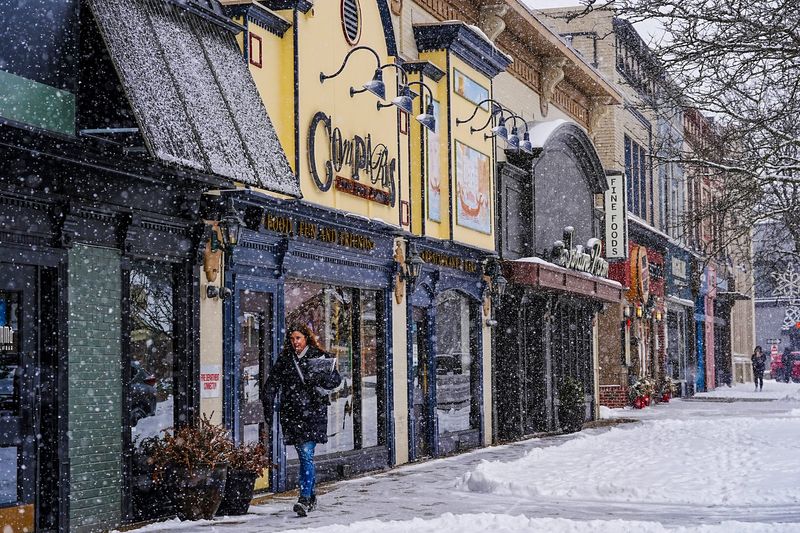
Walk down through Detroit’s historic district, the Avenue of Fashion, and you will see an array of small businesses.
What the NFIB survey suggests is that business owners are struggling to make long-term decisions in an era increasingly defined by short-term disruption.
They face unpredictable costs, volatile markets, shifting regulatory expectations, global conflicts that affect supply chains and political polarization that has eroded confidence in institutions.
Many are not asking whether they can survive this month. They are asking whether they can confidently plan for the next five years.
That distinction matters. Economic growth depends on the future.
Businesses invest today because they believe tomorrow will reward their risk. When that belief weakens, investment, hiring and expansion slow. The result is not necessarily a recession. Sometimes it is something far more difficult to diagnose: economic stagnation disguised as stability.
Across the country, there is a growing disconnect between what economists in ivory tower institutions measure and what everyday people and business owners feel. Policymakers may point to favorable data that supports their arguments, but many people continue to experience economic insecurity.
Housing remains unaffordable for millions. Healthcare costs continue to strain family budgets. Young people, including those coming out of college with huge student debts, question whether they will achieve the same standard of living as their parents. Retirees in Detroit’s senior communities worry that fixed incomes will not keep pace with rising expenses.
This gap between statistical performance and lived experience has become one of the defining challenges of this era.
The danger is that uncertainty itself can become self-fulfilling. When businesses delay investments, growth slows. When consumers pull back spending, demand weakens. When communities lose confidence in their economic future, opportunity begins to shrink.
This is why restoring confidence must become a national priority. That requires more than the campaign rhetoric that will greet voters in the fall. It requires leadership willing to provide stability, predictability and a coherent vision for the future. Businesses can adapt to challenges. What they struggle to navigate is uncertainty.
Bankole Thompson’s columns appear on Mondays and Thursdays in The Detroit News. Contact him at bankole@bankolethompson.com, or follow him on X (formerly Twitter): @BankoleDetNews.
This article originally appeared on The Detroit News: Area economic indicator doesn’t factor business owners | Opinion
Reporting by Bankole Thompson, Holland Sentinel / The Detroit News
USA TODAY Network via Reuters Connect
By Bankole Thompson, Holland Sentinel | USA TODAY Network