INDIANAPOLIS – First comes the passion.
There may be no more raw emotion or dramatic swings in sports than at the Indianapolis 500, a 200 mph dogfight with life-and-death implications.

But then comes perspective. It’s amazing to see how quickly that arrives.
Scott McLaughlin had to be happy with third place in the 110th running. Oh, he wanted to win. Badly. And for much of the afternoon May 24 it looked as though McLaughlin might, until it didn’t.
But when McLaughin got from 10th to third in two chaotic green-flag laps around the Indianapolis Motor Speedway, that helped. So did the fact that he wasn’t crouched by his car with his head in the hands, out of the race before it started. That’s the way last year’s 500 ended for McLaughlin, with a feeling he wouldn’t wish on an enemy.
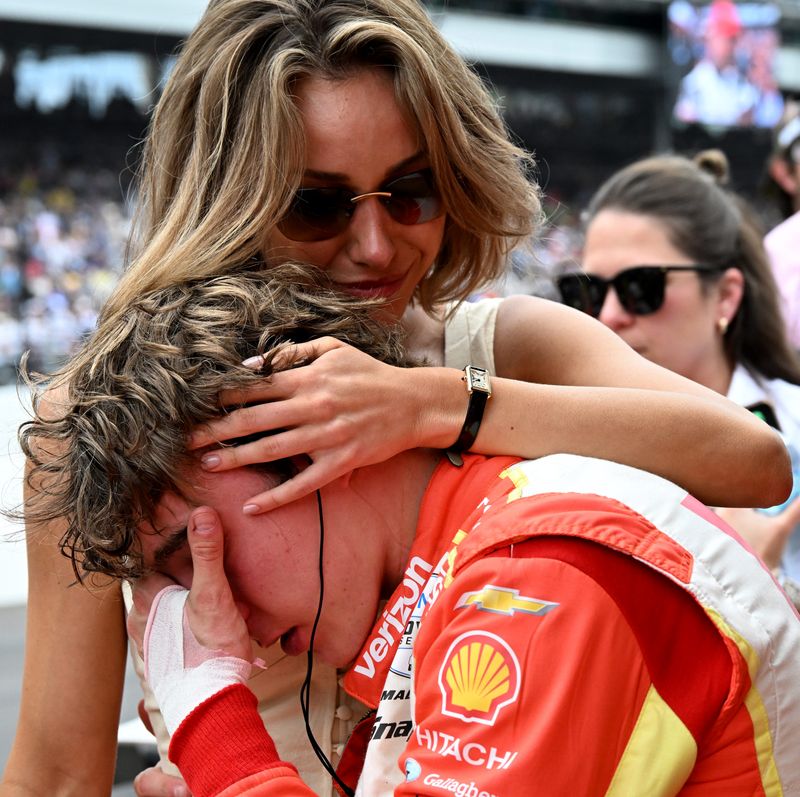
David Malukas was heartbroken, gut-punched by a daring pass in the few hundred yards on what would have been the biggest day of his life by far. Tears and quivering voice told the story of one crucial second of his race.
But less than a half hour later Malukas was thinking about how he’d worried more than once his racing career was over and how appreciative he was to have had a chance. A good chance. And how he’ll have more in the future.
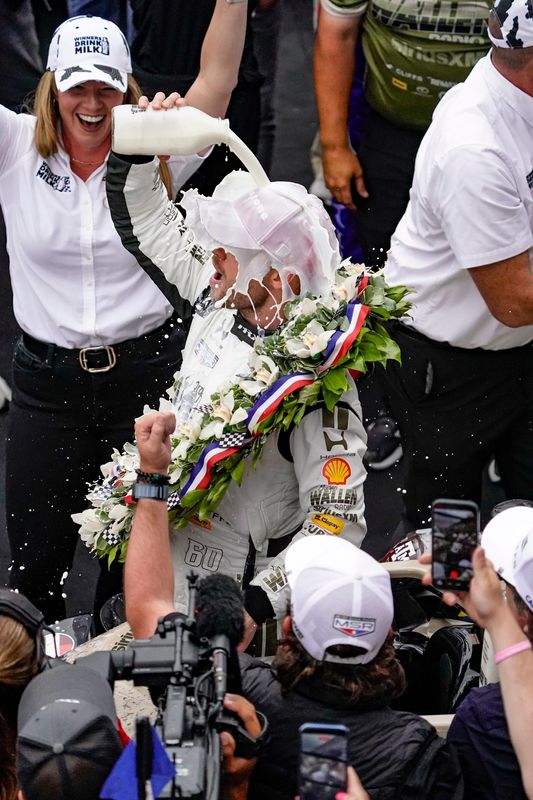
Then there was Felix Rosenqvist, the latest winner of the biggest auto race in the world. It’d been nearly seven years since he’d picked up his only previous victory in an Indy car. There are no superlatives that can fully explain this career accomplishment.
But 20 days earlier Rosenqvist and wife Emille welcomed daughter Stella. Becoming a father for the first time is a whole different sort of joy.
“I think I’ve widened my spectrum of emotions by a million times this month,” Rosenqvist said.
His wife and daughter weren’t at the track, but he managed a quick call amid the celebration.
“[Parenthood] unlocks something in you for sure that you never had before,” Rosenqvist said.
“We all put so much pressure on yourselves and we also get added pressure from our teams, our media, whatever it is. You always have way more pressure than you need, really, and you’ve been learning to cope with it all your life.
“I think somehow this was the first time I felt less pressure because I already had so much. I come home at night and I’m the happiest man.”
Rosenqvist’s IndyCar journey has been a twisty one.
The 34-year-old Swede won with Chip Ganassi’s team in 2020, his second in the series, on the Road America circuit in Elkhart Lake, Wisconsin, but then bounced to McLaren for 2022 and ‘23 before landing at Meyer Shank Racing.
Entering Indy, Rosenqvist was on a 98-start winless streak during which he recorded six poles but just five podiums.
“It’s an extremely long time,” Rosenqvist said. “It’s not only me but every driver in this series, they come from a background where they’ve been winning everything. You’ve been on pole positions all the time, and all of a sudden to have that kind of slump, it definitely gets to you a little bit.”
Although Malukas is just 24, he has ridden an even wilder career roller coaster. He spent two seasons with Dale Coyne’s tiny team, was injured in a preseason cycling crash that cost him his McLaren ride before he ran a single race in 2024 ans was lucky to finish that season as Rosenqvist’s fill-in teammate for 10 races.
Still, Malukas was fortunate to have the eye of mega-owner Roger Penske. After spending last season with A.J. Foyt – including a second-place finish at Indy – he joined Penske proper for this season.
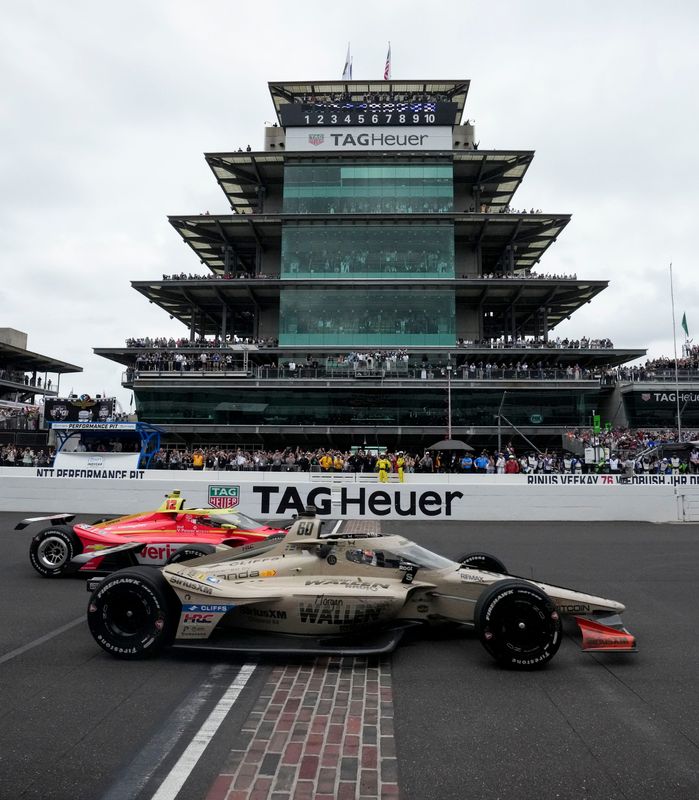
The best way for Malukas to repay The Captain would have been with his first IndyCar win and Penske’s 21st 500. Instead Rosenqvist was able to keep up his momentum on the outside and edge Malukas by a record .0233 of a second.
“It was ours to win, and I knew that,” Malukas said. “I’ve never pushed that hard in my whole life. I can’t believe it. … I don’t know how much closer you can get to getting it.
“From 2024, from the wrist injury, I’ve been to so many different teams, and nobody is like Team Penske. … Obviously coming from all of that, Roger was one of the first guys to come to me and tell me that he believes in me and told me to keep on pushing. I think that’s why it’s really emotional for me because I wanted to get a win for this team and just wanted to be written across those history books.”
Before the final corner, Rosenqvist assumed he’d finish second. Then the pendulum swung.
“I was like, ‘This sucks, now we’re second in the 500. I guess it was a good day; we did what we could,’” he said. “I thought I didn’t have it, and then I shifted up, and it was just kind of sucking up to David [in the draft], and it was just enough to get me over the finish line half a foot ahead of him.
“You can’t even dream up that stuff. It was just so cool. I’ll watch it a million times.”
While frustration of the runner-up and elation of the winner stand out most dramatically, every one of the 33 drivers dealt with the ups or downs of the day and probably both.
That starts with another Meyer Shank driver, Marcus Armstrong, who would have been the one drinking milk had the race ended under then yellow for Mick Schumacher’s brush with the wall rather than restarting with the white flag. Instead Armstrong finished fifth after running much of the final lap with Rosenqvist alongside.
“That’s racing,” team co-owner Michael Shank said. “It gives and takes.”
Beyond Armstrong, Conor Daly lit up the crowd when he took the lead but ended up 12th. Fellow Hoosier Ed Carpenter left angry at Takuma Sato after crashing out.
Alexander Rossi was beside himself after having to climb out of a smoking car for the second straight year. Katherine Legge, the first woman to start the Indy-NASCAR double, made only 17 laps before crashing to avoid broadsiding Ryan Hunter-Reay.
The list goes on.
“It’s Christmas but not everyone gets a present, and that’s the worst part about it because you wake up you’re like, yo, we’re going to get presents, it’s going to be sick, and then only one guy goes home with one,” McLaughhlin said. “That’s what my mom said.
“Everyone here that finishes not first despises today, and it is what it is. You’ve just got to take the learnings, whatever it is, whether you crashed last year or you finished where we finished today – What could you have done differently? What could you have done better? What was out of your control? – and just come back stronger.”
That last part applies to the winner, as well.
As well as opening the big present, Rosenqvist gained experience and confidence that can help for years to come. A different perspective, too.
This article originally appeared on Milwaukee Journal Sentinel: Finding perspective amid passion and chaos at Indy 500 | Dave Kallmann
Reporting by Dave Kallmann, Milwaukee Journal Sentinel / Milwaukee Journal Sentinel
USA TODAY Network via Reuters Connect