As Ohio’s data center boom shows no signs of slowing down, experts advocated Ohio needs to reimagine its relationship to big tech to protect all Ohioans.
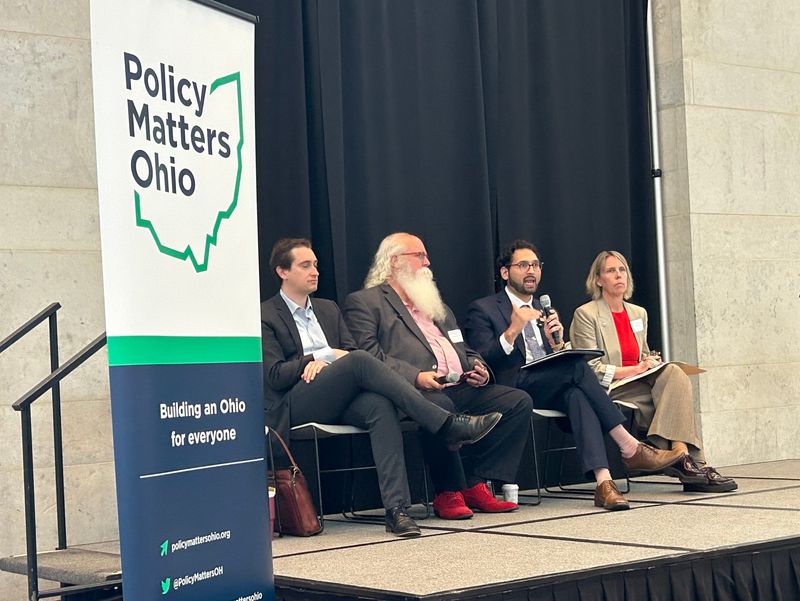
It was all part of the “Reimagining the Silicon Heartland Summit” day-long event May 22 at the Ohio Statehouse organized by the left-leaning group Policy Matters Ohio.

Instead of dividing the interest of working tradespeople who have found consistent work because of the industry and environmental advocates, the two groups need to find where they align to build power and counterbalance corporate interests, Policy Matters Ohio Executive Director Hannah Halbert said. And there are clear ways to do it, she said.
“Transparency, accountability and real community control so that that investment, that profit is broadly shared so that we have policies in place to build our economy from the middle out and make Ohio a place that truly, truly works for everyone. We can do that,” Halbert said.
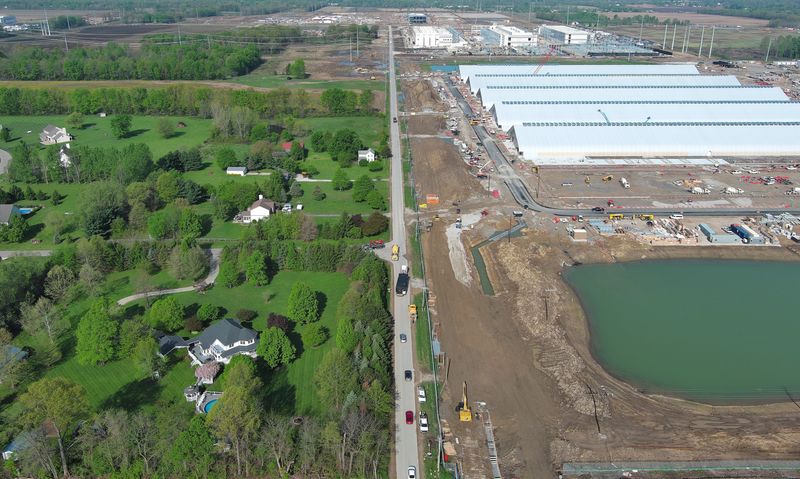
Ohio has the sixth most data centers in the country – 232 throughout the state – with 137 of those in central Ohio, according to a list of all current and under-development listings provided by Data Center Map, a global data center directory. Some are small enough to fit inside office buildings. Meta’s New Albany data center, which the company is expanding, is built on 766 acres ‒ more than one square mile.
Data centers house servers that are the backbone of the artificial intelligence boom. But they have faced criticism about their drain on local resources, including the amount of power and water they require.
A common data center criticism is that they do not create permanent jobs, but two trades officials said they create thousands of long-term jobs for tradespeople.
Dorsey Hager, the executive secretary-treasurer for the Columbus/Central Ohio Building Trades Council, said that 10 years ago Columbus building tradespeople were working about 4 million man-hours per year. In 2023, that was up to 9.8 million man-hours – the most they had ever worked in a single year. In 2026, he said they will easily eclipse 20 million work hours – doubling the amount of work hours in less than three years.
He said about 40% of those hours are spent working on data centers, and 93% of hours worked on data centers specifically is done by union members.
Pat Hook, the business manager for the local International Brotherhood of Electrical Workers union, said his union has also seen major increases. Before 2015, the electrical workers union averaged working about 1.8 million hours a year. Last year, they worked 6.6 million hours, and the majority of those hours were on data centers.
Hook said union members are also working on existing data centers to upgrade and maintain the electrical system because servers and equipment need replaced every few years.
“The building trade members will continue to work in these data centers as long as they’re operational,” he said. “We will probably need more hours worked by the building trades members than potentially by the actual operator of the data center themselves.”
Spencer Dirrig, the vice president of government affairs for the Ohio Environmental Council, said the state needs more regulations to protects all Ohioans. The state cannot have a piecemeal approach to regulating data centers, leaving every small village or city to fend for itself. It’s unrealistic to expect officials in small communities to regulate massive technology companies, such as Google, with its experienced attorneys.
“We need a state regulatory floor that sets a basic standard for what should be allowed in the state no matter where you are,” he said, “and we should allow communities individually to still have the right to discern what is best for their community, what they would require in their community, what fits in their community and what makes sense for their people.”
Ohio has zero public reporting requirements for data center’s water intake, water discharge, water additives, emissions or energy costs, Dirrig said.
Virginia, the top data center market in the country, this year alone has passed multiple regulations for the data center industry, including water volume reporting, water consumption estimates before a data center is permitted and energy costs sharing to ensure infrastructure upgrades don’t fall onto consumers, he said.
“Those data centers are still there,” Dirrig said. “We can do both. We can have regulations and have the jobs and that kind of investment.”
Delaware County and eastern Columbus suburbs reporter Maria DeVito can be reached at mdevito@dispatch.com and @mariadevito13.dispatch.com on Bluesky and @MariaDeVito13 on X.
This article originally appeared on The Columbus Dispatch: Ohio urged to rethink big tech as data center boom accelerates
Reporting by Maria DeVito, Columbus Dispatch / The Columbus Dispatch
USA TODAY Network via Reuters Connect