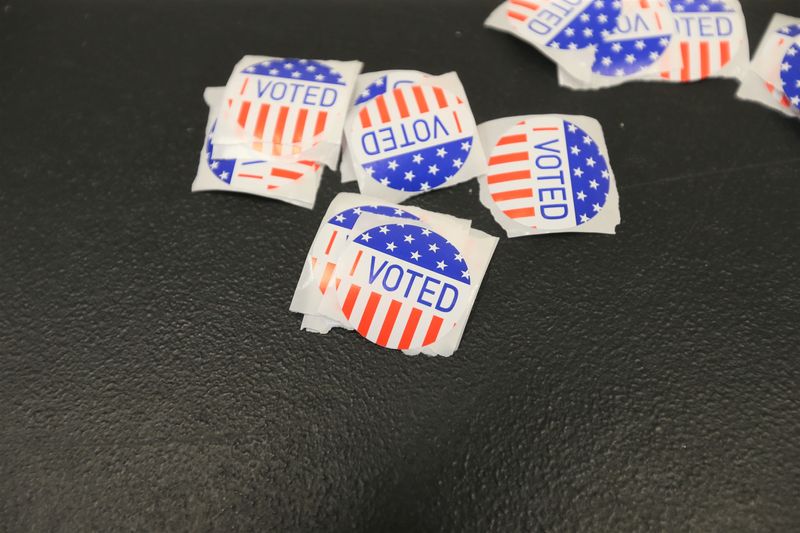
SOUTH BEND — Voter turnout is alterable and is affected by a variety of political conditions. In St. Joseph County, voter turnout is up compared to the last three primary elections, though overall, voter turnout is facing a decreasing trend.
The Tribune analyzed primary election results going back to 2010. On average, St. Joseph County sees 31,660 ballots cast during a primary election. But in 2016, there were 70,919 ballots cast.

Indiana University South Bend political science professor Elizabeth Bennion spoke to The Tribune about voter turnout trends to help shed some light on what influences election turnout.
“In this particular primary election, we saw millions of dollars in advertising pour into the midterm election, particularly targeting GOP senate candidates who had voted against President Trump’s redistricting plan.” Bennion said. “This level of ‘get out the vote’ voter persuasion and mobilization effort likely had an effect on turnout, particularly in those targeted areas.”
So, what influences voter turnout?
Usually, it wouldn’t be atypical to see a senate primary race spend tens of thousands of dollars on a campaign. But, Bennion said, it’s “very unusual” to see a state legislative race attract as much national attention and outside money as Indiana’s Republican senate races did.
Bennion said that one factor that matters significantly is mobilization. This can look different depending on the candidate’s individual strategy, but mobilization usually happens through phone calls, text messages, door to door campaigning and advertisements.
“This is something that we saw in the Trump-targeted districts where volunteers from Turning Point USA helped to reach out to specific voters,” Bennion said.
In some cases, these volunteers were Indiana or St. Joseph County residents, but Bennion said that in many cases, these volunteers came in from out of the state.
“One of the things we know is that President Trump[‘s] endorsement was the single most powerful driver of turnout and candidate success,” Bennion said.
“Especially for Trump-endorsed challenges in the state senate races, more broadly, we also know that Donald Trump does turn out voters, and this is not just on the Republican side,” Bennion said.
Bennion said that Republicans who resonate with the Make America Great Again and America First movements are more likely to turn out at the polls. But the same can also be said for Democratic voters. The MAGA and America First movements bring them to the polls out of “strong opposition” to the movement and Trump as the head of the Republican party.
“One thing that we sometimes see is countermobilization of the other party where people can actually turn out at high levels as a counter reaction to some of the advertisements that they are seeing, if they don’t like what they’re seeing,” Bennion said.
But it’s not just mobilization efforts getting people to the polls; contested primary races tend to drive how many people show up to vote. This year, both the Democratic and Republican parties had races.
In a state like Indiana with historically low voter turnout, Bennion said, this has to do with the competitiveness of state political races on a national level. In 2024, Indiana ranked 41st in voter turnout. New York sat right below Indiana, ranked 42nd in voter turnout.
“States with higher turnout have a different ecosystem of election laws than we do here in Indiana,” Bennion said.
These laws include Election Day registration, online voter registration, automatic voter registration, early in-person and absentee voting, ballot drop boxes and vote by mail.
To see what voting laws look like state by state, go online to https://www.vote411.org/voting-rules.
Campaigning matters
During the 2008 election, when former President Barack Obama ran for his first term against Republican Sen. John McCain, Obama did what Bennion called “the otherwise unthinkable”: He won Indiana’s Electoral College vote.
“In some ways, the Trump effect mirrors the Obama effect, but they were quite different in other ways,” Bennion said.
Obama was very focused on voter issues, and voters were very focused on the economy.
It was 2008 and the Great Recession had taken root. According to the U.S. Bureau of Labor Statistics, by the end of 2009, over 15 million people were unemployed. Elkhart County saw its unemployment rate climb to 10.8% — the highest rate of unemployment in the entire country, according to the BLS.
“It was also the case that Obama set up field operations everywhere,” Bennion said. “Field offices and groups of volunteers to get out and go door to door and campaigned aggressively, which other Democrats had not done and Republicans, even in that year, did not do.”
As much as campaigning matters for a candidate’s campaign, so does reality. What is happening with the economy? Is there an international conflict? What strategy does this candidate have in mind? Those are all things that Bennion said matter to voters just as much as a good campaign does.
Obama wanted to mobilize new voters, and in the case of “Donald Trump, it is less about people’s feelings about the economy and more about their feelings about Trump,” Bennion said.
“And in this case of the 2026 primary, it’s more about mobilizing existing rural and ex-serving [veteran] voters than it is about finding new voters,” Bennion said.
Trump’s campaign aimed to consolidate his base of voters around his “specific brand of politics.” Bennion said that to some extent, his campaign was about purging the party of other influences. Or, at the very least, to send a message that there will be strong party discipline.
Data matters
Voter registration hasn’t fluctuated very much. On average, there are 194,929 registered voters in St. Joseph County. But there is an outlier. Not only was 2016 the highest in voter turnout, but it was also the highest in voter registration with 207,841 registered voters.
Of all nine years, there is an average of 16,992 Democratic ballots cast and 14,767 Republican ballots cast. This data does not mean that there are more Democratic ballots cast for each primary; it means that on average there are more Democratic ballots cast. For the most part, party turnout fluctuates year by year.
2010 — 197,007 registered voters; 30,066 ballots cast — St. Joseph County did not track party ballots this year.
2012 — 200,917 registered voters; 32,729 ballots cast; 19,082 Republican ballots; 13,647 Democratic ballots
2014 — 199,357 registered voters; 12,930 ballots cast; 4,550 Republican ballots; 8,380 Democratic ballots
2016 — 207,841 registered voters; 70,919 ballots cast; 37,816 Republican ballots; 33,093 Democratic ballots
2018 — 170,853 registered voters; 35,945 ballots cast; 12,572 Republican ballots; 23,373 Democratic ballots
2020 — 191,025 registered voters; 37,445 ballots cast; 11,424 Republican ballots; 25,502 Democratic ballots
2022 — 194,268 registered voters; 14,483 ballots cast; 7,044 Republican ballots; 7,439 Democratic ballots
2024 — 201,540 registered voters; 23,843 ballots cast; 13,991 Republican ballots; 9,582 Democratic ballots
2026 — 191,552 registered voters; 26,580 ballots cast; 11,658 Republican ballots; 14,922 Democratic ballots
Redistricting Matters
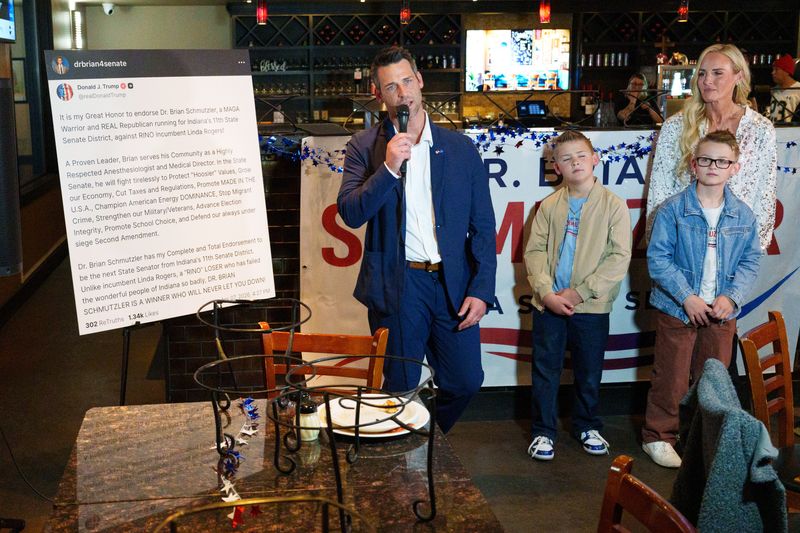
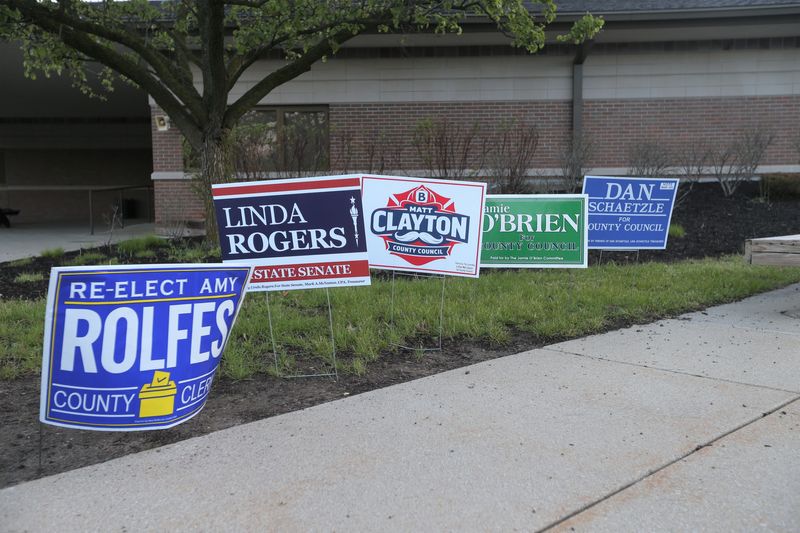
Indiana fought off President Trump’s attempt at getting the state to redistrict in 2025. But the majority of the “Republicans In Name Only” — as Trump calls them — who voted against his plea lost their seat in this year’s primary. That includes Indiana Sen. Linda Rogers, who lost to challenger Dr. Brian Schmutzler in the Republican primary for the District 11 Senate seat.
In a state like California or Texas that has redistricted to favor one party over the other, Bennion said, “those districts are viewed as safe red or safe blue districts and members of the other party can feel discouraged, as if their vote won’t matter, and even members of the incumbent party can feel like, ‘Oh, my party has this election wrapped up. It doesn’t really matter if I go to the polls.’”
Bennion went on to explain that gerrymandering eradicates competition, while, as explained earlier, a competitive race drives voter turnout.
“During a general election, the midterm election, the president’s [party] ordinarily loses seats in the U.S. Congress,” Bennion said. “This is one reason for the big push for redistricting to try to reduce the number of seats that Republicans lose in the midterm election.
“It would be very unusual for a Republican to pick up seats in the U.S. House or in the Senate in a midterm election,” Bennion said. “So, the question is, if the Republicans follow historical patterns and lose seats, how many seats do they lose?”
Email Tribune staff writer Juliane Balog at jbalog@usatodayco.com.
This article originally appeared on South Bend Tribune: What role does voter turnout play in an election?
Reporting by Juliane Balog , South Bend Tribune / South Bend Tribune
USA TODAY Network via Reuters Connect