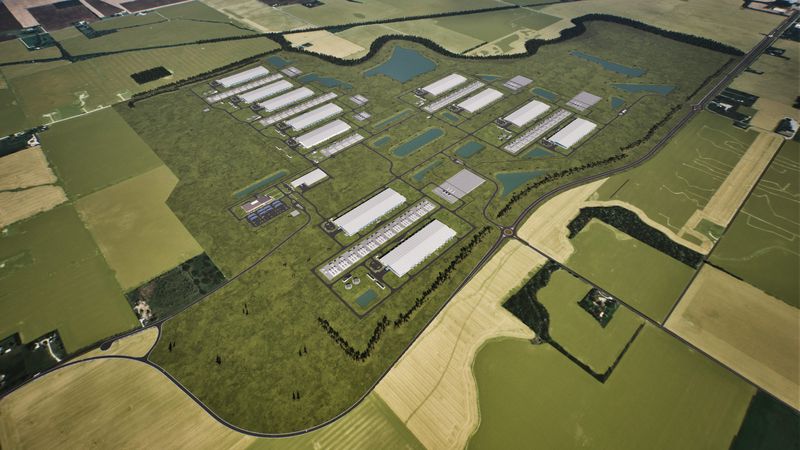
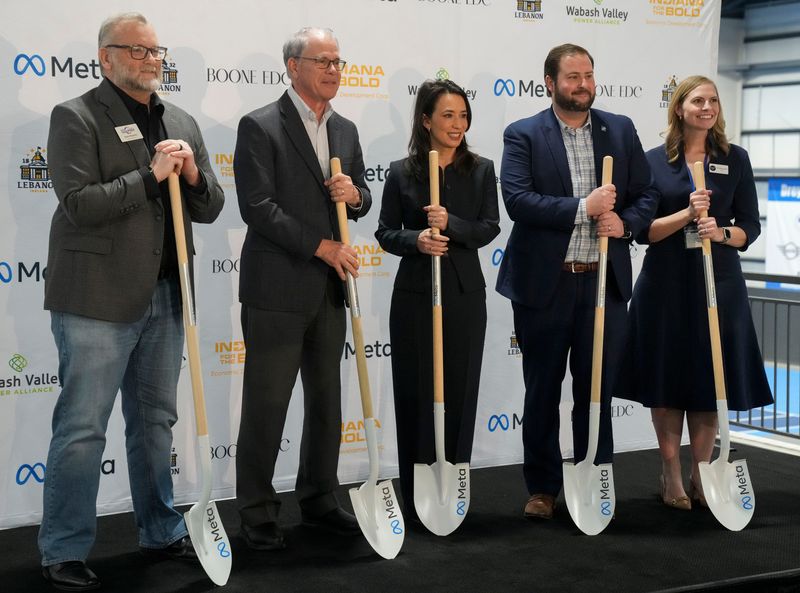
Few issues in Indiana excite opinions as strongly as data centers. I have been living in the middle of the storm since November 2024, when the Lebanon City Council unanimously approved an incentive package for Meta’s multibillion-dollar investment in the LEAP district for a data center.
Only one member of the public testified. Her comments were against the district as a whole, not against data centers. I’m sure if they held that same meeting today, the building would be overflowing with protest signs and angst.

Data centers certainly come with real trade-offs, but if approached correctly, they can have massive financial benefits for a community.
Why data centers are choosing Indiana
There have been data centers in Indiana since the late 1990s, but these early iterations are dwarfed in both scale and attention by their modern hyperscale siblings.
Today’s hyperscale boom has its roots in a relatively uncontroversial bill from the 2019 legislative session: House Enrolled Act 1405. The final version passed the Indiana Senate unanimously and 84-6 in a bipartisan manner in the Indiana House of Representatives. The idea was to eliminate sales tax on data center equipment and leverage Indiana’s central geography, lower relative risk of natural disasters and cross-country fiber optic lines to attract massive capital investment to our state.
Fast forward seven years and city halls are filled with protesters, rural counties are passing moratoriums, utilities are stretching to meet demand, and social media is flooded with angst, conspiracy theories and anti-data center memes that are usually AI-generated. It seems like every community is either in the middle of a pitched battle or holding its breath waiting for one to appear on their doorstep.
When railroads first cut through rural America, people had wild conspiracy theories about them as well. They feared the iron horse would stop cows from giving milk or that the speed would cause human bodies to disintegrate.
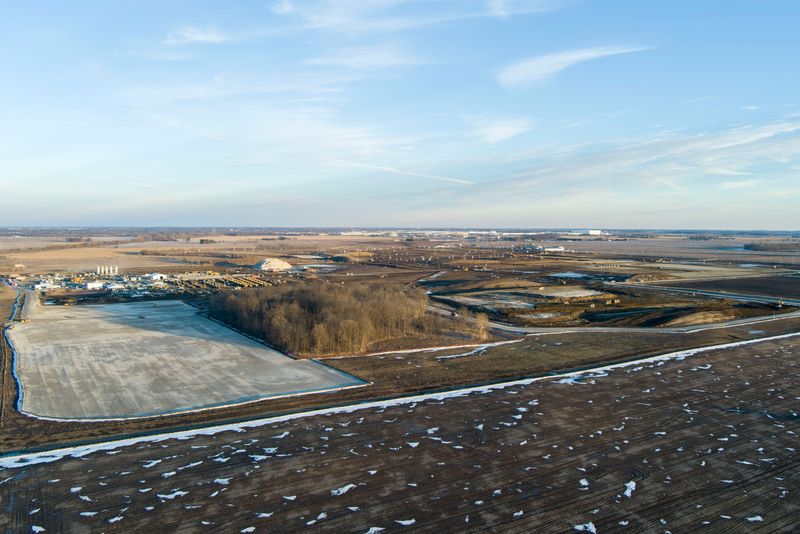
Data centers, like railroads, do bring visible change. In most cases, a farm field simply transitions from a corn or soy monoculture into a high-tech campus. That is a hard pill to swallow for neighbors who assumed their view would never change.
Hyperscale facilities also require massive amounts of power and water. Even closed-loop cooling systems experience heavy evaporation during hot Indiana summers, meaning Meta’s demand in Lebanon could see seasonal spikes in the millions of gallons.
Furthermore, construction is never fun. Truck traffic, dust, mud, lights and noise are all fair complaints. They must be strictly managed, but they aren’t a reason to kill a project with massive financial benefits for the community.
Data centers help communities overcome revenue growth limits
Our property tax system is a complicated beast, as Gov. Braun found out pursuing property tax cuts last year.
Local leaders live in the sandbox the General Assembly builds for them. They are strictly limited by the General Assembly’s Maximum Levy Growth Quotient, which is essentially the speed limit on local property tax growth. The MLGQ caps the maximum percentage a local government unit can increase its budget from one year to the next. It doesn’t limit individual tax bills. It limits the size of the total property tax pool.
The MLGQ is currently arbitrarily capped at 4%. If the total assessed value of property in a city increases by more than 4%, the MLGQ forces the local tax rate to automatically decrease. It drops rates for everyone, but it prevents the city from generating new revenue from the new investment.
To bypass this hurdle and actually capture data center wealth, local governments must place the development into a Tax Increment Finance district. This allows the local Redevelopment Commission to capture the new revenue directly and use it for critical infrastructure.
This is exactly how Lebanon is funding the water and wastewater infrastructure necessary to serve the LEAP district and expand the water supply to our city without burdening current utility ratepayers.
Data centers want tax breaks. That gives communities leverage.
Another key strategy is negotiating a community impact payment or payment in lieu of taxes. This is a direct payment from the data center company to the local government as part of an economic development agreement.
All data centers want the special 35-year personal property tax exemption that was created for them back in 2019. They argue that they turn over their servers and equipment every three to four years, so this exemption is critical from a cost standpoint.
Lebanon used Meta’s request for this exemption as leverage to negotiate a community impact payment of $1.5 million annually per construction phase, with built-in escalators. If Meta builds all five planned phases, that means a $7.5 million annual payment to the City of Lebanon to be used for any purpose allowed by law.
Lebanon’s total annual budget is about $25 million. Soon, these community impact payments will equate to roughly 30% of our city’s entire budget.
While funding public safety salaries out of these temporary payments isn’t fiscally wise, the payments are perfect for building the amenities residents want—new parks, recreation facilities, trails, sidewalks, streetscapes or community centers—all without increasing local taxes.
I have proposed using a portion of these payments to provide direct property tax rebates to homeowners. Residential property taxes make up only about 14% of Lebanon’s budget. The bulk comes from commercial, industrial and income taxes.
If Meta paid standard equipment property taxes, everyone’s rates would have slightly ticked down, including other large industrial businesses. Broad tax cuts are nice, but direct tax rebates to residential homeowners only and brand-new amenities for local families are even better.
Data centers can pay for infrastructure
Every community that is talking with a data center must demand they pay for the infrastructure needed to serve them.
Meta is spending about $40 million on improvements to our local road network. They are paying for the upgrades needed in the electrical grid. Growth should pay for growth. The LEAP district pays for the LEAP district.
While it feels like every town is getting a data center, they aren’t. These facilities have highly specific infrastructure requirements. If a developer comes looking at your community, take a pause before pulling out the Sharpie and posterboard. Ask your local elected officials what benefits they are actively negotiating. Push them to play hardball.
The environment around data centers has changed, and that works entirely in favor of the communities that are open to negotiating. Data centers will inevitably be part of our digital future.
The right questions to ask are how locals benefit from them and what protections we need so residents can live alongside them.
Time and the economy march on. Just as railroads separated the boomtowns from the ghost towns 150 years ago, hyperscale data centers are re-mapping the geography of opportunity for the next century.
The winning communities won’t be the ones that hide from the future. They will be the ones that aggressively leverage tech investments to build a better life for their citizens.
Matt Gentry, a Republican, is the mayor of Lebanon.
This article originally appeared on Indianapolis Star: How Indiana communities can cash in on data centers | Opinion
Reporting by Matt Gentry, Opinion Contributor / Indianapolis Star
USA TODAY Network via Reuters Connect