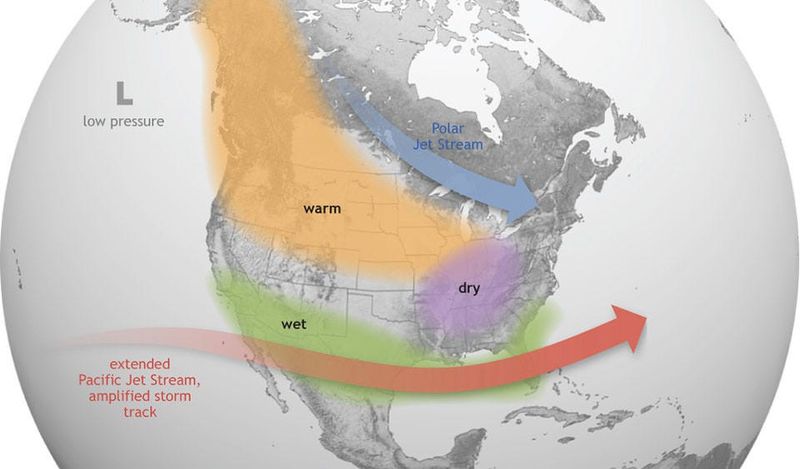
Every prediction so far released for the 2026 Atlantic hurricane season has mentioned El Niño.
Chances are high NOAA also will bring up El Niño when it releases its official forecast for this hurricane season later this week.

But what exactly is it and how does something that happens in the Pacific affect hurricanes in the Atlantic, which could then impact Florida?
➤ Confused? Here’s what ENSO, La Niña, El Niño mean for Florida
As we wait for the start of this year’s hurricane season, which is less than two weeks away as of May 18, let’s get a basic understanding of what El El Niño is and how it could affect Florida this year.
➤ Weather alerts via text: Sign up to get updates about current storms and weather events by location
When does hurricane season start?
The Atlantic hurricane season runs from June 1 through Nov. 30, two weeks behind the eastern Pacific hurricane season, which started May 15 but also ends on Nov. 30.
Ninety-seven percent of tropical cyclone activity occurs during this time period, NOAA said.
➤ Hurricane Center testing new cone: What’s changing this season?
The Atlantic basin includes the northern Atlantic Ocean, Caribbean Sea and Gulf of America, as the Gulf of Mexico is now known in the U.S. per an order from President Trump. NOAA and the National Hurricane Center are now using Gulf of America on its maps and in its advisories.
Countdown clock to start of 2026 Atlantic hurricane season
National Hurricane Center now issuing tropical outlooks
The National Hurricane Center started issuing daily tropical outlooks May 15. The outlooks are updated every six hours until the season ends Nov. 30.
➤ Ready or not, National Hurricane Center resumes daily tropical outlooks
An outlook could be issued before or beyond those dates if something showing potential for development appears.
The tropical outlooks provide a quick look at what’s happening in the tropics, including any disturbances out there showing potential for development and tropical waves that may be present in the Atlantic basin.
What are predictions for 2026 hurricane season?
Here are some of the predictions released so far for this year’s hurricane season. NOAA will release its forecast for the season May 21.
➤ El Niño odds rise again, which could mean fewer hurricanes for Florida
A major hurricane is a storm that is a Category 3 or stronger, with maximum sustained winds of at least 111 mph.
What is El Niño?
“El Niño occurs when water temperatures along the equator in the eastern Pacific Ocean, southeast of Hawaii, are warmer than the historical average,” according to Alex DaSilva, AccuWeather lede hurricane expert via email.
“The official threshold is when those temperatures are at least 0.5 degrees Celsius (which would be 0.9 degrees Fahrenheit) above the historical average for several months in a row. Those conditions need to persist, typically for about three months, to confirm the pattern.”
How does El Niño affect Atlantic hurricanes?
Even though El Niño occurs in the eastern Pacific, it has an impact in the Atlantic.
“El Niño strengthens winds in the upper atmosphere, particularly from the west, which creates conditions that are not favorable for tropical systems to form and strengthen,” DaSilva said.
➤ La Niña is kaput, setting the stage for a potential ‘super’ El Niño
Those winds increase wind shear in the Atlantic which tears apart tropical cyclones as they develop.
“These impacts are primarily caused by changes in the vertical wind shear, which refers to the change in wind speed and direction between roughly 5,000-35,000 feet above the ground,” NOAA said. “Strong vertical wind shear can rip a developing hurricane apart, or even prevent it from forming.”
“There is a strong correlation between El Niño years and fewer tropical systems overall” in the Atlantic.
The opposite happens in the Pacific, where El Niño increases the chances for hurricane activity.
“Simply put, El Niño favors stronger hurricane activity in the central and eastern Pacific basins, and suppresses it in the Atlantic basin,” NOAA said.
Does El Niño mean there will be no hurricanes in Florida this year?
No, and you should not use the presence of El Niño as an excuse to not prepare for a hurricane this year.
➤ Don’t count on El Niño to kill Florida hurricane season, experts warn
El Niño doesn’t guarantee Florida will be safe and that no storms will threaten the Sunshine State, it just means the total number of storms is usually lower for the year, DaSilva said.
“Florida has been impacted by storms in El Niño years, so residents should always stay prepared,” DaSilva said
In 2004, a weak El Niño year, Florida, was hit by four hurricanes: Charley, Frances, Ivan and Jeanne.
“The risk is going to be there for impacts this year regardless of what you hear about in any seasonal forecast.” said National Hurricane Center Director Michael Brennan at the 40th annual Governor’s Hurricane Conference in West Palm Beach earlier in May.
What is a ‘super’ El Niño?
The word “super” is often used when sea surface temperatures in the tropical Pacific Ocean rise to 3.6 degrees above average for several months, although NOAA does not officially define a “super” El Niño category.
➤ Data shows Florida hurricane landfalls drop sharply during El Niño
Even so, that large increase in sea surface temperatures now has an 82% chance of developing between May and July and remain in place through winter 2026-2027, according to the National Weather Service’s Climate Prediction Center.
The strength of El Niño correlates with its impact on hurricane season, with a stronger pattern creating more hurricane-shredding wind shear.
‘It only takes one’ hurricane to make an impact
Forecasters are fond of saying “it only takes one” hurricane to make an impact.
➤ 2026 hurricane season coming fast. Answers to common questions
If there is only one tropical storm or hurricane that hits in a year, but it hits where you live, the impacts will be long-lasting and potentially lifechanging.
Always be prepared, even if the forecast is for a “quiet” season.
How many tropical storms, hurricanes are in a typical season?
The 30-year average, from 1991 to 2020, is for 14 named storms, seven hurricanes and three major hurricanes.
Sign up now to get latest weather alerts
Set up several different ways to get weather warnings so you’re always aware of the latest information and forecast.
The USA TODAY Weather Watch team sends SMS messages straight to your phone. Sign up today for the free service.
Could Florida be hit by a hurricane in 2026? See which counties have highest chance
What are names for 2026 Atlantic hurricane season?
Names for the 2026 Atlantic hurricane season, and how to pronounce them, are:
Florida weather radar for May 18, 2026
Weather watches and warnings issued in Florida
When is the peak of hurricane season?
The peak of the season is Sept. 10, with the most activity happening between mid-August and mid-October, according to the Hurricane Center.
Interactive map: See how many hurricanes, tropical storms have passed near your home
Stay informed. Get weather alerts via text
What’s next?
We will continue to update our tropical weather coverage to bring you the most current information you need to protect your home and family.
Contributing: Kimberly Miller, USA Today Network-Florida
Cheryl McCloud is a journalist for the USA TODAY Network-Florida’s service journalism Connect team. You can get all of Florida’s best content directly in your inbox each weekday day by signing up for the free newsletter, Florida TODAY, at https://news-press.com/newsletters.
This article originally appeared on Naples Daily News: What does El Nino mean for Florida during hurricane season?
Reporting by Cheryl McCloud, USA TODAY NETWORK – Florida / Naples Daily News
USA TODAY Network via Reuters Connect