When Battelle spin-off company Revive Environmental converted the final gallons of a cancer-causing fire suppressant foam used for decades by Franklin Township firefighters, it was celebrated by more than Chief Bob Arnold.
It was also the culmination of years of Battelle research and influence by Ohio lawmakers, environmentalists and Gov. Mike DeWine to eliminate what has been called a “pernicious” scourge on the environment.

“It was a huge relief that the state stepped up and helped fire departments rid ourselves of the health risks associated with that foam,” Arnold told The Dispatch. “They saved us thousands of dollars and the continued search to find a safe way to get rid of it.”
Fire suppression foam has one of the highest concentrations of PFAS chemical chains comprised of per- and polyfluoroalkyl chemical substances that don’t degrade naturally in the environment, earning the name “forever chemicals,” as The Dispatch reported in 2022.
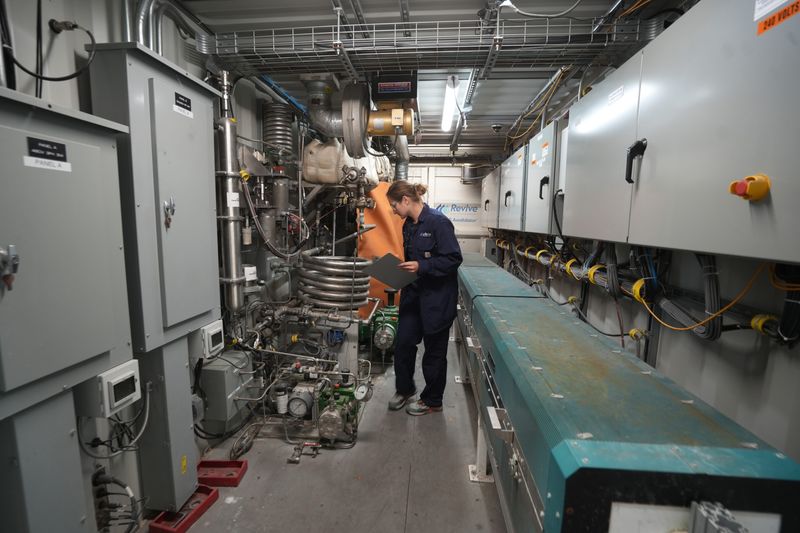
The Dispatch toured the first-of-its kind equipment — the aptly-named PFAS Annihilator — a garage-sized structure that uses heat, oxidation and pressure to render PFAS molecules inert, effectively reducing large volumes of would-be PFAS discharge into waterways and groundwater into purified, near-potable water.
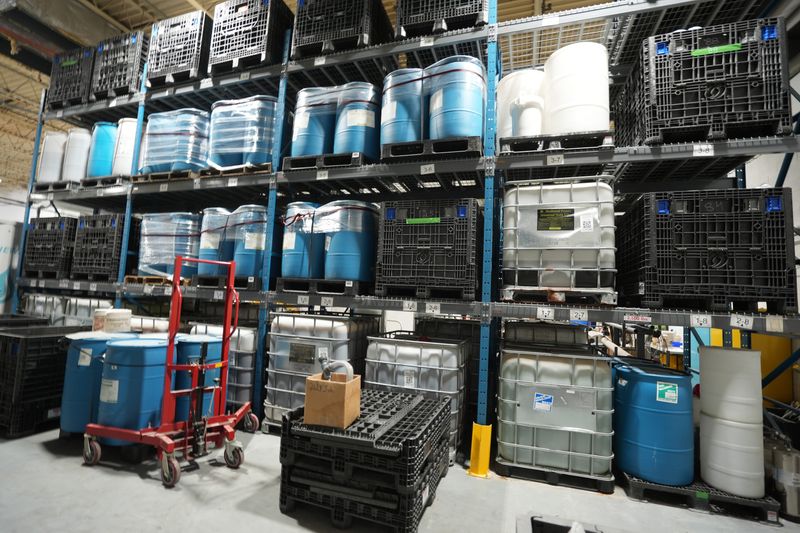
The annihilator is used to essentially neutralize the thousands of gallons of unused fire suppressant liquid foam, now illegal to use, in storage at fire departments across the country.
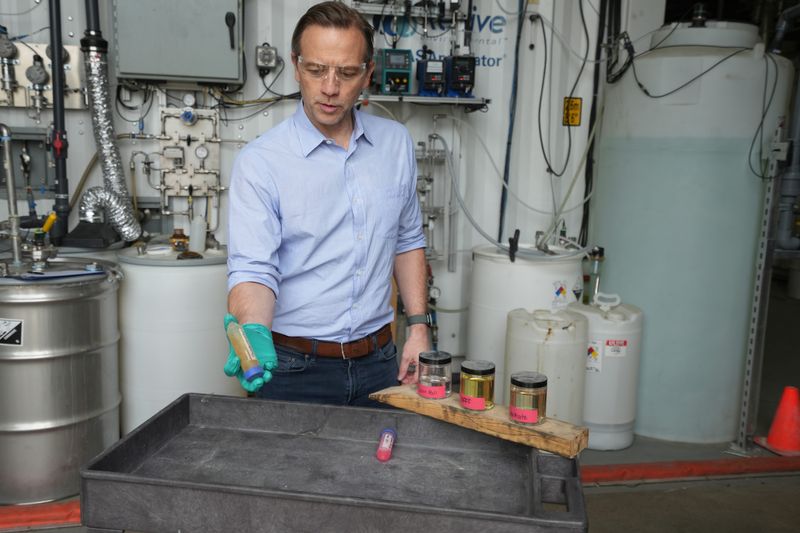
“We’ve never faced a challenge like PFAS before, something that’s so persistent, so widespread in use and so toxic at such low levels. It’s really the most challenging environmental challenge we’ve ever faced.” said Rick Gillespie, Revive’s chief commercial officer, on a call during a Dallas business trip. Earlier, there was a tour of the Far West Side remediation plant.
When Franklin Township first heard about the technology, officials were eager to dispose of their 1,390-gallon stockpile of the stuff, by then banned by the Ohio EPA in March 2022.
They learned about Ohio’s collection program initiated by Dewine in 2024. At the time, DeWine said, “We’re destroying PFAS, which was once believed to be indestructible, to protect our first responders and safeguard the environment.”
That’s what both are now celebrating. There was no cost to the township or several other fire departments statewide, part of state-funded contracts and Ohio EPA for Revive’s work.
At a commercial office park near North Wilson Road and Interstate 270, Revive’s five Annihilator machines run non-stop, producing a slight metallic odor and low hum. Large vats of liquid suppressant await their conversion. Empty tubs line a wall on the building’s far side, evidence of success.
Revive officials presented Chief Arnold a certificate on May 12, confirming that the materials he once labored over, and that may have sickened countless firefighters, are now forever destroyed, confirmed by PFAS-accredited laboratory analysis.
The township’s 1,300 gallons are 10% of Revive’s ongoing work. And a second phase of the project is in contract with New Jersey from which another 70,000 gallons of the suppressant material is being shipped.
There will be no burial of toxic chemicals. No storage drums to leach from. No incineration to foul the air. Just pure water returned to the earth.
“It is nice to know that Ohio has taken a leadership role in PFAS remediation, and it is an Ohio-based company that has the technology to destroy PFAS,” said Charle Rok, who flew to Columbus from her Manhattan publicity offices to celebrate and promote the work.
Gillespie agrees.
“It’s been incredibly rewarding … we’re protecting those firefighters from exposure. But we’re also protecting those communities that they serve, because it pollutes the soil and groundwater,” he said.
Five years ago, Amy Dindal, Battelle’s PFAS program manager, testified to Congress about the work: “We’ve successfully demonstrated this technology can be brought to a facility that processes waste materials, set up in a few hours and destroy PFAS chemicals in the presence of other co-contaminants.”
That held the promise of “bringing this game-changing technology to scale and expand it to meet the growing need around the country,” Dindal said.
In an email sent May 12 Dindal, today Battelle’s environmental business line director, said she’s happy the work is making real-world impact “by destroying PFAS in the environment and protecting people from the health threats posed by PFAS contamination. It took a lot of teamwork, perseverance and innovation, but what started as a pilot has now been operating commercially for over three years.”
And awareness is growing elsewhere.
Columbus City Attorney Zach Klein announced May 12 that the city received $2.41 million more in settlement funds from a lawsuit he filed against several major chemical companies for their negligence in the production of “forever chemicals.” The latest transfer from major chemical producer Tyco Fire Products now puts the city’s settlement funds at over $15 million.
“This is a global problem,” Gillespie said. “We’re really focused on the U.S. market now … but we are definitely being pulled into Europe and beyond.”
“I do think this is a problem that can be solved. And there’s a real drive for it,” he said. “Because everyone wants clean water.”
Growth and development reporter Dean Narciso can be reached at dnarciso@dispatch.com.
This article originally appeared on The Columbus Dispatch: See how a Battelle spinoff is annihilating ‘pernicious’ forever chemicals
Reporting by Dean Narciso, Columbus Dispatch / The Columbus Dispatch
USA TODAY Network via Reuters Connect