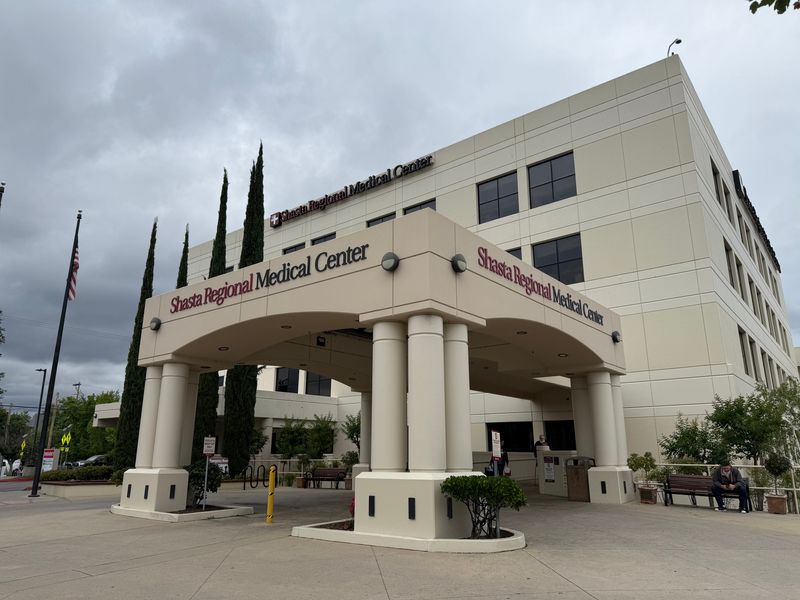
A recent report named Shasta Regional Medical Center as one of dozens of hospitals in California that may face heightened financial pressure as a result of Medicaid cuts included in the One Big Beautiful Bill Act.
According to local health care professionals, the impact will be most severe at rural and community hospitals. However, the resulting increased patient load to Shasta Regional, when combined with the hospital’s already dire financial shortcomings, could pose a significant challenge for health care in Shasta County.

The report — “The Big Ugly Threat to Safety Net Hospitals” by Public Citizen researcher Eileen O’Grady — finds the hospitals considered most vulnerable are those that rely heavily on Medicaid and have posted negative profit margins over multiple years.
“The cuts will be devastating to many low-income and disabled individuals who rely on Medicaid,” the report says, warning of “knock-on effects on hospitals that disproportionately serve these communities.”
The report warns that financial pressure can impact hospitals in the form of service reductions, staff layoffs or hiring freezes, longer wait times and more transfers to distant facilities, but emphasizes that being “at risk” is not a forecast of closure.
“The list of at-risk hospitals is meant to be descriptive rather than predictive; it does not forecast that these hospitals will close,” the report says.
What local health care professionals had to say about the report
Michelle Gaffney, a registered nurse at Shasta Regional Medical Center and the chief nursing representative for the California Nurses Association, said the bill’s impact will be huge and will “severely impact” rural and community hospitals.
She said, however, the bill should not be used as an “excuse” for the shortage of services provided at Shasta Regional.
Gaffney said Shasta Regional is already “under resourced” and has experienced critical cuts to staff and services. This, she said, is the doing of Shasta Regional’s parent company Prime Healthcare, which took over operation of the hospital in 2008.
“Our community is continuing to grow and requiring more services, and yet Prime is not investing back into this facility … patients are having to leave the area or go to another facility and (that’s) putting hardship on them. So it just seems like it’s more of a profits ahead of patients issue at Shasta Regional …” said Gaffney.
A Shasta Regional Medical Center spokesperson, however, asserted that Prime “saved” the hospital in a statement to the Record Searchlight.
“As part of Prime Healthcare, the hospital was saved from closure and bankruptcy and has since benefited from significant investment, with millions of dollars dedicated to strengthening clinical infrastructure, expanding services, supporting its workforce, and enhancing care delivery for the community,” said the spokesperson.
Gaffney disagrees, and said the hospital lacks “consistent CT services at night …,” an adequate amount of providers for interventional radiology, and relies on off-site pharmacies during night hours.
Regarding the Public Citizen report, a hospital spokesperson said the following:
“The Public Citizen report reflects the broader national challenges facing hospitals, where reimbursement rates often do not keep pace with the rising cost of delivering care – particularly for those serving the most vulnerable … Shasta Regional Medical Center remains committed to providing high-quality, compassionate care and ensuring continued access to essential services for the community. This commitment is reflected in our consistent recognition for quality, safety, and patient outcomes by Healthgrades, The Leapfrog Group, and the Lown Institute,” said the spokesperson.
Zach Freels, a labor representative for the California Nurses Association, is concerned about the closure of hospitals in the surrounding area due to federal Medicaid cuts.
Freels said these closures “(put) a strain on the entire regional network” because there “aren’t too many places where patients can be transferred to.”
Why Shasta Regional was flagged as an “at risk” hospital
Public Citizen’s analysis flags hospitals as “at risk” if they meet two conditions, averaged over 2022–2024:
According to the California Department of Health Care Access and Information, Shasta Regional’s “Medicare Fee-for Service” payer mix for inpatient care in 2024 was 51.8%, and 20.9% for outpatient care.
The net profit margins for Shasta Regional Medical Center are not available online.
Methodology behind the Medicaid hospital risk report
The report uses CMS hospital financial data (2022–2024) and identifies hospitals with both heavy reliance on Medicaid and negative margins, emphasizing that the list is intended to highlight heightened vulnerability, not to predict closures.
Drew Askeland covers Redding and Shasta County government issues, as well as anything else that needs reporting for the Record Searchlight and USA Today Network. Reach him at drew.askeland@redding.com or (530) 225-8247. Please subscribe today to support our newsroom’s commitment to public service journalism.
This article originally appeared on Redding Record Searchlight: Shasta Regional services flagged ‘at-risk’ due to Medicaid cuts
Reporting by Drew Askeland and James Ward, Redding Record Searchlight / Redding Record Searchlight
USA TODAY Network via Reuters Connect