Gas prices in Bloomington have jumped to near $5 per gallon, but an IU economist worries it’s only the beginning.

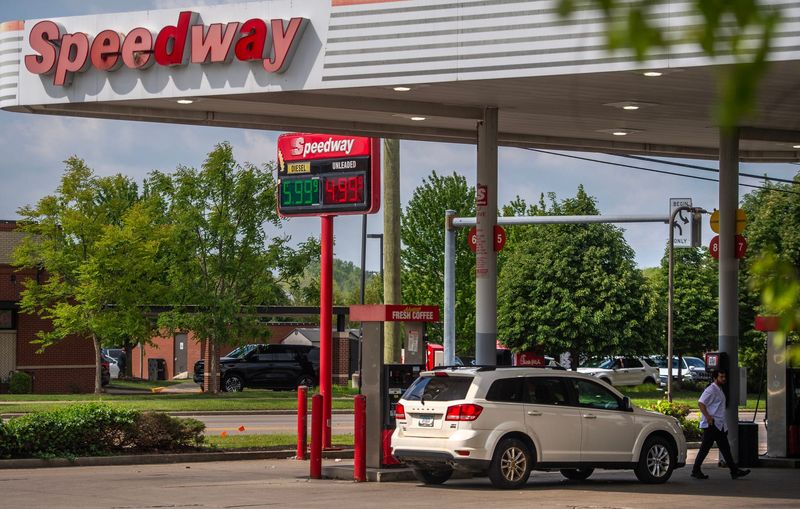
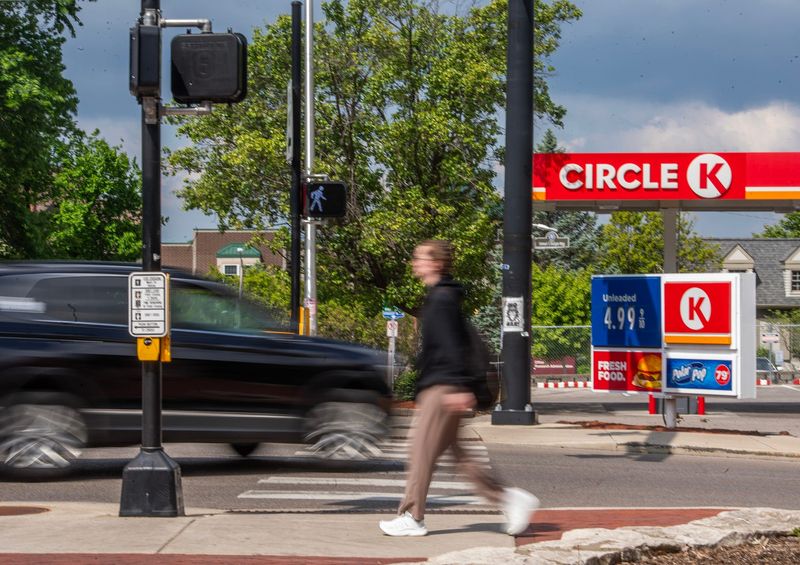
Several Bloomington gas stations were selling a gallon of regular unleaded for $4.99 Friday, though AAA reported the Bloomington average was $4.85, up nearly 30 cents from a day earlier and up more than $1 from a week ago.
While that’s still a couple of dimes or so below a record, economists worry that a prolonged conflict with Iran over the Strait of Hormuz will cause prices of gasoline — and many other things — to continue to rise, threatening an already shaky global economy.
Andreas Hauskrecht, clinical professor of business economics at Indiana University’s Kelley School of Business, said he expects things to get worse before they get better.
“I wouldn’t be surprised if we see gasoline prices of $7 or $8,” he said Friday.
Why prices jumped — and why economists aren’t optimistic
Hauskrecht said prices are jumping now because markets previously assumed that the disruption at the Strait of Hormuz would not last very long. That assumption has now collapsed, which pushed up prices quickly, and, Hauskrecht said, speculators — traders who buy oil contracts based on where they think prices will go next — reinforced that dynamic by betting on prolonged shortages.
Prices have jumped not because shortages exist now or because the situation in the strait has changed significantly, he said. They have jumped because expectations have changed.
Hauskrecht said it’s actually surprising that prices didn’t jump sooner based on the size of the disruption. When Russia attacked Ukraine, it moved 3 million barrels of oil per day out of the market, and oil prices immediately jumped to $120 a barrel. The slowdown of traffic through the Strait of Hormuz removes four to five times that amount, which means a price jump to $200 a barrel would not have been unsurprising. Lower demand and other countries increasing their supply had tempered the impact.
Hauskrecht said traders until this week still expected the administration of President Donald Trump to reach an agreement with Iran, but that now looks unlikely, he said, which has increased the likelihood of a prolonged conflict and disruption of the traffic through the strait.
If the conflict continues, America’s excess oil supply will diminish, and prices will continue to rise, he said.
“With every day the strait is closed, the problem will get bigger and bigger,” Hauskrecht said.
America’s ability to produce large amounts of gas and oil has somewhat cushioned the effects so far, but Hauskrecht said pricing shocks will become worse in the U.S. and will affect many more areas of the economy.
Particularly worrisome for Indiana are products that require oil or oil byproducts, including fertilizer, which will drive up input costs for Hoosier farmers, which will make food more expensive, he said. Steel and aluminum production requires a lot of energy, which means they will cost more. In addition, higher fuel prices will drive up transportation costs, which means every item that is being flown or shipped or trucked will get more expensive.
“This is the very beginning of significant negative economic impacts worldwide,” Hauskrecht said.
The most vulnerable people in America will get hit the hardest, he said. In Bloomington that includes people who are on the lower end of the income scale and who have to commute to Monroe County from elsewhere. Their commutes will get more expensive — and so will their lunches.
About one in five people who work in Monroe County commute from outside the county, according to STATS Indiana, meaning higher fuel prices can affect a significant share of Bloomington’s workforce almost immediately.
Why higher gas prices could spill into the broader economy
Hauskrecht said he worries the U.S. could slip toward stagflation, a combination of high inflation and slow economic growth the country last saw in the 1970s.
He said much of the economic growth the nation has experienced recently has been driven by investments into AI, including data centers, which do not create a lot of jobs, and by deficit spending, fueled by the federal government’s ability to borrow money. Without those areas, the economy is barely growing at all, he said.
Economists worry that lower disposable income and rising prices will prompt households to postpone purchases of cars, home appliances and other items, which would further undermine the economy.
For people in Bloomington, the most visible impact may be that nearly $5‑a‑gallon gas price, but Hauskrecht warned higher energy costs could soon show up elsewhere — from online orders and meals at local bars to grocery bills.
Boris Ladwig can be reached at bladwig@heraldt.com.
This article originally appeared on The Herald-Times: Indiana gas prices climb as Middle East tensions rattle energy markets
Reporting by Boris Ladwig, The Herald-Times / The Herald-Times
USA TODAY Network via Reuters Connect