I lived in Detroit for over 15 years. Spotty electric service and high bills were just a fact of life for Michigan residents. Since moving to Chicago in 2022, I’ve had lower rates, zero outages and a grid running on 68% clean energy – versus Michigan’s 33% – but it took a scandal and serious reforms to help Illinois realize its potential.
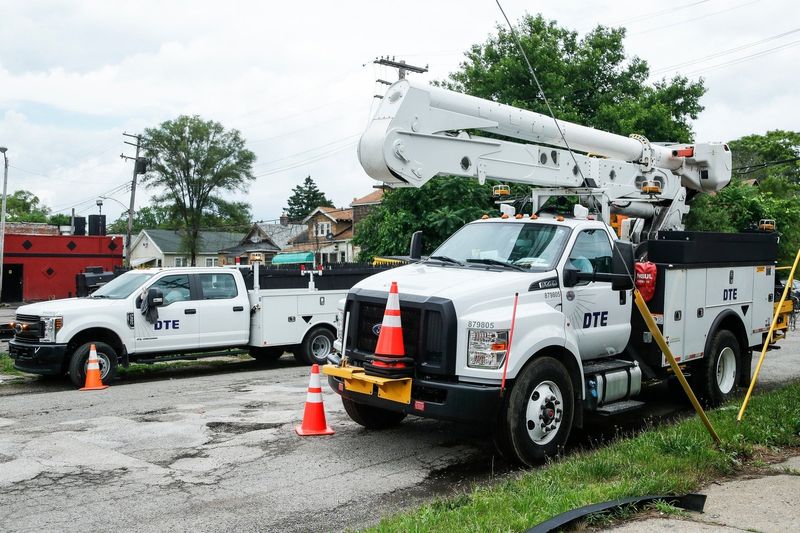
Michigan ranks 50th – dead last – among all U.S. states for the length of power outages. In 2023, 45% of DTE Energy’s 2.3 million customers lost power for eight hours or more. For most families that means a ruined refrigerator or a sleepless night. For Michiganders on ventilators, oxygen concentrators or dialysis machines, it can be a matter of life and death. Illinois, by contrast, ranks among the best in the nation for reliability – first or second depending on the measure – according to U.S. News & World Report’s Best States rankings.

Despite their poor performance, Michigan’s utilities keep getting rewarded. In March 2026, state regulators approved a $276.6 million revenue increase for Consumers Energy alone, which translates to an 6.1% rate hike hitting bills starting May 1. As if on cue, DTE Energy Co. announced this week that it plans to file for a $474.3 million rate increase on April 28 – if approved in full, it would the largest in at least seven years.
Since 2020, Michigan’s utility watchdog, the Michigan Public Service Commission, has approved nearly $800 million in total annual revenue increases to the state’s major utilities.
Michigan Attorney General Dana Nessel has called the situation “unfair and unsustainable,” saying she has intervened to save consumers over $4.1 billion in utility cases since taking office, but the rate increases keep coming.
Lessons from the land of Lincoln
Illinois was not always a model of utility ethics or service delivery. A decade ago, it was caught in a scandal. From 2011 through 2019, the largest electric utility in Illinois, Commonwealth Edison, known locally as ComEd, engaged in a bribery scheme. In settling the federal investigation, the company admitted it arranged jobs, vendor subcontracts and monetary payments for associates of Illinois House Speaker Michael Madigan. In exchange, Madigan used his legislative influence to push bills favorable to ComEd.
Illinois lawmakers responded with the Climate and Equitable Jobs Act, signed in September 2021. It ended automatic rate hikes, replaced them with a pay-for-performance system tied to actual service, and put in place what consumer advocates describe as the toughest utility ethics standards in state history. The results: lower bills, far fewer power outages and twice as much clean energy as Michigan.
That’s what Illinois has. What Michigan has is a lot of dark money influence from utility political action committees, years of rate hikes and a Legislature in which 82% of members have taken money from DTE or Consumers’ PACs.
Follow the money
DTE and Consumers have spent decades buying influence in Lansing. As reported by the Energy and Policy Institute in 2022, 138 of Michigan’s 148 state legislators had received contributions from DTE’s PAC, executives or lobbyists. Throughout her career, Gov. Gretchen Whitmer (who appoints the MPSC regulators who approve rate hikes) has received $235,900 from DTE-linked sources, the most of any state official.
The direct donations are the visible part. The utilities also run shadowy political nonprofits – “dark money” groups that don’t have to disclose who’s writing the checks. DTE’s affiliated group, Michigan Energy First, has taken in over $51 million since 2014. Court filings confirmed a DTE employee coordinated donations to Michigan Energy First from her DTE email account. And between 2013 and 2017, a four-year span, Consumers PAC made over $43 million in political contributions.
Here’s the most brazen part of it: Consumers Energy has been funding opposition to a ballot initiative that would ban utilities from spending money in Michigan politics, even as one poll showed 81% of Michigan voters support that ban.
As if on cue, DTE announced this week that it plans to file for a $474.3 million rate increase on April 28 – if approved in full, it would the largest in at least seven years – while simultaneously pledging to pause further rate requests until 2028. The catch: The pause is contingent on Google and Oracle data centers coming online in DTE’s service territory by the end of 2027. It is a neat trick. DTE gets to announce rate relief and a $9 billion data center windfall in the same breath, and ratepayers are supposed to be grateful for both.
In other words, DTE’s promise of relief to Michigan ratepayers isn’t a product of regulatory reform or competitive pressure. It’s a product of landing lucrative contracts with two of the wealthiest companies in the world.
The monopoly isn’t changing. It just found a bigger customer.
What does this mean for Michigan’s race for governor?
With Whitmer term-limited, Michigan’s 2026 governor’s race will decide who appoints future regulators to the MPSC. The top candidates offer genuinely different profiles when it comes to utility money.
Former Detroit Mayor Mike Duggan, a longtime Democrat running as an independent, has received direct and indirect support from DTE-affiliated figures. According to Crain’s Detroit Business, Jerry Norcia, CEO of DTE until last year and now executive chairman of the utility’s board, gave Duggan the maximum individual contribution of $8,325. Former DTE CEO Gerry Anderson gave $8,300. Beyond these individuals, DTE’s dark money affiliate Michigan Energy First donated $50,000 to Put Progress First, a nonprofit supporting Duggan.
Secretary of State Jocelyn Benson, the Democratic frontrunner, has explicitly pledged to refuse corporate PAC donations and has publicly supported the ballot initiative that would ban utility political spending.
Voters should also know that her husband, Ryan Friedrichs, is a vice president at Related Companies, the parent corporation of Related Digital, which is developing the Oracle data center that is central to DTE’s rate pause pledge. Friedrichs shifted to a national role at the company in March 2026, stepping away from Michigan projects. Whether that arrangement resolves the conflict of interest is a question Michigan voters will have to answer for themselves.
No direct DTE or Consumers Energy PAC contributions to his campaign have been identified in public disclosures to date by U.S. Rep. John James, a Republican frontrunner.
Perry Johnson, who entered the Republican primary earlier this year, is largely self-funding his campaign and has expressed concern about data center impacts on electricity costs. No DTE or Consumers Energy PAC contributions to his campaign have been identified in public disclosures.
What Michigan can do
One initiative that has received renewed attention is a proposed Ratepayer Bill of Rights, which would establish an independent ratepayer advocate, ban utility campaign contributions to Michigan politicians and lift the current 10% cap – a state law that limits alternative energy suppliers to just 10% of the market, effectively guaranteeing DTE and Consumers a captive customer base no matter how poorly they perform.
Whether or not the Ratepayer Bill of Rights advances, it captures the essence of what real reform requires: independence, transparency and accountability.
Voters deserve a straight answer from every candidate running for governor: Will your MPSC appointments be made independently of the utilities funding your campaign? Candidates who have taken utility money – directly or through dark money groups – have a conflict of interest that no campaign promise can fix.
Illinois resolved this. They passed laws that required increased disclosure for lobbyists and utilities, and adopted strict ethical guidelines. Michigan has the same option.
The lower bills, absence of outages and the working grid I’ve enjoyed for the last four years in Chicago happened because Illinois got caught, got embarrassed and got serious. ComEd paid $200 million. A House Speaker got indicted. Lawmakers finally passed rules that put customers ahead of campaign donors.
Michigan is still waiting for that moment. In the meantime, there’s one question every Michigander should be asking their state rep and every candidate running for governor: Have you taken money from DTE or Consumers?
The next governor’s MPSC appointments will answer that question for you. Whether Michigan ratepayers get relief – or another decade of the same – depends entirely on whose side your next governor is actually on.
Matthew Roling is a Clinical Assistant Professor and Founding Executive Director of the Abrams Climate Academy at the Kellogg School of Management, Northwestern University. He lived in Detroit for 15 years, but now calls Chicago home. Submit a letter to the editor at freep.com/letters and we may publish it in print or online.
This article originally appeared on Detroit Free Press: DTE, Consumers rate hikes keep coming as outages drag on | Opinion
Reporting by Matthew X. Roling, Op-ed contributor / Detroit Free Press
USA TODAY Network via Reuters Connect