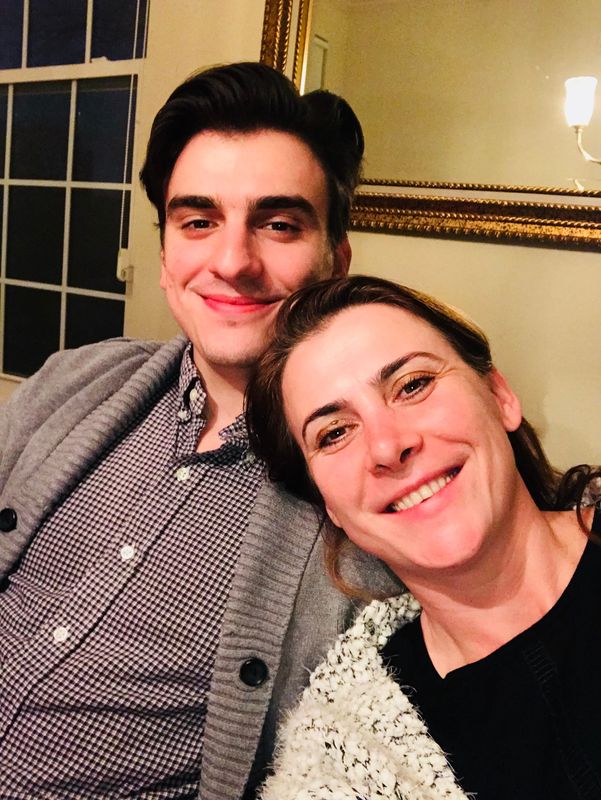
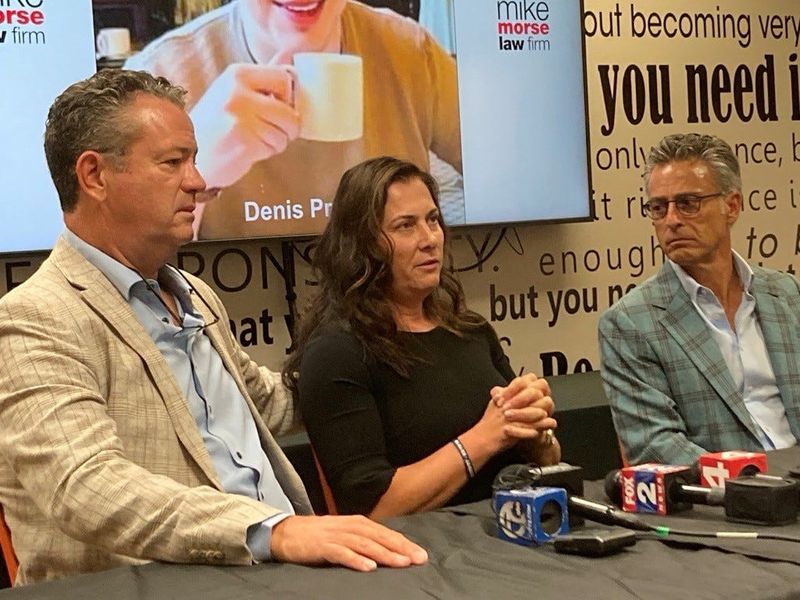
Novi — A Wayne County jury awarded Denis Preka’s estate $75 million two years ago after finding two men were responsible for the 21-year-old University of Detroit Mercy student’s death seven years ago when they allegedly slipped drugs into his drink without his knowledge and mocked him while posting social media videos of his incoherent spiral into unconsciousness.
But after receiving news that Michigan Attorney General Dana Nessel’s office won’t prosecute the case, Linda Thom, the victim’s mother, said she’s frustrated that she can’t get justice in the state’s criminal justice system, despite the sizeable judgment in civil court.

Following the attorney general’s recent decision, Thom said she hopes to get results from the federal justice system. She said she reported alleged corruption by Oakland County Prosecutor Karen McDonald and Assistant Prosecutor Marc Keast to the FBI more than a year ago, and that she’s been in regular contact with an FBI agent.
“I pray the FBI will expose all this corruption,” said Thom, who lives in Grosse Pointe Farms but splits time between Michigan and Florida. “One way or another, I am going to get justice for my son.”
Novi Police Chief Erick Zinser said the FBI called him in 2023 to briefly discuss the case, although a spokesman for the federal agency did not confirm or deny an investigation.
Thom claimed McDonald’s 2022 decision to drop charges against the man who’d been arrested in connection with her son’s death was influenced by campaign donations made by the defendant’s attorney. Thom also alleged that prosecutors presented false evidence in court to bolster the case for the defendant’s release.
Prosecutors called the allegations baseless and said they were investigated by the Michigan Attorney Grievance Commission after Thom filed a report last year. The investigation was closed April 15 due to a lack of evidence, according to prosecutors and Thom.
What happened to Preka on March 18, 2019
Preka was a business major who was cramming for a test at his classmate Paul Wiedmaier’s Novi home the night of March 18, 2019, when he reportedly asked for Adderall to help him study.
Wiedmaier called two men, Conner Gibaratz and Nicholas Remington, according to court records. Remington, who police and prosecutors said was a known drug dealer, allegedly gave Preka MMDA and MDA instead of Adderall, authorities said. The men gave Preka the wrong drugs because they thought it would be funny to watch his reaction, according to the civil lawsuit.
The civil jury dismissed the claims against Gibaratz but found Remington and Wiedmaier liable for Preka’s death.
The standard in civil court is lower than the evidence required for a criminal conviction. Criminal convictions require proof of guilt beyond a reasonable doubt, while in civil court, a finding of liability needs only a preponderance of the evidence, meaning guilt is more likely than not.
A month after Preka died, Remington was arrested and charged with delivery of a controlled substance causing death, which is punishable in Michigan by up to life in prison. Remington was on probation at the time of Preka’s death. He was incarcerated in the Oakland County Jail for more than a year in lieu of a $1 million bond. Four judges and magistrates denied motions to lower the bond.
But prosecutors dropped the charges in February 2022 because they said Beth Hand, a former assistant Oakland County prosecutor, withheld evidence in the case. Hand, who was elected Mason County prosecutor after leaving Oakland County, has denied the allegation.
Commission closes case against Prosecutor Karen McDonald
Thom claimed McDonald dropped the charges against Remington because his attorney, Neil Rockind, donated thousands of dollars to the prosecutor’s election campaign. Last year, Thom leveled those allegations in a complaint to the Michigan Attorney Grievance Commission.
On April 16, the Attorney Grievance Commission informed Thom and attorneys for Keast and McDonald that the commission closed the case because of a lack of evidence.
“The Attorney Grievance Commission found no basis for any discipline against Prosecutor McDonald or this office, and closed Ms. Thom’s complaint,” Jeff Wattrick, spokesman for the Oakland County Prosecutor’s Office, said in a statement.
Danielle Hagaman-Clark, the Attorney General’s Criminal Justice Bureau chief, wrote Thom on April 8 to inform her of the decision not to prosecute the case. Hagaman-Clark said her office also looked into the allegations against McDonald.
Thom responded in an April 10 letter that the Nessel’s department wasn’t interested in finding fault with the prosecutor and only opened an investigation after being contacted by the FBI.
“In my view, this case was not taken up out of a genuine willingness to pursue it, but rather because outside pressure, specifically the involvement of the FBI made it unavoidable,” Thom wrote. “From the outset, I believed the Attorney General’s office would not reopen a case that could expose the actions of Prosecutor Karen McDonald. I made this clear early on to (an FBI agent she spoke with).”
Federal and state investigations into Thom’s allegations explored
Zinser said he had a brief telephone conversation with an FBI agent about the case sometime in 2023.
“They didn’t indicate whether or not they were doing an investigation,” the chief said. “They wanted to know the status of the investigation; where it stood, basically. It wasn’t a long conversation.”
FBI spokesperson Jordan Hall said agents often get tips without opening formal investigations.
“As a matter of longstanding policy, the FBI does not confirm or deny the existence of any investigation,” Hall said in a statement. “The FBI routinely assist law enforcement agencies upon request. The FBI receives calls and online tips from concerned citizens on a daily and routine basis. Our policy is to intake all complaints from concerned citizens. The fact that the FBI may have received a complaint from a citizen is not indicative of whether or not the FBI has an open investigation.”
Thom said she contacted Nessel’s office every week since the attorney general agreed in March 2025 to look into the case.
“They kept putting me off, putting me off,” Thom said.
Hagaman-Clark wrote that the investigation was painstaking.
“We recognize your expressed frustration at the speed of our review process, please know that we dedicated to our review the requisite time to perform a thorough assessment of this case due to both the severity of this matter and the loss of a precious life,” she wrote.
Nessel’s office explains why it didn’t file criminal charges
Kimberly Bush, a spokesperson for the Attorney General’s Office, told The News there were multiple reasons the office declined the case.
“The AG sympathizes with the Preka family and agrees with their belief that foul play led to Denis’s untimely death,” Bush said in a statement.
“However, as we explained to Denis’ family, we do not believe we can prove guilt beyond a reasonable doubt for three reasons. First, the court has already ruled that the most incriminating of evidence is no longer admissible because it has been tampered with. Transferring this case to another prosecuting agency does not change the court’s decision or the admissibility of this evidence.
“Second, there is not enough remaining admissible evidence that we can bring before a court, and finally, there is evidence that a member of the victim’s family threatened a witness into making specific assertions,” Bush wrote. “Given those hurdles, we do not believe we would be able to meet the legal standard of proof of guilt beyond a reasonable doubt, as required by the court, and by the professional rules of conduct.
“This decision was made following an extensive review and investigation,” Bush said. “We recognize the pain that his family carries and regret that this outcome does not make it any easier.”
When interviewed by police, the man whose home Preka died in, Wiedmaier, changed his story about who had given the victim the drugs. But Hagaman-Clark wrote in her letter that she had reviewed a phone call in which Thom threatened Wiedmaier by telling him “he had to come clean” and tell police that Remington gave Preka the drugs that killed him.
“Paul was told that ‘he would be protected’ if he told police that Nick Remington had given your son drugs and that ‘no one would hurt him’ if he told the police,” Hagaman-Clark wrote. “He was also advised that he and his family would be destroyed and sued if he did not cooperate. This is only a partial summary of the call; there are other discrepancies on the call.
“It was only after that conversation that Paul Wiedmaier changed his story with the police,” Hagaman Clark wrote. “Even if Paul Wiedmaier were to testify, his testimony and credibility is tainted by this threatening call. A jury could easily conclude the first statement was more reliable because he was still acting under the trauma of Denis’s death and had not yet thought to lie or did not yet have a motivation to fabricate.
“Based upon the foregoing, and considering the case without the Snapchat evidence, we cannot conclude beyond a reasonable doubt that your son was given MDMA directly by Nick Remington when it is equally plausible that he was provided the drug by someone else or took it on his own volition,” Hagaman-Clark wrote.
Wiedmaier did not return a phone call seeking comment.
Thom said she never threatened Wiedmaier and questioned why he wasn’t arrested for providing conflicting stories to the police.
“I recorded Paul after he had already given multiple statements to police,” she said. “By then, his story had already changed three times. What they call ‘threats’ was me confronting him with documented facts and telling him I would pursue legal action if he continued to lie.
“Why are they treating shifting statements as a reason to abandon the case instead of investigating why those statements changed?” Thom said.
ghunter@detroitnews.com
(313) 222-2134
@GeorgeHunter_DN
This article originally appeared on The Detroit News: Grosse Pointe mom pins hopes on feds in son’s Snapchat death
Reporting by George Hunter, The Detroit News / The Detroit News
USA TODAY Network via Reuters Connect